Op-ed by Christoph Warrack, CEO of Woodland Savers, and David Hunter, Senior Counsel at Bates Wells.
Following his success at the battle of Hastings, William the Conqueror dished out vast tracts of land to the barons who had helped him defeat the Anglo-Saxon King Harold.
Ever since, most land in the UK has been held as the private property of a small number of individuals, families, Oxbridge colleges, the Church or, latterly, corporations, rather than being recognised as a common good. In England, for example, half of all land remains owned by less than 1% of the population.
To say this approach to land ownership isn’t serving us well is an understatement. Among the most nature depleted countries on the planet, the UK has lost nearly a fifth of its wildlife since 1970. Meanwhile, we have to import 40% of our food. The truth is there are simply much better ways of managing our land, while recognising nature as the foundation of all human society and, indeed, life on Earth.
Community land ownership
With many landowners seemingly reluctant to adopt new practices, locals are on the look out for opportunities to step in. Communities are buying back their woodlands and wild landscapes, so they can set up innovative businesses that benefit local people and their environment, as well as driving wider change, such as improving health and wellbeing through better connection to nature.
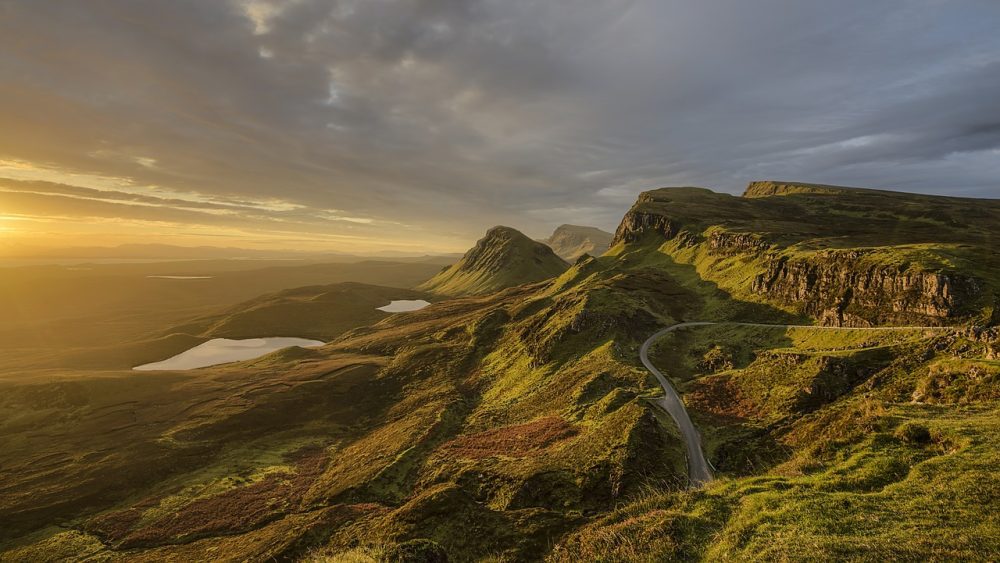
Scotland is a home to this movement, because it already has legislation that gives community groups the right to buy land. In 2003, the Scottish Government passed the Land Reform Act, which gave local groups the power to register an interest in rural land and the right of first refusal when it comes up for sale.
Scotland’s recent Land Reform Bill only strengthened the interests of local communities, by ensuring they’re given advance notice of their right to buy lots up for sale, and empowering government ministers to break up large land holdings that are for sale, if it is deemed to be in the public interest.
A Scottish community used these rights in Dumfries and Galloway, in the country’s south-west, where locals fundraised to buy over ten thousand acres of Langholm Moor from the Duke of Buccleuch for £6 million in 2022.
Today, the Langholm Initiative runs a nature reserve and nature education programme, while undertaking peatland and woodland restoration. Plans for sustainable tourist accommodation and community food production are afoot.
Win-win-win for landowners, communities and the economy
To grow this movement, nonprofit organisation Woodland Savers is now working with local communities across the entire UK, helping them to buy and manage woodlands and other landscapes for nature recovery.
With advice from our legal partner, purpose-driven, B-Corp law firm Bates Wells, Woodland Savers’ support of community land purchases enables local people to develop and deliver nature positive business models that not only bring many environmental benefits, but help communities reconnect with their local wild spaces and generate sustainable new incomes.
Since Woodland Savers was set up in 2021, we have supported two community land purchases to save forests in the Exe Valley and in West Yorkshire – while our upcoming ventures include woodland, water and farmland projects from Lough Neagh in Northern Ireland to Cornwall, Wales, and Merseyside.
We know that young people leave their communities because of a lack of meaningful jobs – many seeking work with a social and/or environmental purpose – and we know that community land ownership provides opportunities to create a regenerative economy based on new ways of working with the world.
We are working with My Little Farm to roll out scalable, profitable, community-farming, through ethical social franchising. We are working with the Mersey Forest’s ‘Natural Health Service’ to investigate how nature prescribing can improve health and productivity, from the simplest steps, e.g. just touching soil can produce serotonin, boosting mental health.
These projects demonstrate that all parties benefit from putting land into the hands of local people. Landowners can rest assured that while selling their land at an appropriate price, or moving to minority shareholdings, they’re delivering a meaningful legacy for themselves and the land, that will be used for the public good.
Communities feel empowered to take control of their environment and act, at a hyper-local level, on the climate and nature crises, while addressing social challenges, creating new jobs, stimulating the local economy, and even potentially mitigating direct risks to their local environments by managing the land in a way that works more with nature.
England needs legal parity with Scotland
There are proven benefits in putting land into community ownership. This could be accelerated if communities in England, Wales and Northern Ireland had the same legal rights as those in Scotland. And if new rights to buy back local land were synchronised with the set-up of a series of blended regional financing facilities, on which we are already at work, providing local groups with expert help in terms of borrowing, crowdfunding and access to grants and investment, that would make the whole process simpler and more agile.
Moving towards community land ownership can help restore our relationship with nature through the creation of new, localised food systems based on regenerative farming, which prioritises soil health and works in harmony with nature, instead of damaging it.
It’s also a means of creating the new kind of nature-based business models that value people and the planet just as much as profit (which can include embedding the rights of nature and future generations in governance arrangements) aiming towards a global economy that works within planetary boundaries. At present, we are beyond six out of nine of those boundaries and urgently need to reorganise ourselves at a fundamental systems level.
The scale of the requisite transformation is daunting, but reinvigorating our relationship with the land that sustains us is the best place to start. Read more here and here.