The global food system faces structural pressures that make current agricultural models unsustainable, and “no longer financially viable as our only way of producing food”.
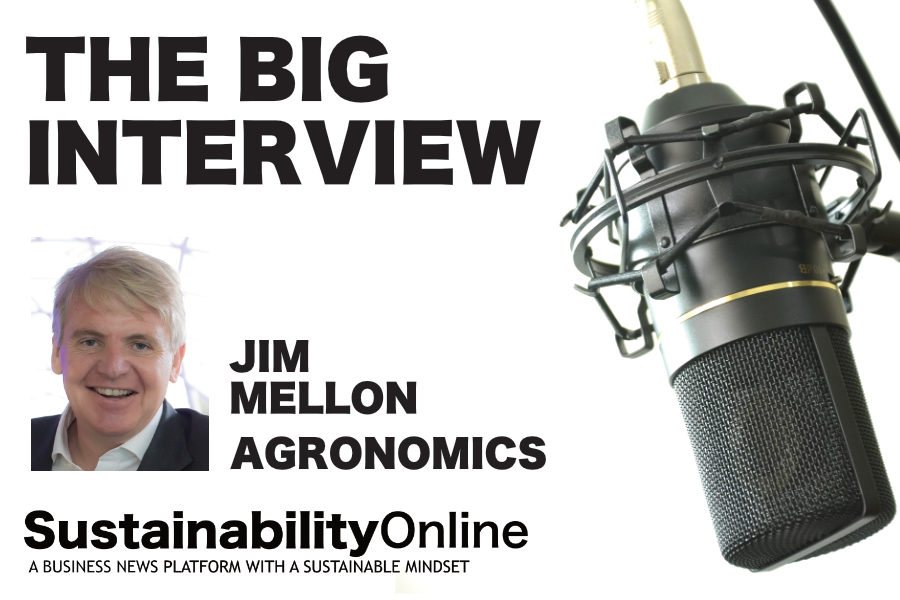
That’s according to Jim Mellon, billionaire investor, entrepreneur and executive chairman of Agronomics, an AIM-listed venture capital firm supporting the development of cultivated food products, cellular agriculture and other related categories.
He’s also written a book on the topic, Moo’s Law: An Investor’s Guide to the New Agrarian Revolution, which sets out the science and investment case for cellular agriculture and alternative proteins in future food production systems. As noted in its foreword, by Bruce Friedrich of The Good Food Institute, the book focuses on ‘solutions and optimism, and the capacity of human innovation to fundamentally transform what has long been considered understood – the nature of food and farming.’
‘Cracking under pressure’
“We take food for granted, but we shouldn’t,” Mellon tells SustainabilityOnline. “From climate change to conflict, and from food cost inflation to negative health impacts, the global supply chain that feeds us is cracking under pressure.
“We’ve seen droughts and extreme weather threaten harvests and crop yields, such as cocoa and coffee; beef is more expensive than ever due to rising energy and feed prices; and the cost of staple foods, such as vegetable oil, has risen sharply due to the war in Ukraine. The current conflict in the Middle East will no doubt also have an impact, as it drives up the price of energy and fuel and disrupts the fertiliser supply chain on which agriculture relies.”
Conventional farming, he adds, contributes to emissions, deforestation and animal welfare issues, not to mention health and safety issues related to the use of antibiotics and other contaminates.
“But it’s not enough to just talk about what the agriculture industry should stop doing, we must also explore what it could become,” he adds. “In other words, our food system needs a new vision.”
Customer perceptions
A glance at Agronomics’ LinkedIn page illustrates the extent to which the VC is reaping the benefits of its investments, with portfolio companies in areas such as precision fermentation, meat alternatives, climate resilient crops, functional ingredients and cultivated protein reporting recent successes. For these to gain cut-through with consumers, however, they need to become cost-competitive and offer the same perceived value and quality as everyday products. Progress in this area is ongoing, Mellon notes.
“Cost is obviously a key challenge, but over the years this has dropped dramatically,” he says. “New technological breakthroughs continue to drive down costs, edging us closer to price parity.
“In terms of clean food ingredients, for example, such as egg white protein, milk protein and various types of oils and fats, including palm oil, we’re very close to price parity. Meat and fish may take slightly longer, but even so, I believe it will soon be cheaper to produce beef or pork in bioreactors at scale, than to raise cows or pigs for slaughter.”
In time, these innovations will help to shorten supply chains, lower emissions, reduce pressure on land and water resources, mitigate the risk of livestock disease, and support farmers in regenerating soils and restoring ecosystems, while also meeting consumer demand, Mellon adds.
“The economic benefits of clean food include being able to manufacture in-country, in local currency and close to the consumer, while also reducing over-reliance on imports,” he says. “But for the sector to have its biggest impact, it needs to scale further – which means continued investment and support from governments and industry.”
Turning point
Mellon has said in the past that he believes 2026 could mark a turning point for cultivated foods entering the mainstream, with the past year seeing “more regulatory approvals related to clean food than ever before”, in areas such as egg and dairy proteins, speciality oils and fats, and cultivated meat products. This, in turn, is leading to wider market adoption in retail, restaurants, and consumer goods markets across the US, UK, and Asia.
“An innovation that’s having a transformative industry impact by driving the shift from creating products in labs into mass production, is precision fermentation,” he says. “Many of our portfolio companies are at the forefront of this movement. This includes EVERY, whose animal-free egg protein is now used in products sold in Walmart in the US; Onego Bio, which has created a versatile egg protein powder, ideal for large-scale food production; and Clean Food Group, a UK based company who have acquired a one-million-litre fermentation facility, producing the next generation of sustainable oils and fats for use in cosmetic and food products.”
Greater consumer understanding about the link between food and its impact on the planet, as well as personal health – particularly among younger generations – is also contributing to this shift. Mellon points to the support of MrBeast, one of the world’s best known influencers (with more than 500 million YouTube followers), as helping to generate both momentum and heightened interest in the sector.
“Recent data has shown that Gen-Z and millennials in particular are open and interested in trying cultivated meat,” he says. “And that’s before it’s even been made commercially available. The industry must now ensure it can maintain that excitement for foods produced differently while it scales.”
Learn from the past
At the same time, the cultivated food industry has been established for some time, and hasn’t been immune to attrition. For every successful startup, there have been other ambitious companies that have struggled to sustain momentum. How does Mellon account for this?
“A number of the clean food industry’s first wave of companies scaled facilities and spent capital aggressively, before solving the fundamental unit economics, particularly the high cost of cell culture media and growth factors,” he says. “Wave two companies are cutting costs in production first, from cheaper bioreactors, to significantly reducing the price of inputs of media – the feed given to grow cells – before scaling up slowly.
“Over the next few years, while we may see some companies fall by the wayside, we’ll also see innovators pick up speed and scale production. These are the ones who have played the long game, developed smartly, and are now ready to make a tangible impact.”
Empowering farmers
As to whether cultivated food is likely to fully replace conventional agriculture in time, Mellon notes that many farmers are eager to operate sustainably, but are constrained by longstanding systems that contribute to environmental strain.
“The truth is that modern, intensive farming practices are destroying the very ecosystems they depend on and it’s a problem that’s only increasing,” he says. “If we want a fairer, more sustainable food system, we need to reimagine how we produce our food and use innovation to empower farmers, not replace them.”
This is where recent advancements in clean food, bio-reactor agriculture and precision fermentation can play a role, providing farmers with the tools to support diversification, reduce emissions, and “regain control” of their supply chains.
“If we can replace large parts of the industrial food complex with clean food, we can help local farmers go back to what they do best – growing high-quality, sustainable food that works in harmony with the environment, rather than against it. In this way, we can keep feeding our growing population and create a secure food system, without harming the planet.”
Learn more about Agronomics at www.agronomics.im