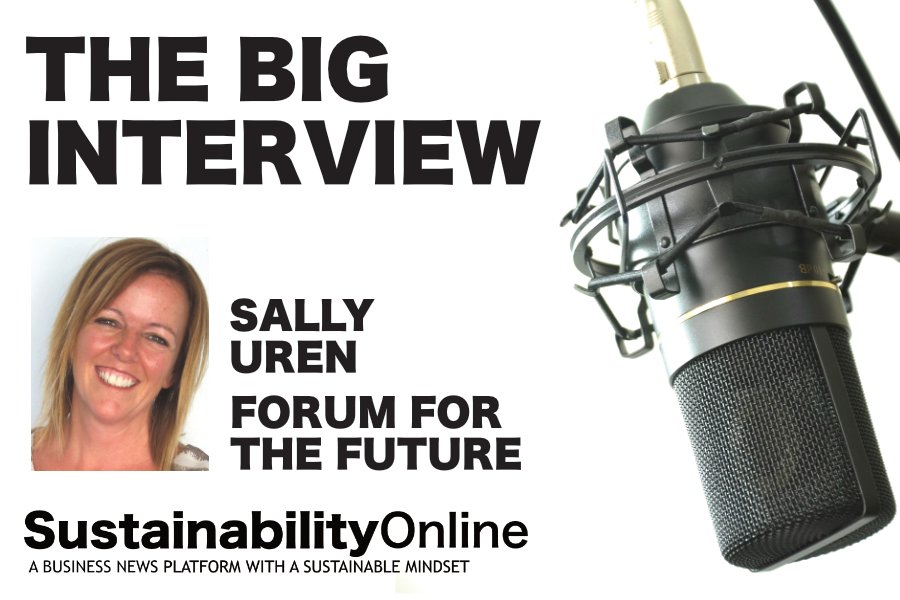
As executive director and chief acceleration officer at Forum for the Future, Sally Uren plays a direct role in driving systems-level solutions that align economic performance with ecological integrity and social justice.
A globally-recognised leader in sustainability strategy and transformational change, she has held various roles at Forum for the Future since 2002, working with business, governments, and civil society to accelerate the shift toward a sustainable future.
Her strategic insight is sought at board level across sectors, evidenced by her roles as a non-executive director at Kimberly-Clark, Kingfisher and Burberry. She was appointed an OBE for Services to Sustainability and named among the Forbes Top 100 UK Leading Environmentalists, and is a leading ESG speaker on the global stage.
In this exclusive interview with the London Keynote Speakers Agency, Sally shares practical frameworks and hard-won perspectives on why business leadership must embrace sustainability as a strategic imperative, not a box-ticking exercise.
Given accelerating climate risk, why are businesses still falling short in addressing climate issues at the scale required?
No, they’re not. Nobody is. Partly because of the constraints of the economy that we’re in.
Ours is an economy that is fuelled to a large extent on short-term profit maximisation, and so whilst there is a really strong business case for sustainability, you may need upfront investment in, for example, solar panels or other renewable types of energy. You may need to enter into long-term contracts with your supplier and actually commit more resource up front as a way of building resilience into your supply chain.
If you are having to meet really short-term demands on profitability, then that longer-term investment becomes harder, even though you can show the rate of return.
So, one of the biggest barriers is this drive for short-term profit maximisation, which is why it’s really great that investors are beginning to shift on this and realise that short-term profit maximisation without a view to long-term value creation is really short-sighted for the long-term prosperity of the market. So that’s definitely one barrier; the way that capital markets work.
And then I think there’s another barrier – which is much more human – which is I just don’t think we’re ambitious enough. I think we’re a bit too comfortable that we’ll just tweet things here, tweet things there. So, I think another barrier is mindset. There’s just a lack of ambition in some quarters, and a lack of creativity.
If we can really mainstream sustainability within the investment community, send the right signals into the market, focus on long-term value creation, and be bold and ambitious, then I think you’ll see an acceleration.
From a governance and strategy perspective, what core principles should underpin an effective sustainability policy?
First of all, focus on your big impact areas. Sometimes sustainability policies don’t focus on where you can make the biggest difference. So, for retailers there’s been this kind of preoccupation with the plastic bag. Really, it’s not a material impact area.
Where and how you’re sourcing raw materials, as I said earlier, really is a much bigger impact area. How you are helping your customers lead more sustainable lives through the use phase of products is also much bigger than a carrier bag. So, focus on those big material impact areas.
The second is specific to your business. You see lots of sustainability policies where you could just erase the title and switch them over, they’re a bit vanilla. So, a really good sustainability policy should be specific to your business.
Three is set targets. Put targets in your policy. So, science-based targets for climate, other targets for customer reach with new products, for example, or revenue sales from sustainable products.
And then number four is honesty and authenticity. Use your policy to talk openly and honestly about your progress.
If you do those four things, focus on the material impact areas, include targets, make your policy specific and be honest and open about your progress, I think we’d see a general uptick in performance.
For organisations at the beginning of their sustainability journey, what should be the first strategic priority?
The first thing I would do – it sounds really boring, and it is a bit – is to do a materiality assessment. Really understand where are your big impact areas, and where can you make the biggest positive difference. Take the time to do that properly.
Don’t assume where your impact lies, because actually you might not have that right. So, take the time to do a proper materiality assessment, find out where your biggest impacts are and where you can really optimise the contribution that you make to the world around you. Start there.
This interview with Sally Uren was conducted by Jack Hayes of the Motivational Speakers Agency.