Renewable energy sources accounted for 45.3% of gross electricity consumption in the European Union in 2023, a 4.1-percentage point increase on the previous year, new data from Eurostat has found.
According to the data, this marks a record-breaking annual increase in the share of renewable energy in gross electricity consumption in the bloc, and follows on from a 3.5-percentage-point increase in 2022, and a 3.3-percentage-point increase in 2020.
Renewable sources
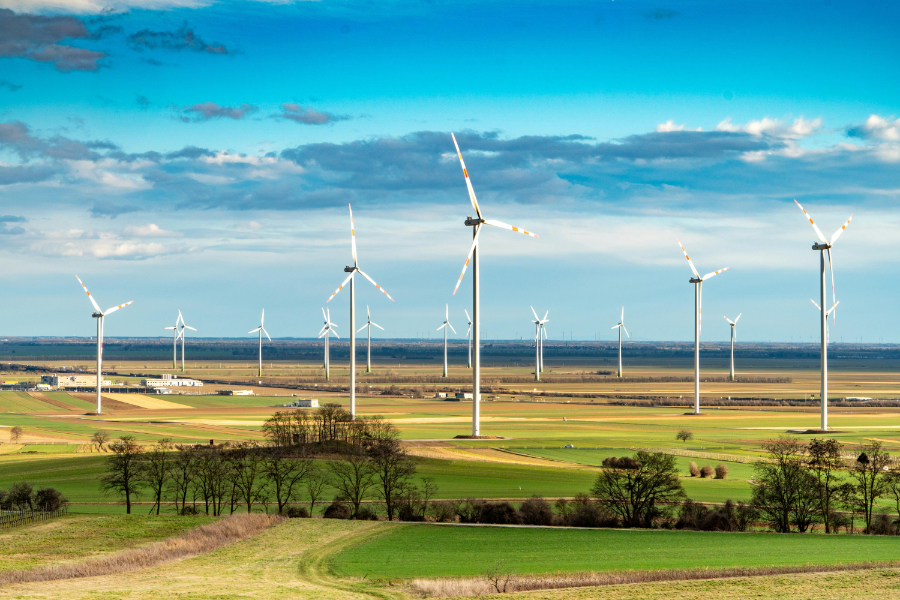
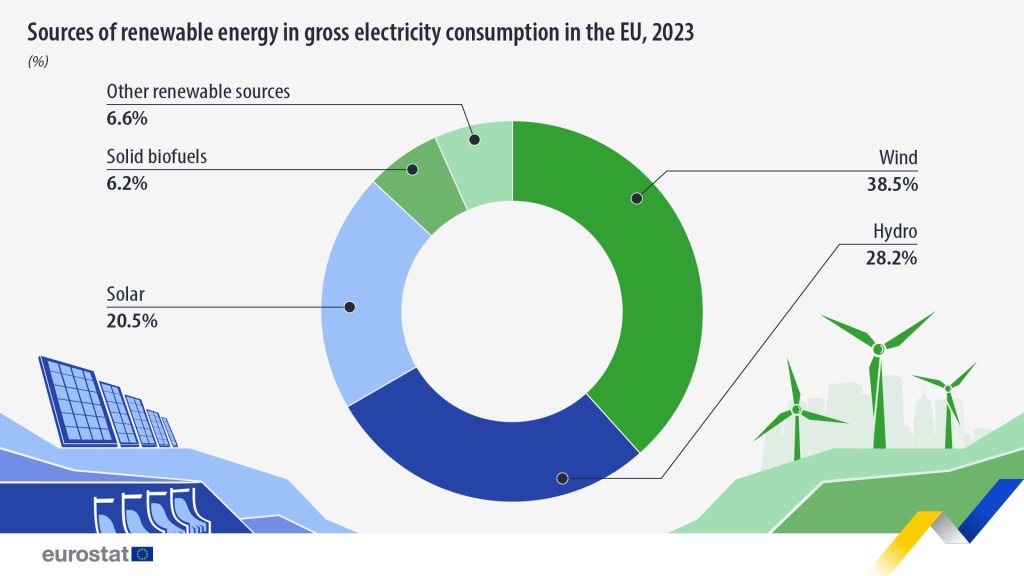
Wind, with 38.5% of the total, and hydropower, with 28.2%, accounted for more than two-thirds of total electricity generated from renewable sources, while solar power contributed 20.5%.
The growth in green energy over the past decade ‘was largely achieved by the expansion of wind and solar power,’ Eurostat said. ‘Solar power is the fastest-growing source, rising from just 7.4 terawatt hours (TWh) in 2008 (representing only 1% of the total) to 252.1 TWh in 2023.’
Other channels included solid biofuels and ‘other renewable sources’, which accounted for 6.2% and 6.6%, respectively, as the diagram below indicates.
Austria and Sweden lead the way
EU member states that generated the most electricity from renewable sources include Austria (87.8%, mostly hydropower) and Sweden (87.5%, mostly hydropower and wind), while Denmark generated 79.4% of its electricity from renewable sources.
Other countries with more than 50% of their electricity coming from renewables include Portugal (63.0%), Croatia (58.8%), Spain (56.9%), Latvia (54.3%) and Finland (52.4%), the data showed.
Several EU countries reported significantly lower shares of renewable electricity, however, including Malta (10.7%), Czechia (16.4%), Luxembourg (18.0%) and Hungary (19.5%). Read more here.