Last year, 47.4% of the net electricity generated in the European Union came from renewable energy sources, new data from Eurostat has revealed.
This is a 2.6% increase compared to the previous year.
Highest share of renewables
Among EU member states, Denmark boasted the highest share of renewables in its electricity generation, at 88.8%, mostly coming from wind, with Portugal following on 87.4%, largely from wind and hydro. Croatia, which came third (73.8%), mostly relied on hydro.
A number of countries boast a relatively low share of renewables in their electricity generation, with just 15.1% of electricity in Malta, 17.5% in Czechia and 24.1% in Cyprus coming from renewables.
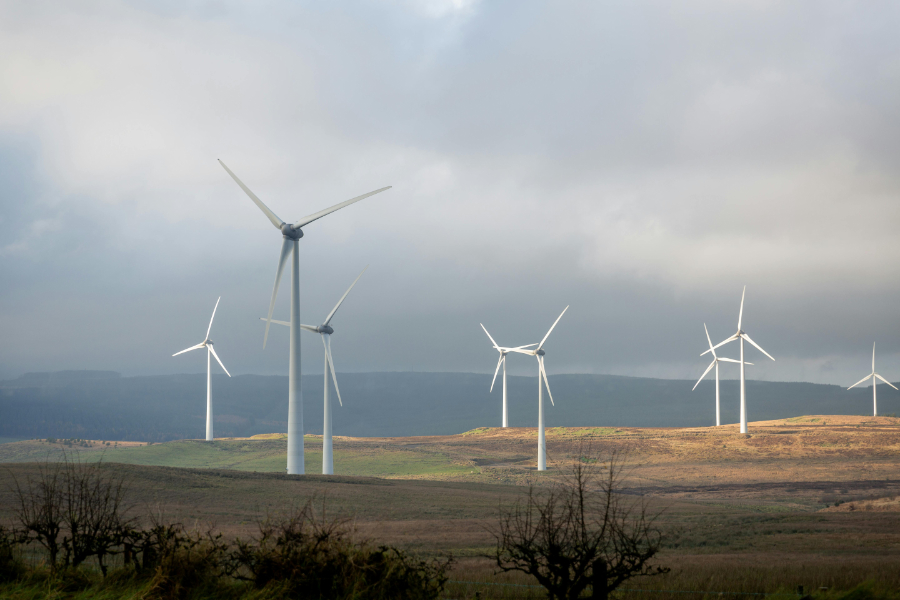
Overall, across the EU, wind accounted for 39.1% of the electricity generated from renewables, more than any other sector. Hydro power accounted or 29.9%, followed by solar – both photovoltaic and solar thermal – with 22.4%.
Combustible renewable fuels accounted for 8.1%, while geothermal energy contributed approximately 0.5%.
Read more: Denmark’s Ørsted announces next stage in Bahren West wind farm development

Transport, heating and cooling
In the transport sector, the share of electricity from renewable sources reached 10.8%, up from 9.6% in 2023, Eurostat added. Sweden had the highest share in this sector at 33.6%, followed by Finland at 20.6%.
Elsewhere, for heating and cooling, renewable sources accounted for 26.2% of energy consumption in 2023, up from 11.7% in 2004. Again, Sweden (67.1%) led the way in terms of heating and cooling energy generated from renewable sources, followed by Estonia (66.7%), Latvia (61.4%), the data showed.
‘Becoming the world’s first climate-neutral continent by 2050 requires ambitious measures to enable European citizens and businesses to benefit from sustainable green transition,’ Eurostat noted. ‘The growth of renewable energy sources may also stimulate employment in the EU, through the creation of jobs in new ‘green’ technologies, which will be one of the cornerstones of the future Clean Industrial Deal.’ Read more here.