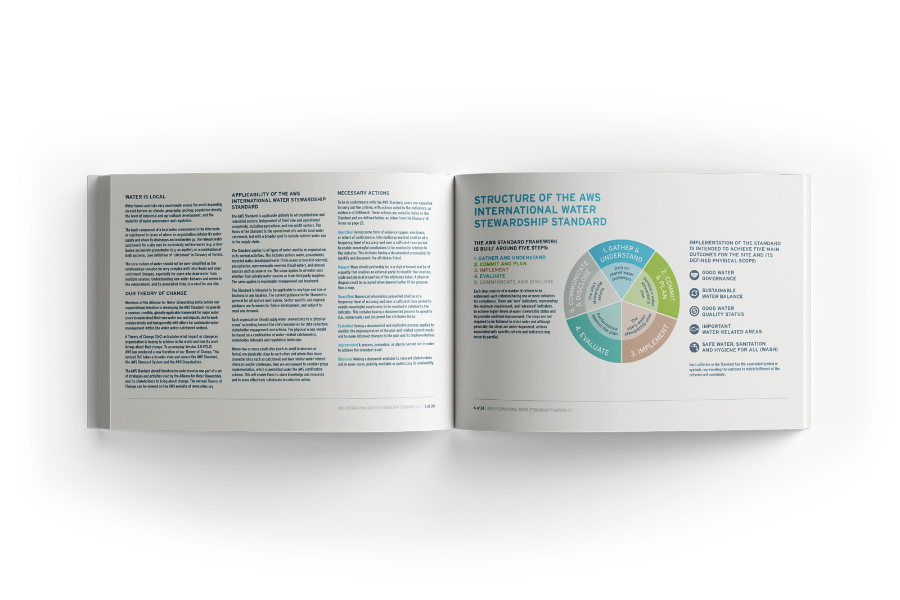
The Alliance for Water Stewardship (AWS) has announced that it will launch Version 3.0 of the International Water Stewardship Standard at an event in Tokyo to coincide with World Water Day.
The new version of the standard will be introduced at a physical launch event on 18 March, followed by three global virtual launch webinars on 25 March 2026.
According to the AWS, the upgraded standard comes at a time when ‘global water risks accelerate and companies face mounting pressure to demonstrate credible environmental claims amid tightening EU and UK regulations on green claims and water related disclosure under the Corporate Sustainability Reporting Directive (CSRD)’.
The World Economic Forum stated in its recent Global Risks Report 2026 that environmental risks remain the most serious threats over the coming decade, while a recent UNU-INWEH Report warned that the world has entered an era of ‘water bankruptcy’.
In addition, one in five companies around the world are already reporting ‘significant’ water-related supply chain risks, representing an estimated $77 billion in value.
About Version 3.0
Version 3.0 of the standard, which was adopted in December 2025 following a two-year global consultation process involving more than 100 organisations and the submission of more than 3,000 public comments, strengthens how the framework is applied in several areas.
These include clearer requirements and minimum expectations for companies beginning water stewardship programmes; better alignment with broader sustainability agendas and integration of collective action requirements; and strengthened interoperability with CSRD requirements and alignment with CDP and Taskforce on Nature related Financial Disclosures (TNFD).
The AWS Standard provides a framework that allows major water users to measure water use and impacts and to work with other stakeholders to improve water management. Certification under the standard involves third-party verification and is intended to demonstrate responsible water stewardship to regulators, investors and communities.
An independent evaluation of the previous version of the standard found ‘ tangible social, environmental and economic benefits including better community engagement, improved water quality and balance, groundwater recharge, creation of new habitats, lower costs through reduced water use and growth in agro industrial production and jobs,’ the AWS said. Read more here.