The Brazilian Development Bank (BNDES) has launched a new open-access platform to monitor the progress of the New Climate Fund, which seeks to support projects in energy transition, decarbonisation, and reforestation in the Global South.
The tool enables users to track the progress of approved projects, as well as investment totals, the type of financial support, and the locations in which investment is being applied.
‘Commitment to transparency’
“With this platform, BNDES reaffirms its commitment to transparency and to the ecological transition that ensures a future for new generations,” commented Aloizio Mercadante, BNDES president.
The platform will be demonstrated in detail during a presentation organised by the bank at COP30 in Belém.
The New Climate Fund, which was established in 2009, operates through two channels – reimbursable funding managed by BNDES and non-reimbursable funding overseen by the Ministry of the Environment and Climate Change (MMA).
Over the past two years, BNDES has approved around BRL 19 billion (€3.07 billion) in credit lines for projects throughout Brazil, compared to a total pledged funding of just BRL 1.6 billion (€260 million) between 2019 and 2022.
Transport electrification
According to Nelson Barbosa, BNDES director of planning and institutional relations, the fund, which is financed by the National Treasury and Green Bonds, supports the ‘electrification of urban transport, biofuel production, reforestation, and green industry’.
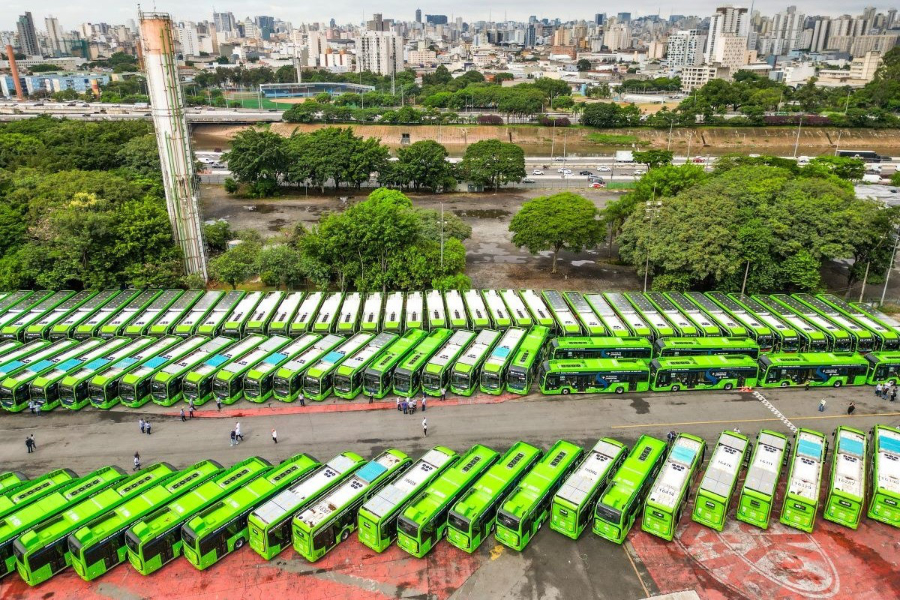
For example, BNDES is the largest financial backer of electric buses in Latin America, with some BRL 3.8 billion in approvals since 2023, which has the potential to reduce CO2 emissions by around 115,000 tonnes per year,
The launch of the new platform also reinforces the bank’s commitment to transparency, it noted, achieving a transparency index of 96.81% in the latest evaluation by Brazil‘s TCU. This is more than 20% above the national average. Read more here. [Photo: Edson Lopes Jr./SECOM]