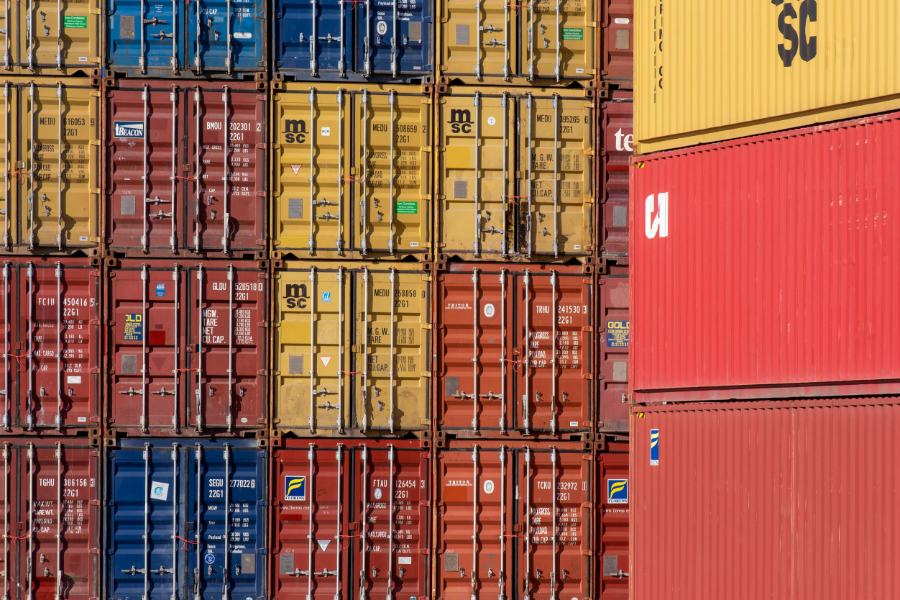
Container shipping reached a two-year peak in efficiency in the final quarter of 2025, according to new data from VesselBot.
VesselBot’s latest analysis, Decoding Maritime Emissions Q4 2025 – Efficiency Peaks as Intensity Hits Yearly Low, explored how vessel fleet composition, carrier deployment choices, and trade-route design have contributed to emissions outcomes among container shipping networks.
It drew on data from 79,438 containership voyages completed during the final quarter of last year.
Emissions intensity
As it found, average well-to-wake emissions intensity declined to 188.9 grams of CO₂e per TEU-kilometre in the fourth quarter, the lowest level recorded in 2025.
At the same time, however, total emissions for the quarter exceeded 52 million tonnes of CO₂e.
The report indicates how carrier performance can vary even among vessels using the same trade lanes – on major Asia–Europe corridors, competing operators recorded ‘materially different’ carbon profiles depending on vessel size, fleet age, and time in port, VesselBot noted.
The age of vessels also played a role, with voyages by vessels younger than 15 years ‘significantly more efficient’ than those of older ships.
‘Managing the past’
“If you measure emissions quarterly but operations change daily, you are managing the past” commented Constantine Komodromos, CEO and founder of VesselBot. “Ocean networks are constantly reshaped by schedule changes, vessel swaps, blank sailings, port disruptions, and geopolitics.
“Sustainability has to become an operational KPI, evaluated at the moment of planning and execution, alongside reliability and cost. And we should be honest about offsets and book and claim fuels. They may help close a gap in the short term, but they do not force the system to change. Real progress comes when shippers and carriers change how freight is moved, not just how emissions are accounted for.”
During 2025, VesselBot tracked 313,690 containership voyages operated by more than 5,800 vessels, with total emissions from said vessels amounting to 208.8 million tonnes of CO₂e.
The report also examines how geopolitical volatility, fleet renewal, and regulatory expansion are reshaping emissions exposure heading into 2026. Read more here.