The development of sustainable and biodegradable electronic textiles, known as e-textiles, has taken a ‘big leap forward’ according to researchers at the University of Southampton and UWE Bristol.
The study, which also involved the universities of Exeter, Cambridge, Leeds and Bath, explored a new sustainable approach for the development of fully inkjet-printed, eco-friendly e-textiles, dubbed ‘Smart, Wearable, and Eco-friendly Electronic Textiles’, or ‘SWEET’.
E-textiles which integrate electronic components like sensors and batteries, have applications ranging from fashion to healthcare, but have historically faced challenges in recycling and biodegradability due to the inclusion of metals and other non-biodegradable components.
Product development
The development of SWEET e-textiles relies on a three-layer design that uses Tencel as the base fabric – a biodegradable and renewable material made from wood – and conductive materials like graphene and PEDOT:PSS, which are inkjet-printed onto the fabric.
“Integrating electrical components into conventional textiles complicates the recycling of the material because it often contains metals, such as silver, that don’t easily biodegrade,” commented Professor Nazmul Karim at the University of Southampton’s Winchester School of Art, who led the study. “Our potential eco-friendly approach for selecting sustainable materials and manufacturing overcomes this, enabling the fabric to decompose when it is disposed of.”
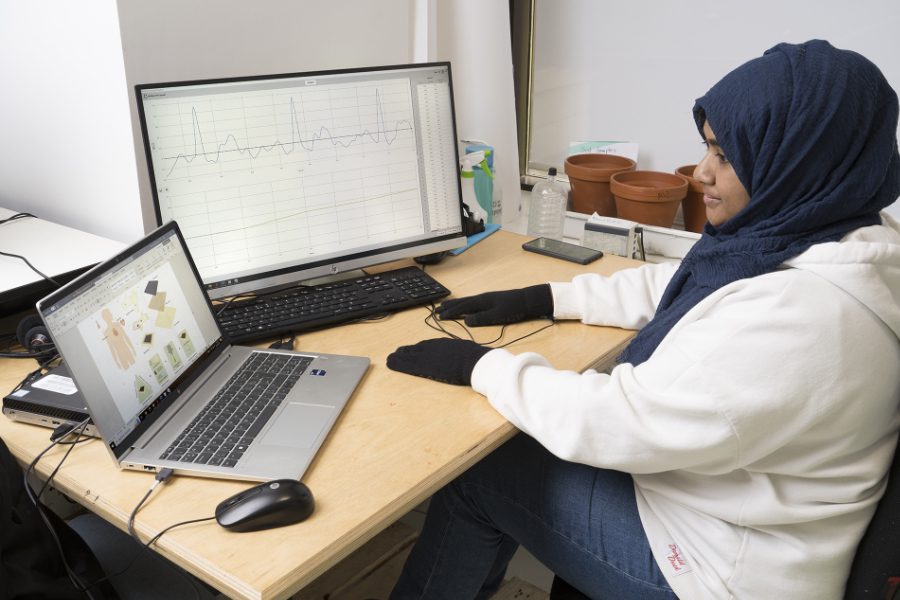
The SWEET e-textiles were tested for their ability to reliably monitor physiological metrics such as heart rate and temperature, which are among the practical applications for such textiles, and found that they attained industry-standard levels.
In addition, the material was also found to have a high level of biodegradability – when buried in soil for four months, the fabric showed a substantial 48% reduction in weight and a 98% loss in strength.
The inkjet printing process used in the manufacturing of SWEET e-textiles further enhances sustainability by minimising material waste and reducing water and energy consumption compared to conventional methods. This approach reflects a shift toward more responsible production practices, aligning with global efforts to reduce pollution and landfill waste.
“Achieving reliable, industry-standard monitoring with eco-friendly materials is a significant milestone,” added Dr Shaila Afroj, an Associate Professor of Sustainable Materials at the University of Exeter and a co-author of the study. “It demonstrates that sustainability doesn’t have to come at the cost of functionality, especially in critical applications like healthcare.”
Wearable applications
Going forward, the team aims to develop wearable garments from SWEET for healthcare applications, particularly in terms of the early detection and prevention of heart-related diseases that affect as many as 640 million people globally.
“These materials will become increasingly more important in our lives, particularly in the area of healthcare, so it’s really important we consider how to make them more eco-friendly, both in their manufacturing and disposal,” Karim added.
The study was published in the Energy and Environmental Materials journal. Read more here. [Photo by Marzia Dulal]