



Google reduced the carbon emissions of its data centres by 12% last year, despite a 27% increase in electricity demand, the tech giant said in its latest Environmental Report.
The emissions reduction was achieved due to more than 25 clean energy projects coming on stream during 2024, which together added some 2.5 gigawatts of clean energy to the grids that serve its operations.
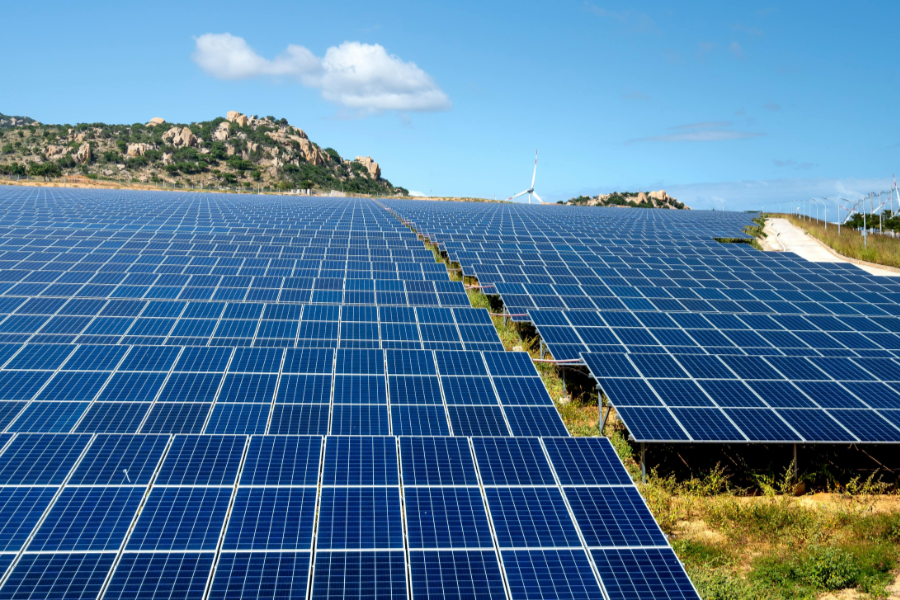
This is equivalent to more than 4 million solar panels, Google noted, adding that it increased its hourly carbon-free energy use from 64% to 66%.
‘The next wave of innovation’
During 2024, Google announced its biggest ever procurement of clean energy, adding 8 gigawatts to its portfolio, a record single-year investment.
“But you can’t run the future on yesterday’s infrastructure and grid,” commented Kate Brandt, chief sustainability officer, Google. “Powering the next wave of innovation — especially AI — requires us to solve some of the most significant challenges of our time: not only generating vast amounts of clean, reliable energy, but also using it efficiently.
“So we’re focused on building and operating the world’s most energy-efficient data centre infrastructure, optimising our models and hardware to use less electricity, and pushing the frontiers of advanced energy development.”
Google said that its data centres are now 84% more energy-efficient than the industry average, while it is also ‘leading the industry’ in terms of making its AI models more efficient – the introduction of quantisation has sped up its large-language model training efficiency by 39%.
The firm is also seeing its AI solutions being put to work to streamline operations and reduce emissions – during 2024, AI-powered products developed by Google helped reduce an estimated 26 million metric tonnes of CO2 equivalent emissions, equating to around 3.5 million US homes.
Total emissions
Looking ahead to 2030, Brandt added that while the company will continue to set bold ambitions, total emissions – including the activities of third parties in its supply chain – have increased by 11%.
“This is largely driven by the emissions from our supply chain as we continue to grow, as well as the fact that we operate globally, and the world isn’t decarbonising fast enough or at a uniform pace,” she said, pointing to the slow transition to clean energy in parts of the world, such as Asia-Pacific.
“For both Google and our suppliers, we can’t outpace the infrastructure that isn’t available on the ground, which is why we’re partnering with others to accelerate solutions.” Read more here.


One thought on “Google reduces data centre emissions despite increased electricity demand”
Comments are closed.