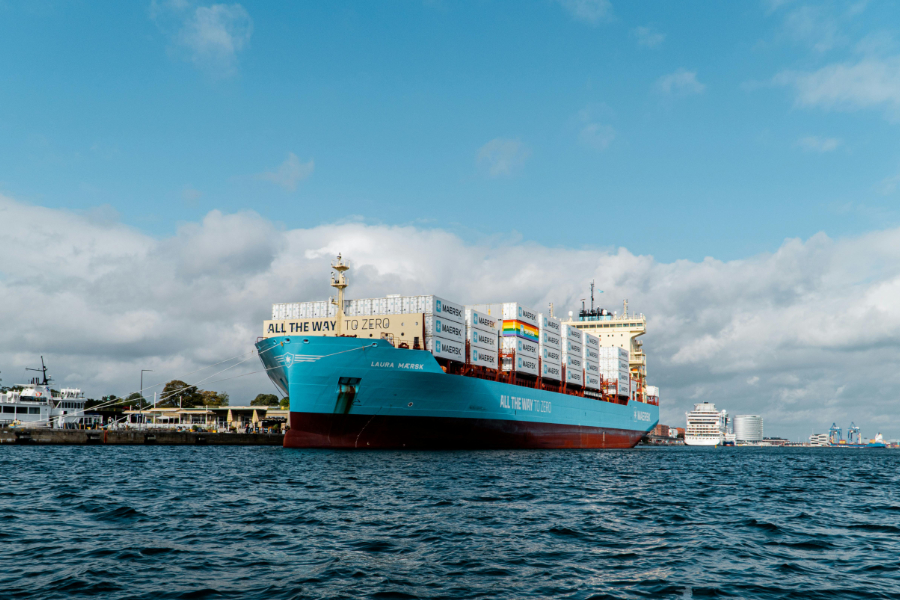
Denmark, one of the world’s leading maritime nations, has described the recent net-zero agreement by the International Maritime Organization (IMO) as a “first step towards climate-neutral shipping” by 2050.
Denmark’s Minister of Business and Industry, Morten Bødskov, was commenting following the agreement by the IMO to set the shipping industry on a course toward climate neutrality by 2050.
Following two weeks of negotiations, a majority of IMO member states backed a new climate deal, which will be formally adopted in October 2025, and will see progressive reduction on emissions from ships, the introduction of a financial mechanism to support the development of green fuels, and rewards for those adopting zero or near-zero GHG technologies.
‘An uncertain time’
“In an uncertain time, […] the agreement is an important step towards a greener future and good news for Danish maritime companies,” Bødskov commented. “It has not been easy, and not everyone is on board yet.
“Although we had hoped for an even more ambitious result, this is a historic agreement, which is a first step towards climate-neutral shipping in 2050. We must have this agreement in safe harbour by October. That is why we continue to work, and we insist on taking responsibility and continuing the dialogue. Today we have come an important step closer to climate-neutral shipping in 2050.”
Binding agreement
The international shipping industry is responsible for nearly 3% of global greenhouse gas emissions, and the IMO’s agreement marks the first time that the sector will be governed by binding global climate regulations.
The agreement did not receive universal backing, however, with major players such as the United States, Russia, and Saudi Arabia failing to support it.
Commenting at the close of the IMO negotiations, IMO Secretary-General Arsenio Dominguez said, “The approval of draft amendments to MARPOL Annex VI mandating the IMO net-zero framework represents another significant step in our collective efforts to combat climate change, to modernise shipping and demonstrates that IMO delivers on its commitments.
“Now, it is important to continue working together, engaging in dialogue and listening to one another, if we are to create the conditions for successful adoption.” Read more here and here.