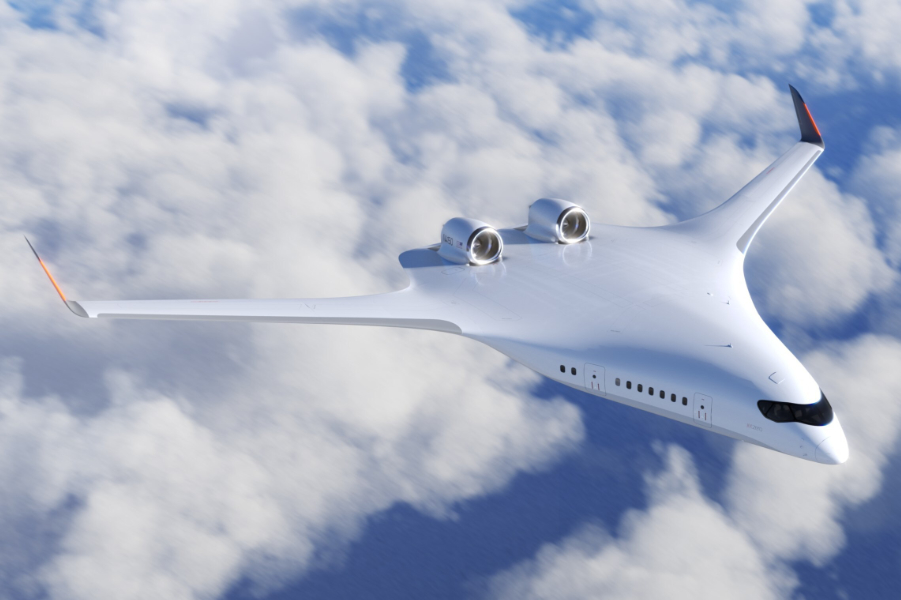
JetZero and Delta Air Lines have teamed up to develop a blended-wing-body (BWB) aircraft that is reportedly set to be up to 50% more fuel-efficient than current commercial aircraft.
Delta, which sees the rollout of the aircraft as an important step in its bid to achieve net-zero emissions by 2050, will provide operational expertise through its Sustainable Skies Lab, supporting JetZero in bringing the BWB design to commercial viability.
JetZero received a U.S. Air Force grant in 2023 to build a full-scale demonstration aircraft, with plans to conduct a first test flight in 2027. With support from Delta, Northrop Grumman, and Scaled Composites, the company aims to introduce the aircraft into commercial service by 2030.
‘Bold and important work’
“Working with JetZero to realise an entirely new airframe and experience for customers and employees is bold and important work to advance the airline industry’s fuel saving initiatives and innovation goals,” commented Amelia DeLuca, Delta’s chief sustainability officer.
“While Delta is focused on doing what we can today to address our carbon footprint, it’s critical we also work with a variety of partners to advance revolutionary technologies, like JetZero’s blended-wing-body aircraft, to solve a significant portion of future aviation emissions.”
The BWB aircraft was first tested and demonstrated by NASA and Stanford University in the 1990s, with the design tailored to reduce drag, increase lift efficiency, and decrease overall aircraft weight. In addition, JetZero’s model will also be capable of using sustainable aviation fuel (SAF) when it goes into service.
‘Marked progress’
“JetZero is working to change the world by bringing to market an aircraft that aims to fly this decade and make immediate and marked progress toward reducing airline energy costs, and the associated emissions,” added Tom O’Leary, JetZero cofounder and CEO.
“The ability to realise such significant efficiency gains in the near future meaningfully impacts the industry’s commitment to reach net-zero emissions by 2050 and will serve as the foundation on which other technologies and efficiencies can be realised.” Read more here.