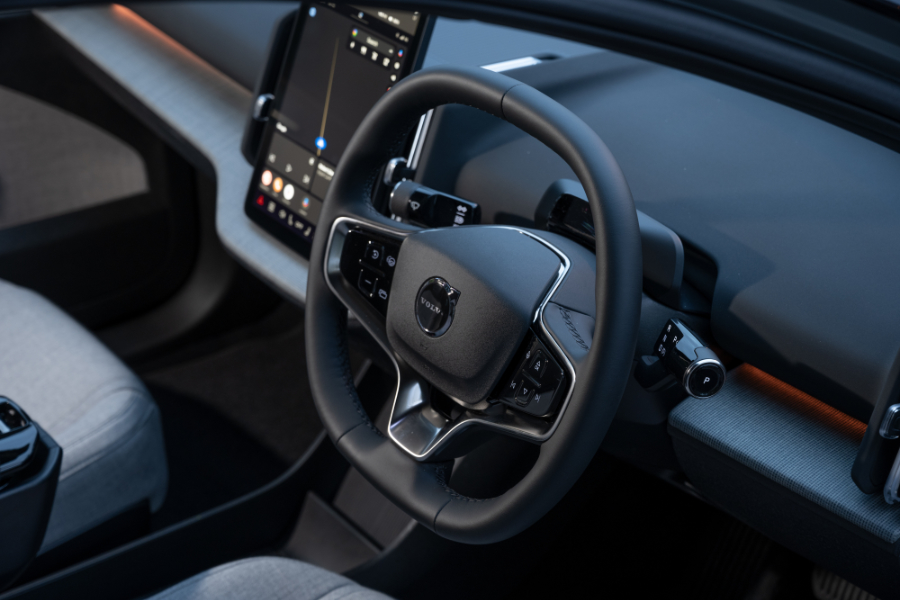
Sales of electrified models accounted for 49% of Volvo sales in the three-month period between December 2025 and February 2026, the company has said.
Of the 156,965 cars that the company sold during the period, which is a 10% decline the corresponding period last year, some 39,132 were fully electric vehicles, which is a 18% increase on the same period a year ago (33,165).
Sales of plug-in hybrid cars, however, were down year-on-year, to 37,474, a 16% decline on the 44,866 recorded last year.
Other vehicles, including mild hybrids and traditional internal combustion engine vehicles recorded sales of 80,359 in the period, down 17% from a year ago (97,255).
US regulatory developments
Commenting on its performance, Erik Severinson, chief commercial officer, Volvo Cars cited “tariffs and unfavourable regulatory developments, especially in the US” as the factors that contributed to the “tough market conditions” the company experienced during the period.
“The prolonged new year holiday period in China further affected our performance,” he added. “However, we are pleased to see steady growth in the sales of our fully electric cars, which is the fastest-growing segment in Europe and globally.
“Growth was particularly driven by the EX30 small electric SUV, now produced in Ghent. Our updated EX30, with its increased addressable market and attractive premium features will further drive electrified growth.”
Annual and Sustainability Report
Volvo Cars has also just published its Annual and Sustainability Report for 2025, in which it reported a 31% reduction in carbon dioxide emissions per vehicle compared with a 2018 baseline, driven by the growing electrification of its product offering.
This enabled the firm to meet its 2025 goal of cutting emissions by between 30% and 35%, it noted.
The company reported an adjusted operating income of SEK 12.5 billion for the year (around $1.36 billion), with an adjusted EBIT margin of 3.5 percent. Free cash flow came in at SEK 2.4 billion.
‘Despite the headwinds during 2025, Volvo Cars remained committed to navigating uncertainty while positioning the business for sustainable growth,’ the company noted. ‘The focus remains on efficiency, cost control and strengthening the core business, providing a solid foundation for when market conditions stabilise.’ Read more here and here.