Renewables are set to overtake coal as the world’s largest source of electricity either this year or by 2026 at the latest, a new report by the International Energy Agency (IEA) has noted.
The IEA’s latest Electricity Mid-Year Update found that electricity demand is set to rise by 3.3% in 2025 and 3.7% in 2026, more than twice as fast as total energy demand growth over the same period.
This increase is being driven by increased demand from data centres and digital infrastructure, as well as to power factories and appliances, keep buildings cool, power electric vehicles, and other demands.
The IEA noted that while the latest forecasts for global electricity demand growth this year and next are a deceleration from the 4.4% increase recorded in 2024, they remain well above the average annual increase of 2.6% seen from 2015 to 2023.
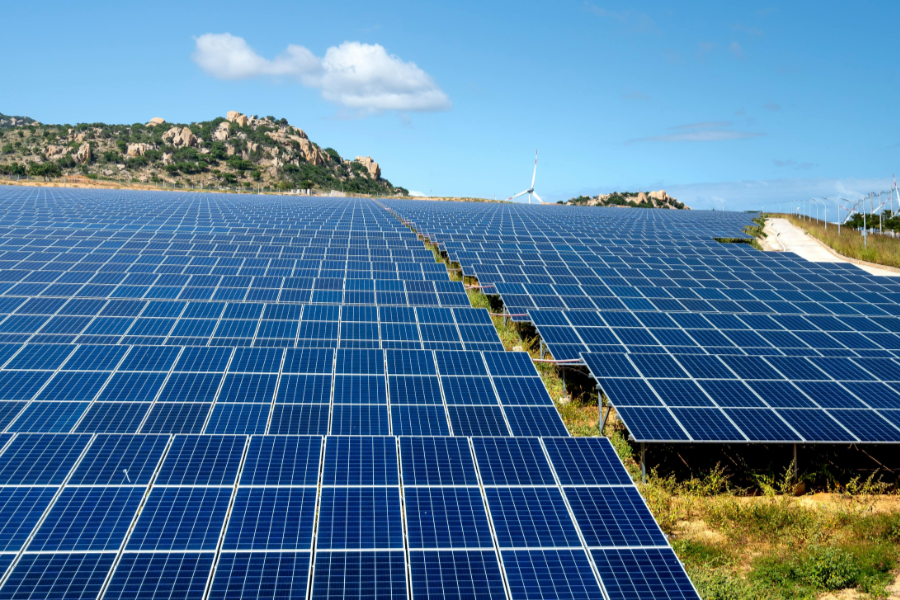
Renewable energy’s growth is being boosted in particular by surging wind and solar deployment, while nuclear power output is also expected to reach ‘record highs’, due to reactor restarts in Japan, strong output in the US and France and new plant additions in Asia.
‘Robust’ growth
“The growth in global electricity demand is set to remain robust through 2026, despite an uncertain economic backdrop,” commented Keisuke Sadamori, IEA director of Energy Markets and Security. “The strong expansion of renewables and nuclear is steadily reshaping electricity markets in many regions. But this must be matched by greater investment in grids, storage and other sources of flexibility to ensure power systems can meet the growing demand securely and affordably.”
China and India are set to account for 60% of global electricity consumption growth in 2025 and 2026, with demand in China projected to rise by 5.7% in 2026, up from 5% this year. In India, electricity demand is set to accelerate from 4% to 6.6% over the same period.
The US is also set to report above-average growth in demand, due to the rapid expansion of data centres, while electricity consumption in Europe is set to grow more slowly this year, with a ‘modest acceleration’ in 2026.
Electricity prices
As the IEA put it, ‘Electricity prices still vary considerably across different regions, with implications for industrial sectors. Average electricity prices for energy-intensive industries in the European Union are still double those in the United States and significantly higher than in China.
‘These cost differences continue to pose challenges to the competitiveness of energy-intensive industries in the European Union.’ Read more here.