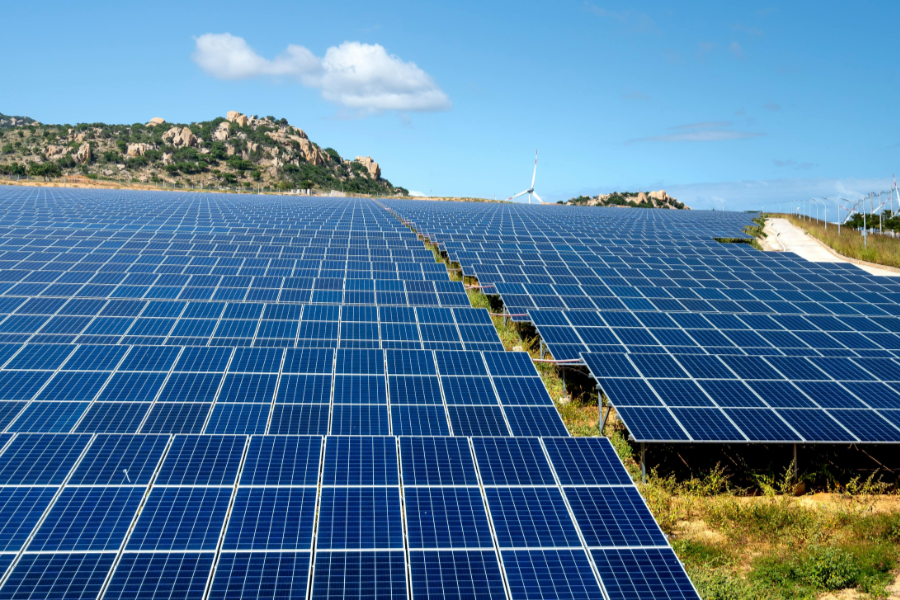
Despite a significant global investment in clean energy last year, including some $660 billion earmarked for renewables, the goal of tripling renewable energy capacity by 2030, as outlined at COP28, is unlikely to be met, a new report by EY has suggested.
The latest EY Renewable Energy Country Attractiveness Index (RECAI 63) notes that network gridlock and high capital costs are likely to delay progress just when acceleration is needed.
Some $1.8 trillion was invested in clean energy projects last year, EY noted.
Battery energy storage systems
Energy storage, including battery energy storage systems (BESS), can play a vital role in overcoming the network gridlock challenge, EY added, with such systems now reaching ‘acute proportions; in many mature markets.
“Scaling up battery energy storage systems can help solve multiple problems holding up clean energy progress, including stabilising and strengthening network infrastructure and enabling more distributed energy resources to connect to the grid,” commented Arnaud de Giovanni, EY Global Renewables Leader.
“Focusing on four factors can help investors navigate this complex, highly regionalised and fast-changing market. These include building a resilient investment case; taking steps to maintain technology competitiveness; establishing the optimal business model or financing structure; and mitigating supply chain risks.”
As renewables proliferate and electrification grows, BESS is likely to play a key role in a dynamic energy system by smoothing supply and demand peaks and helping defer the cost of grid expansion and upgrades, EY added.
A fourfold increase in global BESS deployment is anticipated from 2023 to 2030, reaching 572 GW/1,848 GWh.
Investment markets
“Investor interest in BESS is on the rise,” added Ben Warren, EY RECAI chief editor. “To help cut through the complexity, EY has identified and ranked the attractiveness of the world’s top global battery investment markets.
“But this isn’t an easy market to master. BESS investments are a long-term commitment; they are also highly localised and carry more risk than some other clean energy investments. Success requires understanding the dynamic interaction of regional variations, electricity market design, technology and financing — as well as an acceptance of volatility.”
The US, China, and Germany retain the top three spots in EY’s Renewable Energy Country Attractiveness Index due to strong policy support in each market. To view the RECAI Top 40 in full, visit www.ey.com/recai.
Read more: Renewables ‘face uphill battle’ in high energy-consuming sectors