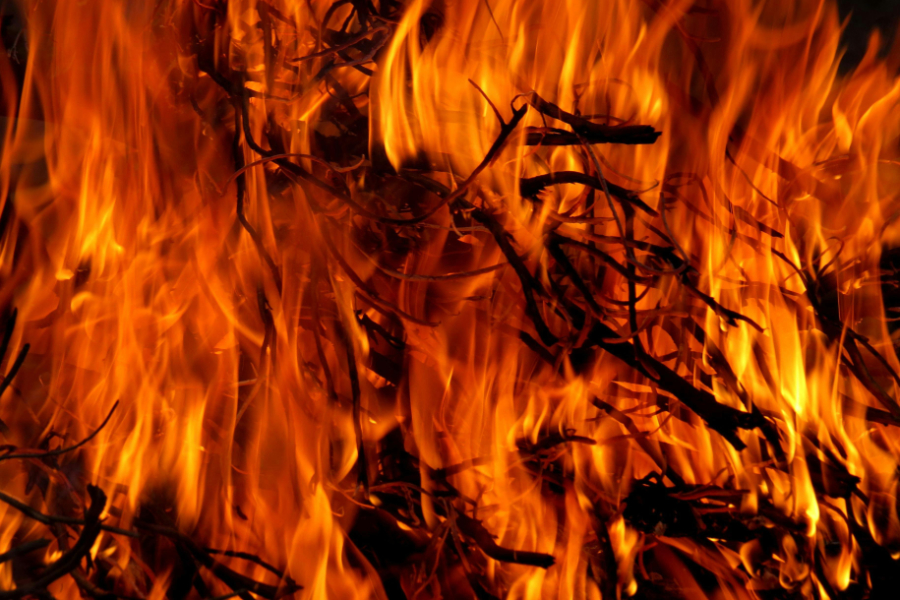
Greek authorities need to rethink and reassess fire prevention and surveillance strategies amid changes in activity, FLAME, a research team from the National Observatory of Athens has said.
FLAME conducted a 25-year analysis of Greece’s wildfire data from 2000–2024, revealing a number of shifting patterns in fire behaviour, geography and timing, as well as uncovering where the blind spots lie in monitoring said fires.
It found that the number of fires taking place during the traditional ‘fire season’, from May to October, is declining, however the area burned is larger than in the past, indicating fewer but more destructive events. The number of large-scale fires – those over 2,000 acres – is increasing both in terms of frequency and size.
Out-of-season fires
At the same time, fires are also increasingly occurring during the winter and spring months, with a significant rise notable since 2012, amidst environmental changes.
These out-of-season fires are spreading across northern Greece and previously low-risk areas, FLAME noted.
Regions such as Attica, Evia, Evros, Boeotia and the Dodecanese have experienced ‘multiple large fire events in the last few years’, it added, however data is still lacking as to the causes of many of these fires.
Pattern recognition
As FLAME noted, the rise in fires across Greece should not be viewed as a ‘hopeless catastrophe’; rather it calls for greater pattern recognition – ‘not just about where we are, but also about where we should prioritise’.
The fact that fires are becoming more destructive requires a more immediate response and better operational management, it added, while the timing of prevention and surveillance needs to be revised to avoid fires going ‘under the radar’.
According to FLAME, in order to respond effectively, Greece must evolve its risk management strategies with better data, earlier prevention, and stronger local preparation.
‘As another firefighting season begins, the point is not to predict what will happen, nor to engage in preparedness contests,’ it said. ‘It is to be present — and prepared — with the right questions, the right priorities, and the right tools. Because fire, as the historical record shows, never waits for us to be ready.’ Read more here.