Clear and strong climate policies can be an ‘antidote’ to global economic uncertainty, and help to ‘get trade flowing and economies growing’, UN Climate Change executive secretary Simon Stiell has said at an event in Panama.
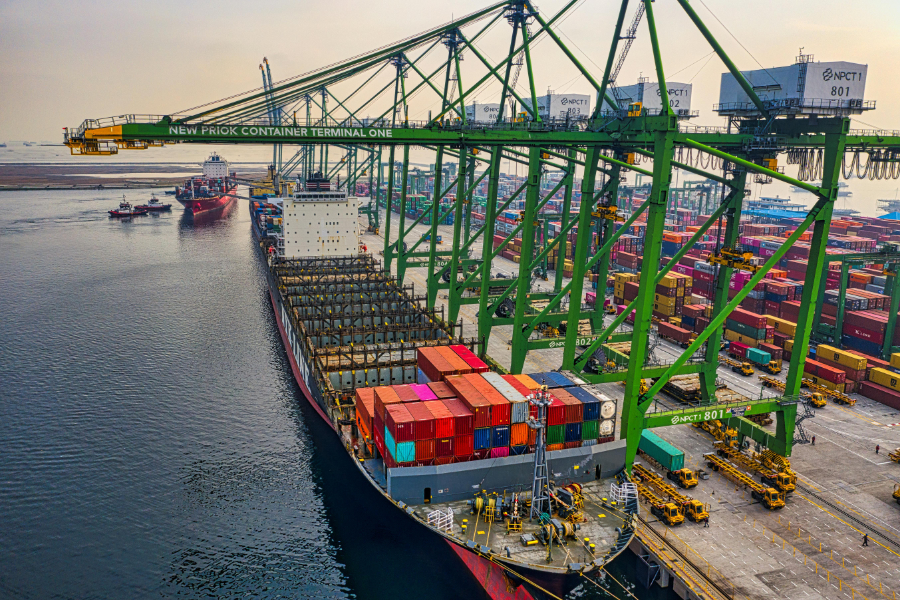
Speaking at the 2025 Nature Summit, which coincided with the newly reconfigured Climate Weeks, taking place in Panama City, Stiell noted that climate change has had an impact on the country’s leading trade route, the Panama Canal, slowing shipping and trade – a situation that has echoes around the world.
‘For the average person – that means costs going up and less money to spend,’ he noted. ‘It also means critical medical supplies delayed for those in desperate need, businesses collapsing, and livelihoods vanishing.’
Positive signs
However, despite this, not to mention the increased cost of living, talk of tariffs and trade barriers, and slowing growth, the UNFCCC head added that there were still reasons to be optimistic.
‘All around the world, clean energy projects are in pipelines,’ he noted. ‘Investors have their fingers on the button – waiting to push go on multi-billion-dollar commitments that will make lives better.’
‘Utterly essential’
He described the new generation of climate plans – or NDCs – as ‘utterly essential’ in order to accelerate this growth, urging political leaders to ramp up their efforts.
‘In the past, climate plans have often focused mainly on cuts – cuts to greenhouse gas emissions and to old-fashioned energy,’ Stiell commented. ‘This new generation of climate plans are really about growth. Growing industries and economies. And building a better future. One where nature is protected, and where people have better opportunities.
‘Done right, these plans can attract a bonanza of benefits. More jobs. More revenue. And a virtuous cycle of increased investment.’
In closing, Stiell added that despite these uncertain times, it is ‘important not to lose sight of where we’re going’.
According to the UNFCCC, the new-format Climate Weeks have an increased focus on real-economy solutions, and aim to bridge the gap between technical dialogues, stakeholder engagement and real-world implementation. Read more here.