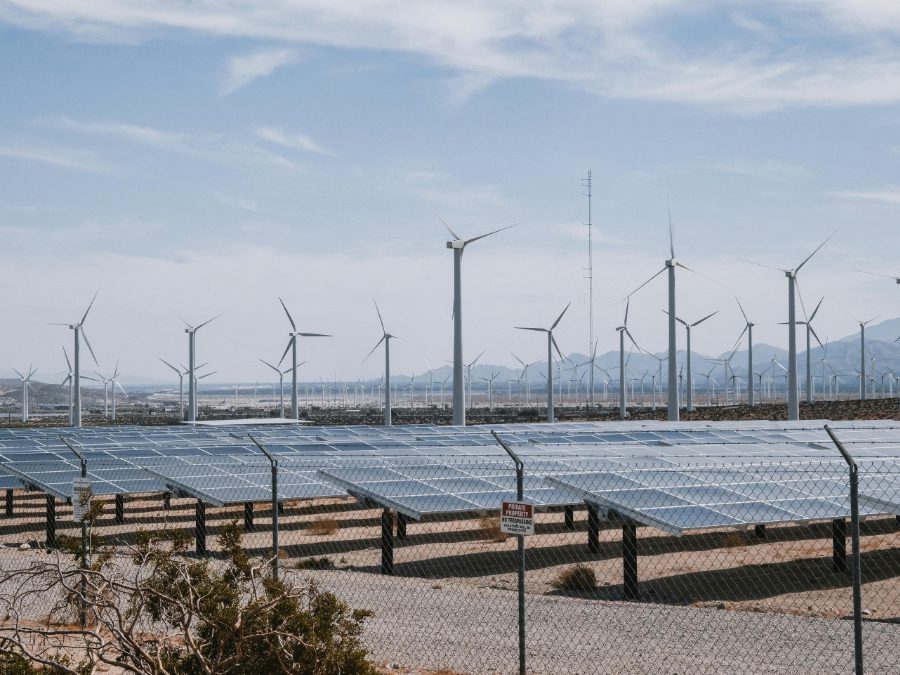
Cleantech energy supply spending is expected to reach $670 billion this year, surpassing upstream oil and gas investments for the first time, a new report by S&P Global Commodity Insights has found.
Amidst what is a ‘growing dominance’ of renewable technologies, solar PV is expected to account for half of all cleantech investments, and two-thirds of installed megawatts, this year, S&P Global noted.
However, despite this surge in investment, further acceleration will be needed to meet climate goals, particularly the target of tripling renewable capacity by 2030.
A $670 billion market
“S&P Global Commodity Insights forecasts that cleantech energy supply investments, including renewable power generation, green hydrogen production, and carbon capture and storage (CCS), will reach $670 billion in 2025, marking the first time these investments will outpace projected upstream oil and gas spending,” commented Edurne Zoco, executive director, Clean Energy Technology, S&P Global Commodity Insights.
As the report notes, capital efficiency in the cleantech sector varies significantly by region, with China dominating the market – the Asian country is projected to add nearly twice as many gigawatts per dollar spent compared to the United States.
The market is currently being shaped by an oversupply of equipment from China, which is particularly affecting the solar, wind and battery sectors. This oversupply of equipment has kept prices low, although they are expected to stabilise in 2025.
China’s share of PV module and battery cell production is forecasted to decline to 65% and 61%, respectively, by 2030, as economic slowdowns and supply chain controls reshape the market.
Elsewhere, battery storage is becoming increasingly important for enhancing project economics and mitigating low wholesale electricity prices in regions with high green energy penetration.
The role of AI
Artificial intelligence, too, is playing an increasingly significant role in clean energy technology, with AI-powered tools improving accuracy and reducing risks associated with discrepancies – potentially as high as 700% – between forecasted and actual energy generation.
Finally, data centres are expected to ‘significantly increase’ their role in clean energy procurement, sourcing approximately 300 TWh of clean power annually by 2030, according to S&P Global. Currently, data centres account for around 200 TWh, or 35% of global corporate clean energy procurement.
“The new year 2025 is not only bringing to the clean energy sector significant transformations that are reshaping energy production and consumption, but it promises to be pivotal for the clean energy sector, with significant advancements in corporate clean energy procurement and the integration of AI in energy management,” added Eduard Sala de Vedruna, head of research, Energy Transition, Sustainability & Services, S&P Global Commodity Insights. Read more here.