New solar, wind and battery capacity additions ‘swamped’ those of fossil fuels and nuclear power in the United States last year, according to a review of Energy Information Administration (EIA) data by the SUN DAY Campaign.
According to the data, the mix of renewable energy sources provided more than a quarter of US electrical generation in January 2026, 11% more than a year ago, and accounted for over 36% of installed generating capacity.
Over the 12-month period from February 2025 to January 2026, solar, wind, and battery storage installations added more than 55 GW of new capacity, while the combined net growth of fossil fuel and nuclear capacity was less than 1 GW.
‘Utterly failed’
“EIA’s data show that the Trump Administration utterly failed to stop the nation’s transition to solar, wind, and battery storage during its first year in office,” commented SUN DAY Campaign executive director Ken Bossong. “The second year of the Trump Administration is projected to be even more lop-sided in favour of clean energy.”
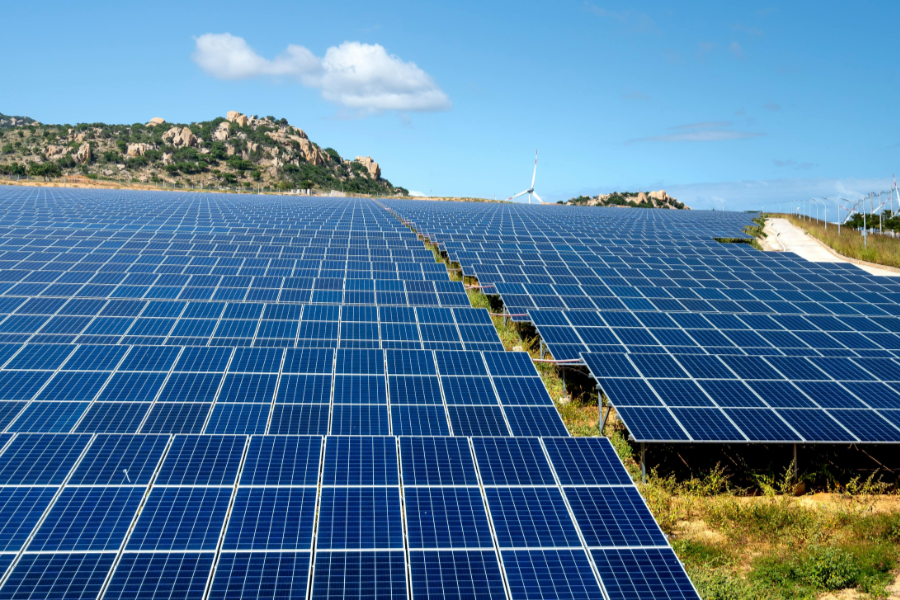
Growth was led by utility-scale solar, which grew by 27.1 GW over the 12-month period – a 16.4% increase – while small-scale, distributed solar installations such as rooftop systems added an additional 6.3 GW (up 12.1%). Wind generated electricity grew by 1.9%, geothermal power output was up by 2.0%, and hydropower rose by 30.2%.
Taken together, electrical generation from renewable energy sources (including biomass) in January 2026 was 11.5% higher than a year earlier, and provided 25.1% of the nation’s total electricity.
At the same time, electricity generated by coal and natural gas plants fell by 12.8% and 3.4%, respectively, compared to a year ago.
Looking ahead
Projections for the coming year are positive, with the EIA predicting increased solar expansion during 2026 – it forecasts suggest that over 41.5 GW of utility-scale solar capacity and more than 22.7 GW of battery storage will be added by the end of January 2027.
Planned battery capacity is forecast to grow by 43.9%, while wind capacity additions are expected to double those of last year.
‘Should EIA’s forecasts come to fruition, new capacity additions by solar, wind, and batteries during the second year of the Trump Administration would be 60% more than those in its first year,’ the SUN DAY Campaign noted.
‘Meanwhile, forecasted growth for fossil fuels and nuclear power is even bleaker than that experienced last year. Zero growth is currently projected for nuclear power while net fossil fuel capacity is expected to fall by 4,261.3 MW. Thus, during the coming 12 months, renewables and battery storage will account for all net new utility-scale capacity additions.’ Read more here.