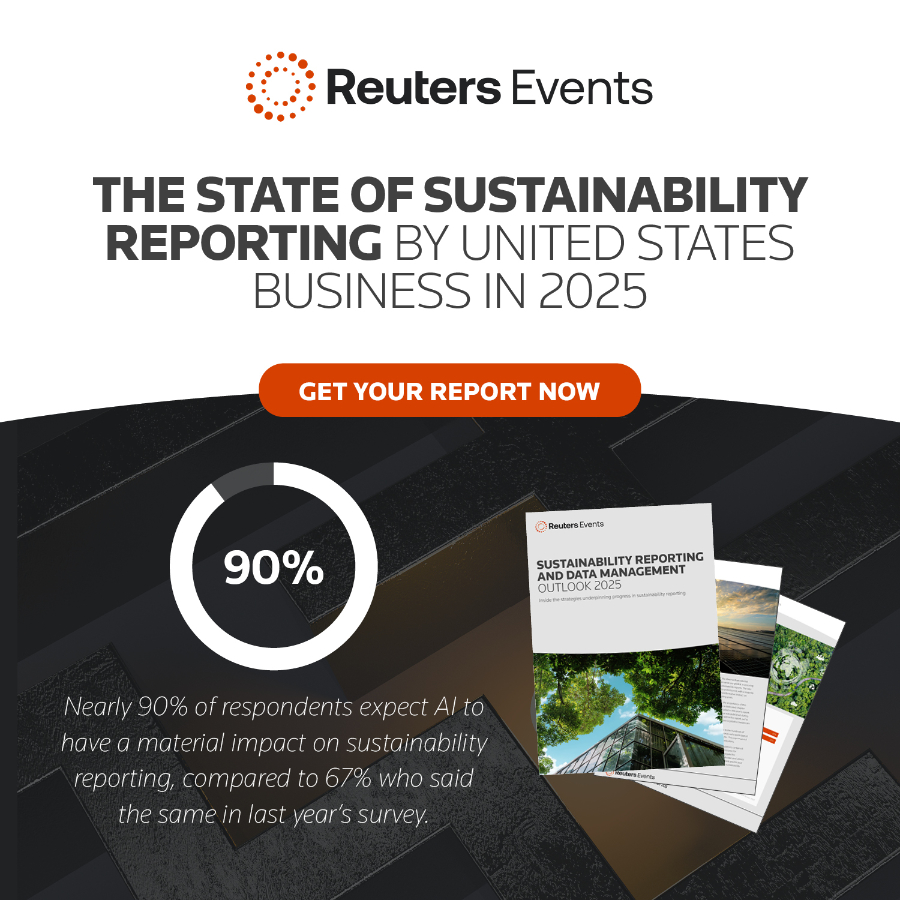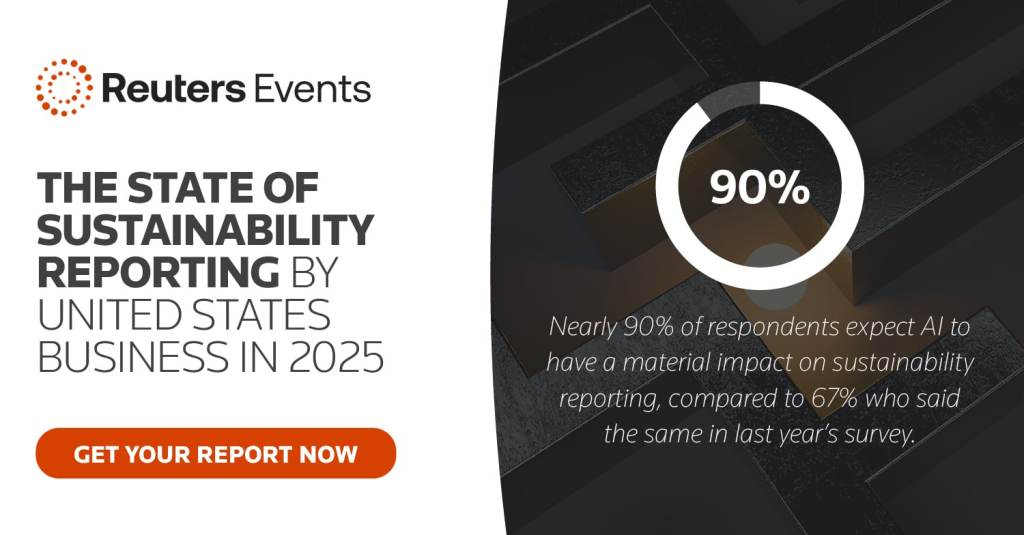
Despite political turbulence and regulatory uncertainty, sustainability reporting by U.S. businesses continues to grow in scale, sophistication, and strategic importance, according to a new white paper published by Reuters Events Sustainable Business.
The State of Sustainability Reporting by United States Business in 2025, authored by Richard Howitt, offers a comprehensive analysis of the current landscape, drawing on the latest research and in-depth interviews with senior sustainability leaders from eight major U.S. companies, including Ford, Microsoft, Google, and DuPont.
According to the whitepaper, ‘Despite the ESG backlash, companies are doubling down on data, innovation, and transparency. They’re not just reporting – they’re redefining what good looks like.’
Key Findings from the 2025 White Paper
- 99% of the largest 100 U.S. companies conduct sustainability reporting; 88% use or reference the TCFD framework.
- 80% of top 250 companies say their sustainability goals are on track.
- 93% of large U.S. companies have dedicated budgets for sustainability reporting.
- 74% report a positive impact on revenue growth from sustainability initiatives.
- 53% of small businesses believe sustainability reporting enhances their reputation.
Innovation and Integration on the Rise
The white paper highlights a wave of innovation in how companies approach sustainability reporting. From AI-powered data systems and product-level impact assessments to double materiality and real-time dashboards, U.S. businesses are embracing new tools to meet rising expectations.
“We’re seeing a shift from compliance to competitiveness,” said Hannah Santry, Sustainability & Environmental Project Director at Reuters Events. “Leaders are embedding sustainability into core business strategy – not because they have to, but because it drives value, resilience, and trust.”
Companies like Ford and Whirlpool are aligning sustainability with financial reporting cycles, while others like Google and Microsoft are leveraging AI and telemetry data to enhance accuracy and insight. The report also explores how companies are navigating Scope 3 emissions, workforce sustainability, and the growing importance of stakeholder engagement.
ESG Pushback Spurs Strategic Clarity
While the report acknowledges the political backlash against ESG in the U.S., it finds that most companies are staying the course – albeit with more careful messaging.
“The backlash has made companies more deliberate, but not less determined,” Santry added. “They’re focusing on what matters most – materiality, transparency, and long-term value creation.”
The report also notes a trend toward “greenhushing,” with fewer companies issuing press releases about their sustainability reports. However, the underlying commitment remains strong: 96% of companies are maintaining their sustainability goals, and 90% plan to increase ESG investment.
Looking Ahead: From Voluntary to Mandatory
With the transition to mandatory reporting frameworks like the EU’s CSRD and ISSB standards, U.S. companies are preparing for a new era of accountability.
The future of sustainability reporting is global, digital, and assured. This white paper is a call to action – to lead with purpose, to invest in systems that scale, and to keep people and planet at the heart of business.
Download the full white paper to explore the latest sustainability insights.