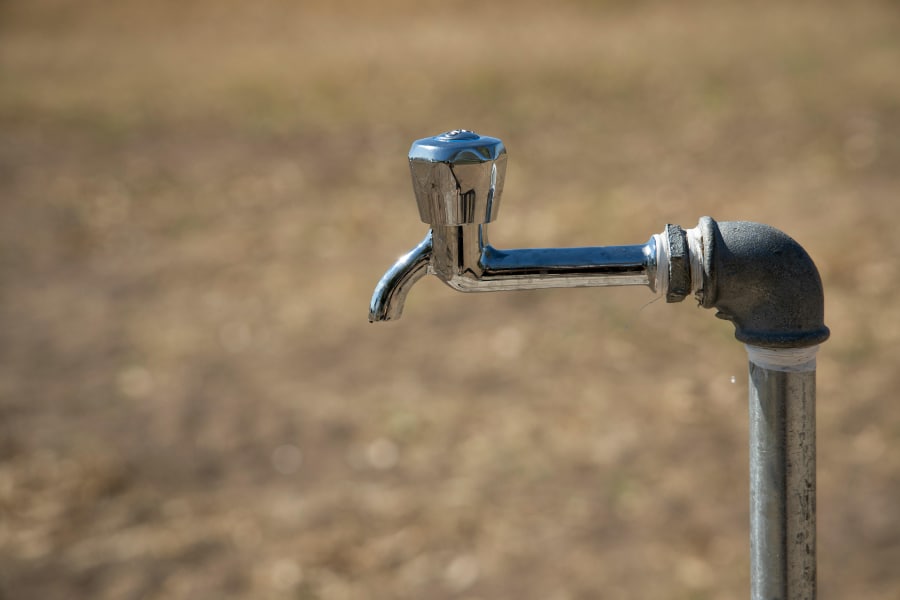
A new study by researchers at Arizona State University has found that the Earth has experienced ‘unprecedented’ freshwater loss since 2002, due to climate change, unsustainable groundwater use and extreme droughts.
The study, the findings of which were published in the Science Advances journal, examined more than two decades of satellite observations, and notes the emergence of four continental-scale ‘mega-drying’ regions, all located in the northern hemisphere.
These include southwestern North and Central America, Alaska and Northern Canada, Northern Russia, and a vast tract of land covering the Middle East, North Africa, and parts of Eurasia.
These ‘mega-drying’ areas are expanding at a rate roughly twice the size of California every year, the study noted, pointing to a critical tipping point in the global water cycle – the rate of drying is now outpacing the rate at which wet regions are getting wetter.
Some 75% of the world’s population is living in 101 countries that have been losing freshwater for the past 22 years. A significant finding from the study is that 68% of the terrestrial water loss stems from groundwater, contributing more to sea level rise than glaciers and ice caps on land.
‘Alarming message’
“These findings send perhaps the most alarming message yet about the impact of climate change on our water resources,” commented Jay Famiglietti, the study’s principal investigator and a Global Futures Professor with the ASU School of Sustainability.
“Continents are drying, freshwater availability is shrinking, and sea level rise is accelerating. The consequences of continued groundwater overuse could undermine food and water security for billions of people around the world. This is an ‘all-hands-on-deck’ moment — we need immediate action on global water security.”
‘Pivotal shift’
The study identifies what is described as a ‘pivotal shift’ around the year 2014-15, coinciding with a significant El Niño event, where climate extremes began to accelerate. In addition, droughts became more severe across the northern hemisphere, having been traditionally dominant in the southern hemisphere.
The research team has called for international cooperation, sustained monitoring, better data sharing, and adaptive water management policies to address groundwater loss.
“It is striking how much non-renewable water we are losing,” added Hrishikesh A. Chandanpurkar, lead author of the study and a research scientist for ASU. “Glaciers and deep groundwater are sort of ancient trust funds. Instead of using them only in times of need such as a prolonged drought, we are taking them for granted.
“Also, we are not trying to replenish the groundwater systems during wet years and thus edging towards an imminent freshwater bankruptcy.” Read more here.