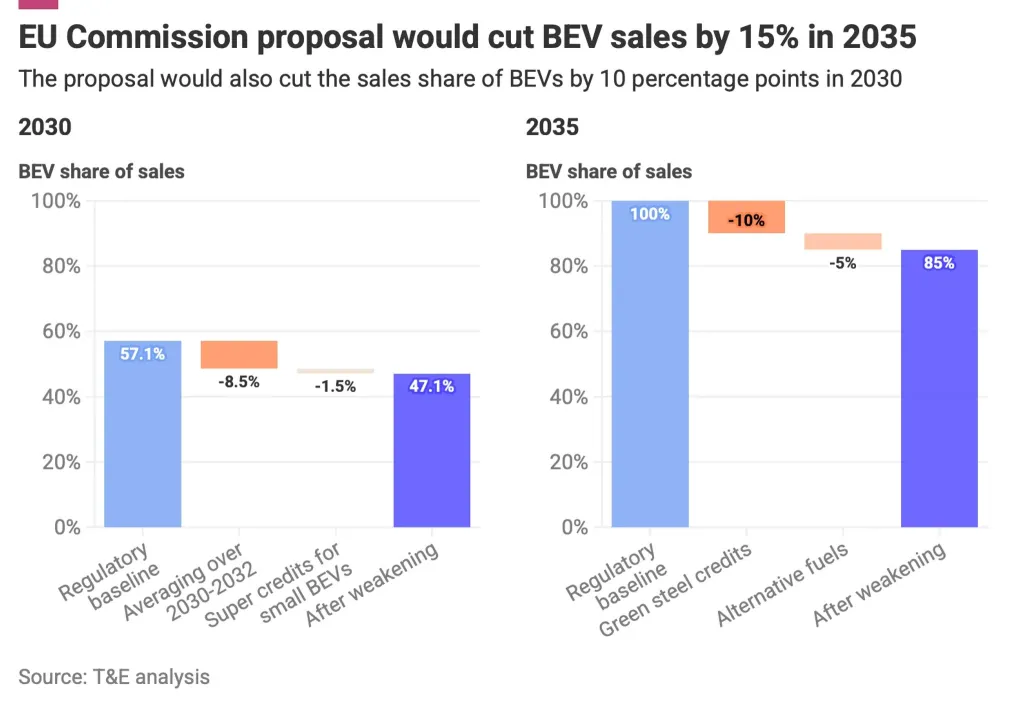
The weakening of the European Commission’s car emissions regulations will likely reduce the share of battery electric vehicles by 15% by 2035, Transport & Environment (T&E) has said.
According to T&E, the Commission’s proposal to revise its 2035 target, from a full elimination of tailpipe emissions to a 90% reduction compared with 2021 levels, could significantly slow the transition to electric vehicles.
The remaining 10% of emissions would be compensated by alternative fuels (by up to 3%) and low-carbon steel (by up to 7%), according to the Commission’s proposals, which were announced in December.
Increased emissions
According to T&E, this measure could also result in an additional 720 million tonnes of carbon dioxide emissions from cars between 2025 and 2050, an increase of around 10% compared to the current regulatory scenario.
It would also enable carmakers to continue to sell any type of vehicle powertrain after 2035, provided that, on average, carmakers’ fleet emissions would stay below 11 gCO₂/km. This could result in more petrol, diesel and hybrid cars being sold well into the next decade, with T&E estimating that carmakers could sell anywhere between 5% and 50% non-BEVs after 2035.
As T&E noted, weakening the targets would delay fleet decarbonisation, increase fuel costs, and undermine Europe’s position as an electric vehicle powerhouse. Further weakening could emerge during negotiations in the European Parliament and Council, it added, which could reduce BEV sales yet further and lead to a potential doubling of emissions.
‘A harmful signal’
‘Weakening the 2035 EV target to allow combustion cars sends a harmful signal that will divert investment away from electrification at a time when Europe needs to catch up with Chinese EV manufacturers,’ T&E commented.
‘By slowing electrification, regulatory flexibilities risk worsening affordability, increasing energy demand and fuel import exposure, and undermining Europe’s industrial competitiveness at a time when global competition in clean technologies is intensifying.” Read more here.