A new study led by researchers from Stanford University has suggested that the widespread deployment of carbon capture technologies would be ‘much more expensive and damaging’ than transitioning entirely to renewable energy.
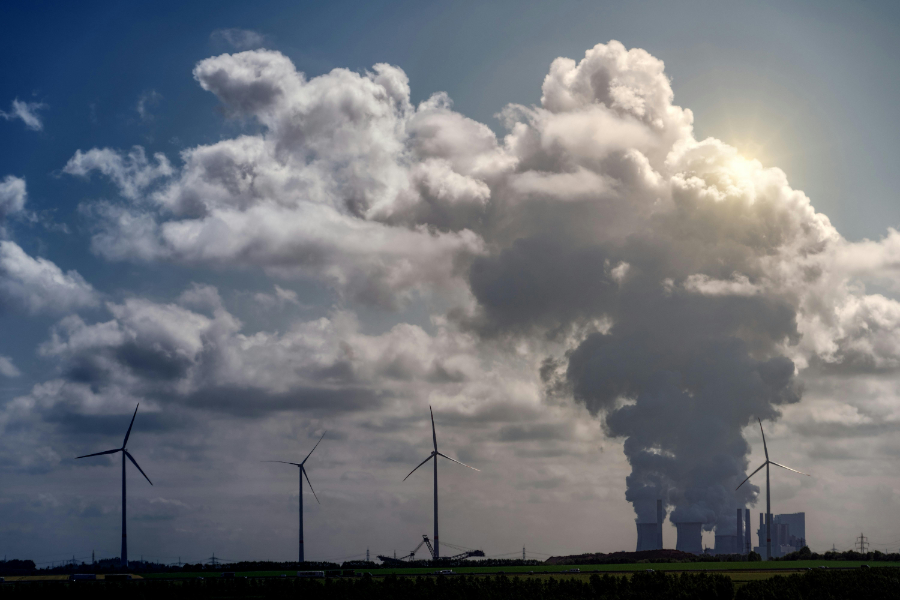
The research, which was published in the Environmental Science & Technology journal, evaluates the cost, emissions and health impacts from two different hypothetical scenarios – one in which global energy needs are entirely met by renewables, including wind, solar, geothermal, and hydropower, and the other, where reliance on fossil fuels continues (along with renewables, nuclear, and biomass energy), albeit with widespread carbon capture technology to reduce emissions.
While both situations are ‘unrealistically extreme’, according to the researchers, they suggest that ramping up investment in carbon capture instead of renewables would lead to higher CO2 emissions, greater energy demands, and higher overall social costs.
Carbon capture
“If you spend $1 on carbon capture instead of on wind, water, and solar, you are increasing CO2, air pollution, energy requirements, energy costs, pipelines, and total social costs,” commented lead study author Mark Jacobson, a professor of civil and environmental engineering in the Stanford Doerr School of Sustainability and Stanford School of Engineering.
“It’s always an opportunity cost to use clean, renewable energy for direct air capture instead of replacing a fossil-fuel CO2 source, just like it’s an opportunity cost to use it for AI or bitcoin mining. You’re preventing renewables from replacing fossil fuel sources because you’re creating more demand for those renewables.”
Energy demand
Jacobson and his co-authors also suggest that if the 149 countries included in the study phased out fossil fuels and biomass combustion, global energy demand could drop by more than 54%, while energy costs could fall by close to 60%, and ‘hundreds of millions of illnesses and 5 million deaths per year’ from air pollution would be prevented.
“You can have the most efficient way of removing CO2 from the air, but that does not change the efficiency of combustion,” Jacobson added. “You’re keeping that inefficient energy infrastructure the same.
“It’s much cheaper and more efficient just to replace the fossil source with electricity or heat provided by a renewable source.” Read more here.