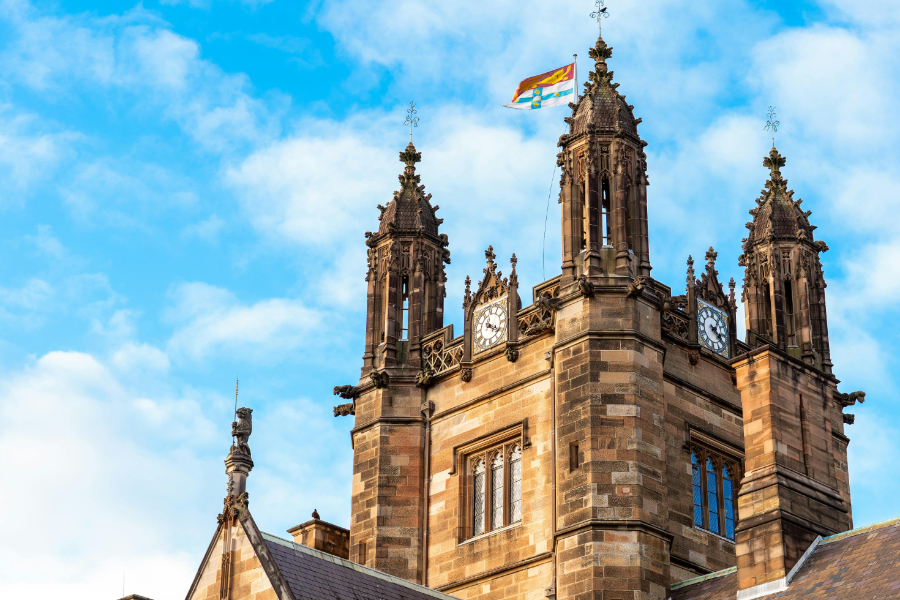
A new study by the University of Sydney (pictured) has uncovered a new, efficient way to produce ammonia – using artificial lightning to produce it from thin air.
According to the researchers, this process could significantly reduce the environmental impact of ammonia production. Most ammonia is currently produced using the Haber-Bosch process, which is energy intensive and a significant producer of carbon emissions.
Ammonia is a critical component of fertilisers, supporting nearly half of the world’s food production.
“Industry’s appetite for ammonia is only growing. For the past decade, the global scientific community, including our lab, wants to uncover a more sustainable way to produce ammonia that doesn’t rely on fossil fuels,” commented lead researcher Professor PJ Cullen from the University of Sydney’s School of Chemical and Biomolecular Engineering and the Net Zero Institute.
“Currently, generating ammonia requires centralised production and long-distance transportation of the product. We need a low-cost, decentralised and scalable ‘green ammonia’.”
Cullen noted that the team has been working on ‘green ammonia’ production for six years.
“In this research we’ve successfully developed a method that allows air to be converted to ammonia in its gaseous form using electricity. A huge step towards our goals.”
Two-stage process
The University of Sydney’s team used plasma to ‘excite’ nitrogen and oxygen molecules in the air, with these molecules then passed through a membrane-based electrolyser that converts them directly into gaseous ammonia (NH₃), eliminating the need for energy-intensive conversion steps from liquid forms like ammonium (NH₄).
“This new approach is a two-step process, namely combining plasma and electrolysis,” Professor Cullen added. “We have already made the plasma component viable in terms of energy efficiency and scalability.
“To create a more complete solution to a sustainable ammonia productive, we need to push the energy efficiency of the electrolyser component.”
The team is now focused on making the overall process competitive with Haber-Bosch at scale. Read more here.