Ireland needs to accelerate its climate strategy, with a ‘focus on delivery of concrete actions within stated timeframes’, the OECD has noted.
‘Ireland is not on track to meet its 2030 greenhouse gas emission targets and needs to make faster progress in putting emissions on a sustained downward trend,’ it said.
‘Robust’ economy
According to the latest OECD Economic Surveys: Ireland 2025 report, Ireland’s economy ‘remains robust’, boosted by a strong labour market, however several structural challenges could derail future growth, including a shortage of housing, an over-reliance on corporation tax, an ageing population, and the need to meet ambitious climate goals.
On climate, the OECD notes that greenhouse gas emissions in 2023 were only 7.8% lower than in 2018, meaning the country needs to ‘shift from planning to faster implementation’ of climate plans to ensure that the 51% reduction by 2030 is still achievable.
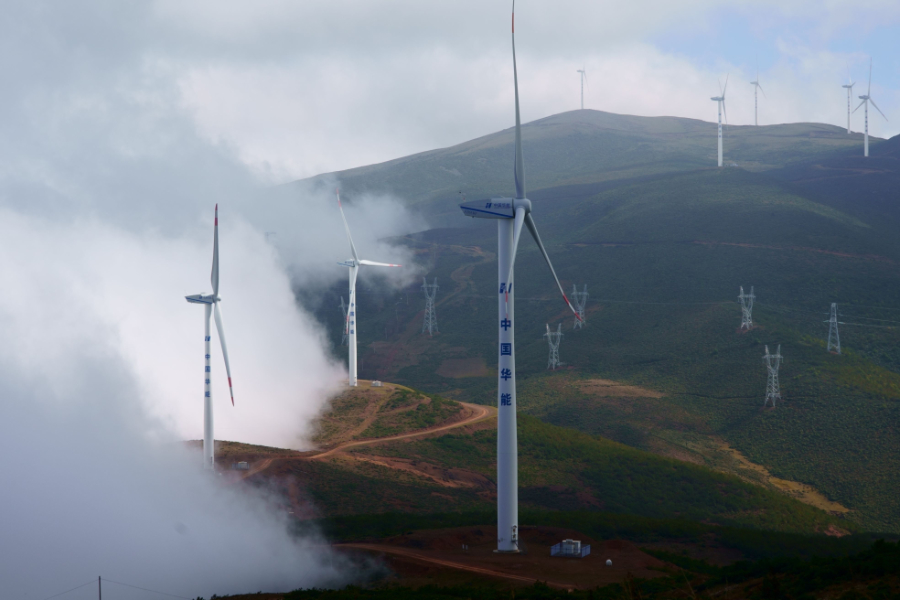
The report advocates for a faster permission and planning system, particularly in the energy sector, where Ireland needs to ‘expedite permitting and grid connection processes and upgrades in transmission, distribution and storage infrastructure’, to meet the demands of both the general population and the growing network of data centres.
Ireland should also ‘ensure that local climate plans provide sufficient spatial mapping and specific targets for renewable electricity’ as well as ‘prioritise planning applications related to offshore wind, including port infrastructure’, the OECD added.
Tackling emissions
The OECD also recommends a more uniform pricing of emissions across sectors and fuels to align with environmental goals. While Ireland’s carbon tax, currently at €63.50 per tonne of CO2, is set to increase gradually to €100 by 2030, the report notes that emissions from the agricultural sector, and from buildings are not adequately addressed by the tax.
It also points out that fossil fuel subsidies, which amounted to €3.5 billion in 2022, particularly for diesel used in transport, undermine the effectiveness of both the carbon tax and the country’s broader climate strategy.
The report advises Ireland to ‘further align carbon prices across sectors in line with their environmental impacts and phase out fossil fuel and other environmentally harmful subsidies’.
Efforts need to also be made to ‘improve the consistency’ of housing and transport policies to promote developments with easy access to transport links, and promote a ‘behavioural shift’ away from cars.
National Adaptation Framework
On the need to adapt to climate change, while Ireland currently has a National Adaptation Framework in place, this needs to be standardised, with the establishment of a ‘set of national adaptation indicators and timelines to monitor implementation’, the OECD noted.
This includes a need to accelerate the development of a common risk approach for the transportation and building sectors, and the expansion of insurance coverage to take into account climate-related disasters.
‘Greater collaboration between the government and insurance companies is needed to quantify climate-related risks and to collect and share information,’ it adds. ‘While insurance companies see climate change as a major risk, further work is required in order to fully integrate climate risk into risk management frameworks.’ Read more here.