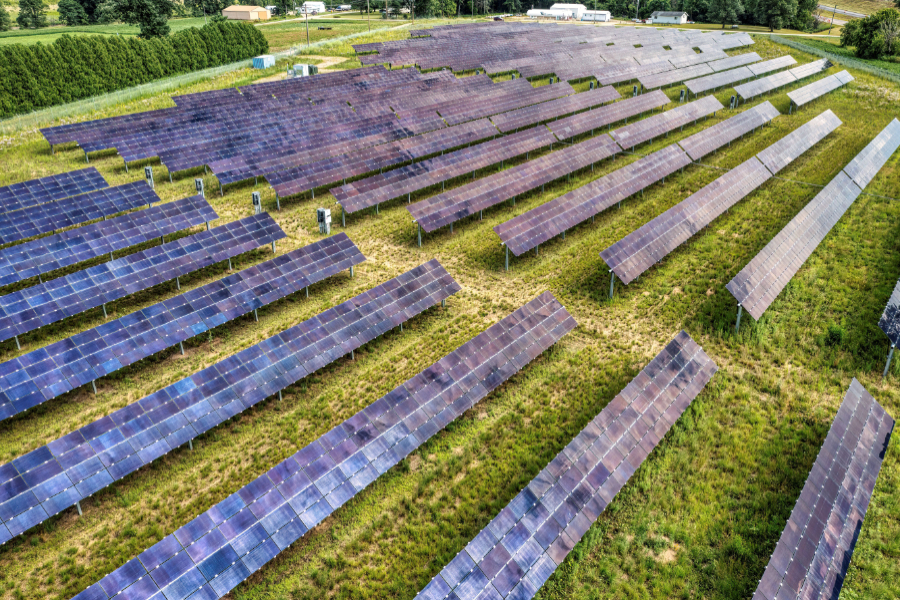
Despite the Trump administration’s pushback against clean energy, more than two thirds of the solar installations in the United States last year were in states won by the president in the 2024 election, a new report by the Solar Energy Industries Association (SEIA) has found.
According to the SEIA’s US Solar Market Insight 2025 Year in Review report, which was undertaken in collaboration with Wood Mackenzie, Texas, Indiana, Florida, Arizona, Ohio, Utah, and Arkansas ranked among the top states for solar additions in 2025.
‘Fast, affordable power’
“Solar and storage continue to dominate new capacity additions to the grid despite policy headwinds,” commented Darren Van’t Hof, interim president and CEO of the Solar Energy Industries Association. “American households and businesses of all sizes are demanding solar and storage because they deliver fast, affordable power to help meet rapidly rising demand.
“Washington must deliver policy certainty for the market to work and to keep pace with growing energy demands. Without this certainty, less solar will get built and Americans will pay the price with higher energy bills.”
As the SEIA noted, the economics of solar ‘remain strong’, despite regulatory actions targeting the clean energy sector. It noted that the US is expected to add around 490 GW of new solar capacity by 2036, bringing cumulative installed capacity to nearly 770 GW.
A ‘monumental’ year
The report described the first year of the Trump administration as a ‘monumental’ one for domestic solar and storage, with cell production capacity continuing to grow, and module manufacturing increasing by more than 50%.
Texas led the way in terms of solar installations, adding 11 GW of capacity last year. Overall, 11 US states set annual installation records for solar in 2025, with 12 states adding more than 1 GW of new solar capacity. In Indiana, for example, nearly 3 GW was added, up from 1.6 GW in 2024.
Last September, the US Department of Energy drew criticism when it posted on X that ‘wind and solar energy infrastructure is essentially worthless when it is dark outside, and the wind is not blowing’. It’s a position clearly not held by most US states.
Wind and solar energy infrastructure is essentially worthless when it is dark outside, and the wind is not blowing. https://t.co/61rquLn5bg
— U.S. Department of Energy (@ENERGY) September 5, 2025
“It’s clear that solar will continue to be the dominant source of new power capacity in the United States, even as gas generation continues to grow,” added Michelle Davis, head of solar at Wood Mackenzie and lead author of the report. “Strong demand growth combined with escalating costs of new gas plants will allow solar to remain competitive, even without tax credits.” Read more here.