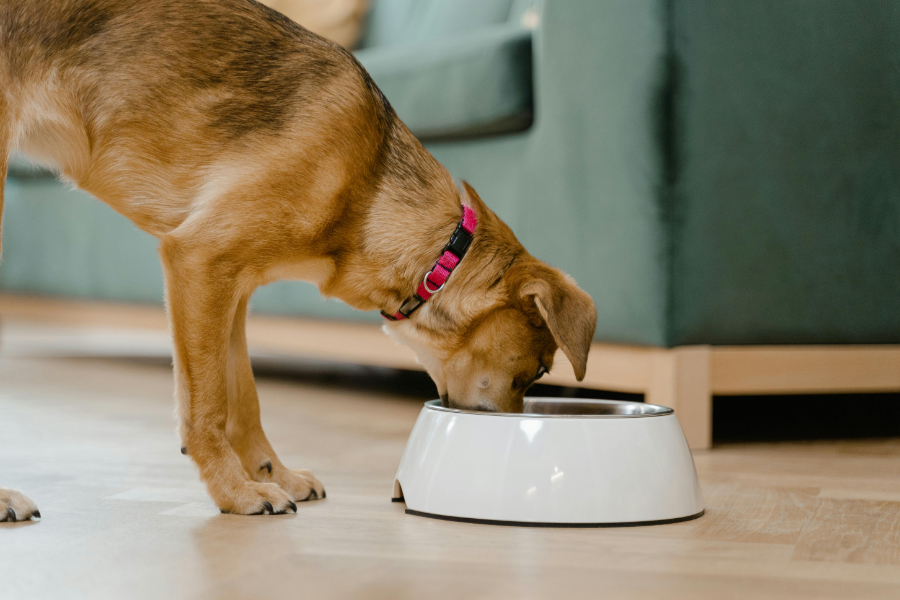
A new study by the University of Edinburgh and University of Exeter has suggested that dogs that are fed food with prime, meat-rich content have a bigger dietary carbon footprint – or pawprint – than those of their owners.
The study, which was published in the Journal of Cleaner Production, analysed close to a thousand dog food products sold in the UK, assessing the emissions associated with each product’s components. This included 526 ‘dry’ dog foods, 114 ‘dry grain-free’ foods, seven ‘dry plant-based’ foods, 197 ‘wet’ foods, 113 ‘wet grain-free’ foods, five ‘wet plant-based’ foods, and 34 ‘raw’ foods.
Prime meat
According to the findings, the emissions intensity of said products varied by as much as 65-fold across the products assessed, with products boasting prime meat having a higher impact.
As the researchers found, ingredient production for commercial dog foods on the UK market contributes between 2.3% and 3.7% of total UK food system greenhouse gas emissions, or between 0.9% and 1.3% of total UK emissions.
While the study doesn’t dispute the importance of meat consumption for dogs, owners keen to reduce the reduce the environmental impact of feeding their pets are encourage to check labels closely, particularly regarding the types and quantities of meat used.
‘More attention needs to be paid to the environmental impacts of feeding pets, including improved understanding of the ingredients supply chain and how moves to less impactful diets can be supported,’ the study noted.
Climate impact
“As a veterinary surgeon working on environmental sustainability, I regularly see owners torn between ideals of dogs as meat‑eating ‘wolves’ and their wish to reduce environmental harm,” commented John Harvey, from the University of Edinburgh’s Royal (Dick) School of Veterinary Studies. “Our research shows just how large and variable the climate impact of dog food really is.
“It’s important for owners to know that choosing grain-free, wet or raw foods can result in higher impacts compared to standard dry kibble foods. The pet food industry should make sure meat cuts used are of the types not typically eaten by humans, and that labelling is clear. These steps can help us have healthy, well-fed dogs with a smaller pawprint on the planet.” Read more here.