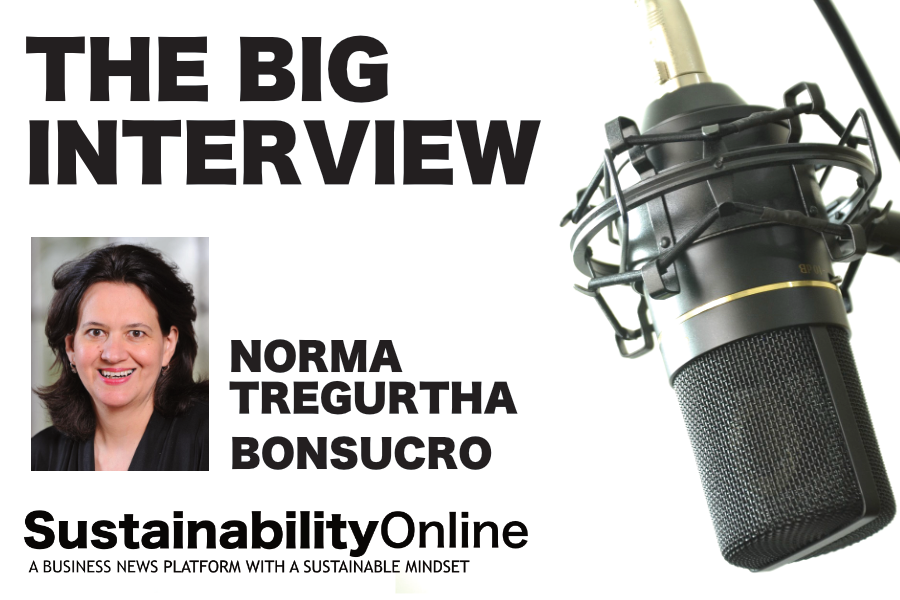
Sugar is one of the world’s most-traded commodities, with sugarcane accounting for 80% of global production. Bonsucro, a global non-profit certification body focused on accelerating sustainability in sugarcane production and supply chains, unites farmers, brands, and governments to drive ethical, economically viable practices.
As commodity sourcing has become more visible in discussions around trade, sustainability, and transparency, so Bonsucro’s role has gained in importance – offering an independent perspective, compared to industry or activist voices. Companies such as Coca-Cola have committed to sourcing Bonsucro-certified sugarcane as part of efforts to reduce the environmental impact of their supply chains.
SustainabilityOnline welcomed the opportunity to catch up with Norma Tregurtha, director of engagement and markets at Bonsucro. Against the backdrop of the EU’s tightening sustainability regulations, we started by asking her how this new wave of legislation is reshaping market access for sugarcane producers and buyers.
Raising the bar
“EU legislation is raising the bar on sustainability reporting and due diligence, and sugarcane supply chains are no exception,” she says. “Buyers need accurate, verified data on Scope 3 emissions, labour conditions, and environmental risks to comply with frameworks like the EU Corporate Sustainability Reporting Directive (CSRD) and the Corporate Sustainability Due Diligence Directive (CSDDD).”
As to the role that the London-headquartered firm can play in enabling such businesses to stay ‘in’, from an EU perspective, rather than be locked ‘out’, she adds that Bonsucro certification provides an “independent, sector specific framework that addresses key environmental and social risks and supports credible reporting. It strengthens risk management, gives buyers confidence in responsible sourcing, and helps producers monetise their sustainability performance. It also plays a key role in EU RED compliance.
“Bonsucro’s EU RED-recognised standard already enables ethanol producers to demonstrate that certified biofuels meet the EU’s strict criteria. As requirements tighten, certification becomes a practical tool for staying ‘in’ regulated markets rather than being left behind.”
Policy developments
While the EU Deforestation Regulation (EUDR) was recently postponed, it is coming, and the bloc has already considered expanding its remit to regions such as Brazil’s Cerrado, where sugarcane is grown. While sugarcane is not currently considered a high-priority crop under the EUDR, Bonsucro is helping the sector anticipate future policy shifts, so producers can be ready for potential changes to legislation.
“It’s true that sugarcane isn’t currently a priority commodity under the EUDR,” says Tregurtha. “However expectations around traceability and responsible sourcing are evolving fast. We’re helping the sector stay legislation-ready by strengthening traceability through our evolving Chain of Custody Standard, which will enable more advanced and reliable data-sharing. Our Production Standard already embeds risk-based due diligence and management plans, so producers can identify and address environmental and land-related risks before they become regulatory issues.
“Because we monitor emerging policy developments closely, we’re able to share insights with our members early, so they can adapt proactively rather than reactively. The combination of traceability, risk management, and foresight is what keeps the sector ahead of the curve.”
An increased role
As sugarcane’s role expands beyond food, new sustainability challenges are emerging. Tregurtha says Bonsucro is helping companies navigate these pressures, supporting broader net-zero and sustainability goals across sugarcane supply chains.
“Sugarcane is the world’s largest food commodity crop by volume, but its value goes far beyond sugar,” she says. “Bonsucro certified producers are certifying a growing range of products including molasses, bagasse, electricity, bioplastics and viscose, offering lower-carbon, circular alternatives. For example, sugarcane ethanol delivers up to 90% less greenhouse gas emissions than fossil fuels, making it important for road transport but also for sustainable aviation and marine fuels where demand is rising.
“Bonsucro supports the expansion of sugarcane-based ethanol and biofuels as credible climate solutions, but only when they’re produced responsibly with strong social and environmental safeguards.”
Supply chain transformation
While certification is at its core, Bonsucro has identified the need to move beyond certification to tackle systemic issues like climate, water and human rights. Here too, there are indications of deeper supply chain transformation taking place, with Tregurtha identifying the group’s Bonsucro Impact Fund and Bonsucro Credit Trading Platform as key tools for enabling the transition.
“Through the Bonsucro Impact Fund, we are seeing farms, mills and buyers collaborate on collective action projects that tackle systemic challenges, from climate resilience and smallholder inclusion to labour rights and water and biodiversity management,” she says. “Such projects help companies address root causes rather than symptoms.
“The Bonsucro Credit Trading Platform is another tool which makes it easy for both sugarcane producers and buyers to invest in sustainability. Sugarcane farms and mills implement certification and register their certified volume as tradable credits, which companies can purchase to meet their sustainable sourcing goals when physical supply is not easily available.”
Bonsucro is keen to “bridge the gap” between commitments and action, she adds, by providing the tools, data and standards needed to measure and reduce emissions. This includes its Production Standard, which sets clear requirements on emissions management, energy efficiency and soil health, and its ClimateCane Tracker, which helps producers measure emissions, identify reduction opportunities and set science-based targets.
“We’re also developing new tools to help producers and companies model climate scenarios, assess risks and track progress over time,” says Tregurtha. “By combining credible data with practical guidance, we’re enabling both producers and buyers to translate climate ambition into measurable, on the ground impact.”
As due dilligence laws increase scrutiny around labour conditions and worker safety, Bonsucro strives to ensure that sugarcane producers “move beyond legal minimums” and put in place systems that address both current and future human rights risks.
“For Bonsucro, this is not only a moral issue but a competitiveness one. As buyers demand verified social performance, strong labour practices are becoming a condition for market access in low-carbon and bio-based value chains,” Tregurtha adds.
Emerging sectors
Looking ahead to the remainder of the decade, Bonsucro is expanding its influence to new end-user sectors, including advanced biofuels and new bio based materials, with sugarcane playing an increasingly important role in supporting the transition to circular and low-carbon economies.
“By 2030, sustainable sugarcane has the potential to play a significant role,” says Tregurtha. “From Bonsucro’s perspective, the sector is moving beyond food and fuel toward a multi-product platform that supports aviation decarbonisation, sustainable materials, and climate-aligned supply chains.
“Sustainable aviation fuel (SAF) is the most immediate opportunity. Sugarcane ethanol is already a proven pathway, with strong lifecycle emissions reductions, but access to premium markets increasingly depends on credible sustainability assurance. Bonsucro certification is becoming a key enabler, particularly for Europe, where airlines and regulators require clear evidence of environmental and social performance.
“Circular economy applications are also scaling, from bioplastics to higher-value uses of bagasse. When producers invest in renewable energy, emissions monitoring, and traceability, they strengthen both sugar sustainability and readiness for advanced biofuel and biomaterial markets. Bonsucro’s role is to connect all these dots, helping sustainable sugarcane producers improve and prove their impact so they can access premium markets, and lead the transition to a truly circular, low-carbon future.”
Bonsucro will be holding its Global Week in New Delhi, India, from 9 to 13 March. For more information, log on to www.bonsucro.com.