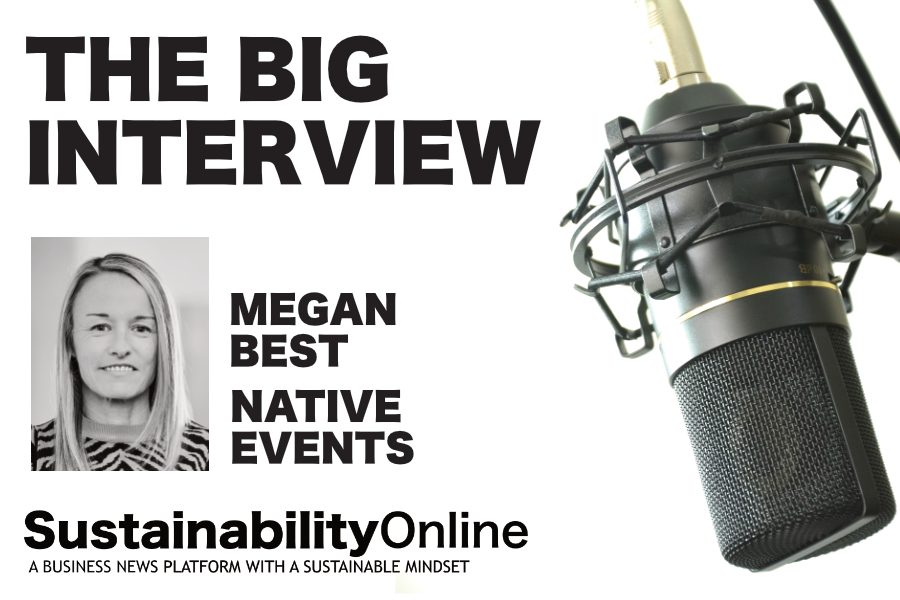
Native Events was launched in 2017 in response to the lack of sustainable solutions available in the Irish festivals and events sector, and in the years since, it has become a leading voice both in Ireland and overseas on how the events industry can transition to a greener, more efficient template.
Best, who is also the co-founder of Julie’s Bicycle Europe, a non-profit seeking to mobilise climate action in the arts sector, has made regular appearances at events across Europe to push the narrative on this topic in recent years. In April, she and her team hosted the first REALISE sustainability summit in Dublin to discuss common challenges facing the events sector, where SustainabilityOnline had the chance to catch up with her.
“We try to bring more sustainable solutions, sustainable infrastructure, or different kinds of approaches to the way we are producing events and festivals on this island,” Best says of Native Events’ work to date.
Building the brand
Native Events was borne out of Best’s role as operations manager of Body & Soul Festival (set to return this August under a new brand, A.Wake), which more than a decade ago was adopting some of the measures Native Events is now pushing – solar panels, reusable cups and so forth.
“We just wanted to do things differently,” she says. “We could see that this was happening in the UK and Europe, but it wasn’t really happening here. We were really banging our heads against a brick wall – when we introduced solar panels the first time, we brought them over from the UK. We weren’t saving any carbon emissions by doing that, but we wanted to show that it could be done.”
Best teamed up with Body & Soul colleague Michael Soro to launch Native Events, in order address these gaps and push the industry towards more eco-friendly practices.
“We founded the business because the infrastructure didn’t exist here, or it didn’t at the time,” she says. “Particularly in the events and festivals industry and in that large-scale music space, there was nothing happening. That’s starting to shift now.”
Change of mindset
Initially, Native Events faced resistance from the events industry – with most established promoters reluctant to change their established practices – but over time, practical solutions were forged that led many sector players to take notice.
“At the start, everybody just wanted to do things the way they’d always done them, because it was the quickest way to do things,” says Best. “It might be messy, and it might be complicated, but there’s a perception among large-scale event producers and promoters that the way they’ve always done it is the best way to do it.
“What we discovered through our learnings and working with overseas events, is that in fact, there are huge savings to be made by doing things in a more detailed way, with a more detailed plan.”
One notable example was at the 2016 at the Body & Soul Festival, where Native Events implemented a smart power plan that resulted in a significant saving on the event’s energy bill. Incentivising better practices among vendors helped ensure alignment with sustainability goals.
“This involved looking at all of the energy users across the site, exactly what they’re plugging in and when they’re plugging it in, and making a really detailed plan of what generators to use where in order to power exactly that,” Best explains. “Previously it would have been ‘here’s a map, here’s what’s happening, let’s just put in as many generators as we need, as quickly as possible. But by planning it carefully, we saved 20% on the diesel bill from the year before, for the same-sized show.”
Changes in legislation, coupled with the impact of the COVID-19 pandemic, which heightened awareness of environmental fragility, provided a further boost. Ireland’s Climate Action Plan, which mandates that institutions like the Arts Council and Screen Ireland develop their own climate action roadmaps, opened the door for Native Events to support their efforts.
“On the back of that, they need to roll out training, engagement, resources, and information, and we are really well-positioned to respond to that,” says Best.
Allied to this, last year Native Events partnered with the Regional Waste Management Planning Offices and Ireland’s Department of Environment, Climate and Communications to launch the first Guide to Plastic-Free Festivals and Events, a resource to enable event organisers, vendors and stakeholders to reduce plastic waste and embrace circular economy practices.
Collaborative approach
According to Best, while the initial investment in sustainable infrastructure and equipment can seem costly, this can be offset – and then some – by the cost savings and efficiency improvements that arise from this shift. By working collaboratively with other events on these sort of non-competitive factors, this rising tide of sustainability can lift all boats, and present new opportunities for innovation.
“There is a perception that there is an investment cost to move into a different kind of infrastructure, to move into different kinds of equipment, and to invest in sustainability, and that you get a return on investment over a longer time frame,” says Best. And there is definitely truth in that.
Healthy competition
“But the real business opportunity is in the collaborations, networks, and partnerships that are springing up everywhere as part of this. Because the only way to tackle all of these issues and start doing things differently is to start working together. It’s how businesses grow.”
This shift in thinking is also leading to healthy competition in the music industry, with international acts such as Coldplay and Massive Attack pioneering eco-friendly initiatives, albeit in different ways, such as using advanced battery technology to reduce their reliance on generators and lower their carbon emissions.
“Now, what we’re seeing in the industry is that these two acts are almost competing against each other,” says Best. “Every time one of them produces a report, the other one comes up with new technology or does something different. That’s what we want to see. There’s nothing wrong with a bit of healthy competition in this area, because it’s pushing the industry in the right direction.”
Major events
Closer to home, major festivals such as Electric Picnic have a significant influence on Ireland’s events industry, however Best believes that more work needs to be done to ensure these type of events use their leverage to drive significant industry change.
“There is definitely a movement in the right direction, from all sizes – from small to mid to large,” says Best. “The large-scale promoters do have more responsibility, but they’re not holding themselves accountable enough yet, I would say. They have such a large market share, both in terms of being able to deal with their suppliers and put certain things into their contracts for suppliers, as well as the resources to do things differently.
“I do get asked a lot about campsite waste, and these visible, tangible effects of large festivals, and yes, it’s a complicated beast when you have 85,000 people in a field. But the conversations and the routes to changing that are happening – at least in the background. It takes time.”
For event organisers that are eager to take the sustainable leap, Best’s advice is simple – talk to your team. By engaging in conversation about where the appetite for change lies, organisers have the opportunity to develop a more ecosystemic approach, rather than piecemeal gestures.
“It has to be a collective action,” she says. “It has to be something that everybody has a little bit of ownership of. There’s no point in one person coming in, and making a specific change to the bars, or introducing a three-bin system instead of two – these sort of low-hanging fruit areas.
“It’s important to have a good chat with everybody on the team who’s involved with creating the event, and then to start to explore where the appetite is, and where the real pain points are. Because they are the ones that are going to be implementing those changes. You have to get everybody on board.”
Thanks to Megan for the interview. Find out more about Native Events at www.nativeevents.ie.