The cement industry is well-placed to address the challenge of non-recyclable and non-reusable waste, leading industry organisations have said in a statement.
The statement, by the Global Cement and Concrete Association (GCCA), the European Composites Industry Association (EuCIA), the International Solid Waste Association – Africa, the Mission Possible Partnership, and the Global Waste-to-Energy Research and Technology Council (WtERT), calls for stronger policy support to ‘unlock the full potential of cement industry co-processing’ as a sustainable waste management solution.
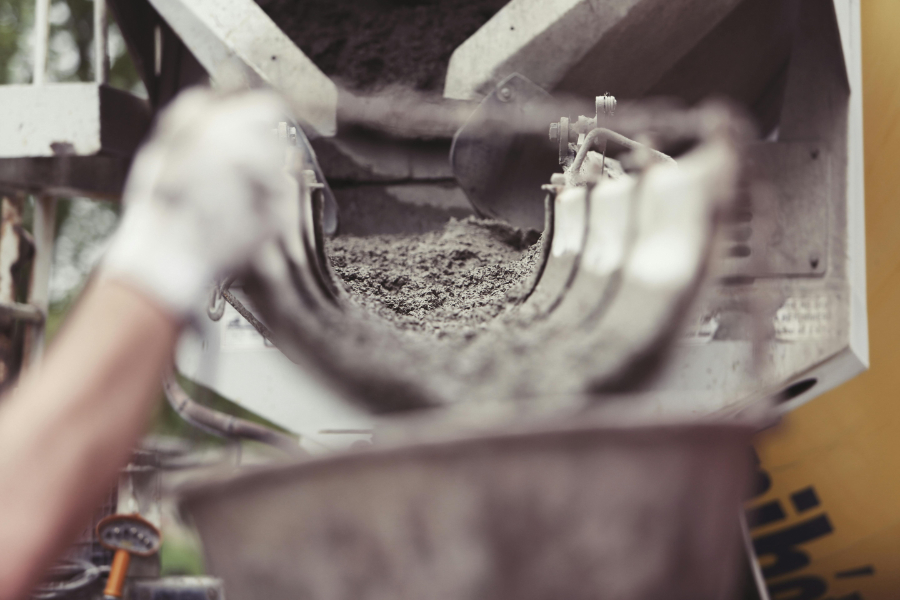
Co-processing in cement production uses waste to replace fossil fuels in heating cement kilns, while any remaining ashes are simultaneously recycled into the building material compound itself – a ‘zero-waste solution’ that creates a bridge between landfilling and recycling, the groups note.
Circular solution
“Cement industry co-processing is a safe, effective and circular waste management solution – a win-win for the environment and local communities,” commented Thomas Guillot, chief executive of the GCCA.”However, despite its proven benefits, wider adoption of co-processing depends on effective regulatory frameworks and supportive public policy.
“Some cement kilns already substitute more than 90% of fuels with waste through co-processing, whereas many parts of the world have no established practises at all. That is why we are renewing our efforts. along with other organisations. and calling for recognition and support of our industry’s positive role and potential.”
The groups’ joint statement calls for greater recognition of co-processing in waste policy frameworks; greater incentivisation of waste collection, sorting, and pre-treatment to ensure ‘consistent, high-quality waste streams’; the introduction of financial incentives to support the growth of co-processing in the cement industry; and the development of public-private partnerships to share risk and support long-term project viability.
The waste challenge
The groups note that waste generated by human and industrial activity totals around 11.2 billion tonnes annually, while the amount of unmanaged municipal solid waste generated annually could double to 1.6 billion tonnes by 2050.
“Waste generation and mismanagement are placing growing pressure on communities, ecosystems, and the global climate,” Guillot added. “When waste is dumped in streets, openly burned, or leaks into rivers and oceans, it causes severe environmental damage and poses serious health risks. Even in regions with waste management systems, large volumes of waste continue to end up in landfills, where biological and chemical degradation contaminates soil and releases methane, a greenhouse gas significantly more potent than carbon dioxide.”
According to the signatories, co-processing represents a ‘practical, scalable and sustainable response’ to dealing with the growing waste challenge. Read more here.