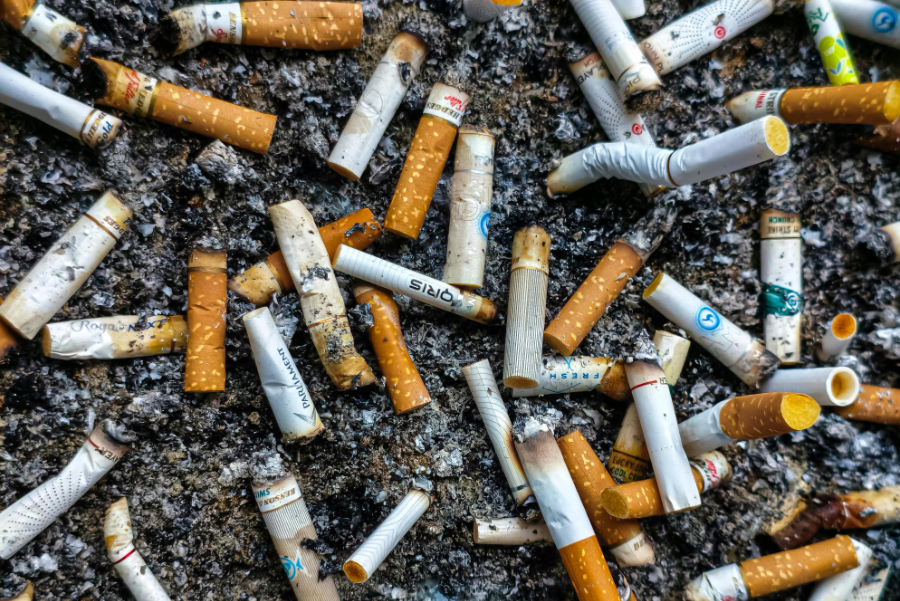
The extent of microplastic pollution from cigarette filters is the topic of a new study by researchers at the University at Buffalo, with their findings showing that one cigarette filter can release up to two dozen microfibres almost immediately upon contact with water.
Over a period of 10 days, one filter can shed between 63 and 144 microfibres, depending on water movement, the researchers noted.
The rapid release of these microfibres, which are typically made of cellulose acetate, had not been examined before, they added. Each cigarette filter contains more than 10,000 microfibres in total.
‘Cannot be ignored’
“Microfibres in natural waters have been primarily associated with laundry and clothing. This work shows that microfibres from littered cigarette filters cannot be ignored,” commented the study’s corresponding author John D. Atkinson, Scott and Coleen Stevens Chair in Engineering Sustainability and associate professor in the UB Department of Civil, Structural and Environmental Engineering.
In undertaking the study, the researchers conducted a series of 10-day lab experiments, placing cigarette butts in water under three conditions – still water (0 revolutions per minute, or rpm), moderately moving water (80 rpm) and more intense moving water (200 rpm).
Extent of the problem
Based on their findings, and using conservative assumptions, they calculated that somewhere between 71 million and 1.4 billion microfibres from cigarette butts may be released into New York’s waters each day.
“Direct release of pre-contaminated microfibres is unique,” Atkinson added. “We typically consider microplastics problematic because of the chemicals they adsorb in the environment, but these are released with contamination. You get both physical pollution of the fibres and chemical pollution of everything that’s stuck to them. In a way, this is a new ‘bad thing’ associated with cigarettes.”
The researchers point to several interventions and behavioural change campaigns that could reduce the number of cigarette butt microfibres that are released into waters.
“Our work can inform strategic placement of receptacles for cigarette butts,” Atkinson noted. “Adding filters to collect cigarette butts in storm sewers could also be beneficial.”
The study, Cellulose acetate microfiber release from cigarette filters in agitated water, was published in the Journal of Hazardous Materials. Read more here.