The expansion of drylands – including hyper-arid, arid and semi-arid lands – around the world needs to act as a “wake-up call” for the international community, advisor to the UNCCD COP16 Presidency, Dr. Osama Faqeeha, has said.
This week, the UNCCD released a report that indicated that three quarters of all land on earth experienced a drier climate in the three decades leading up to 2020, compared to the previous 30 years.
The report also found that the number of people living in drylands more than doubled to 2.3 billion in 2020, compared to 1.2 billion 30 years earlier.
‘Robust and lasting action’
“The expanse of drylands is a worrying global trend” Faqeeha, who is also Saudi Arabia’s environment minister, said. “This report by the UNCCD must serve as a wake-up call for the international community to deliver robust and lasting action on land degradation, desertification, and drought.
“Innovation is a huge enabler and can help drive efficiencies that reduce the strain on essential resources, from cutting water and energy consumption to preserving food security. It is essential to increase access to science, technology and innovation around the world.”
Science Technology and Innovation Day
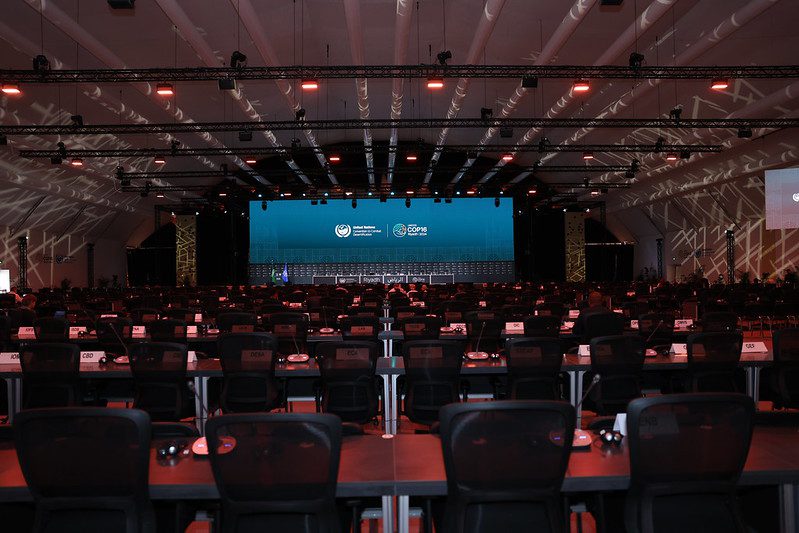
Faqeeha’s comments came as COP16, which is taking place in Riyadh, hosted Science Technology and Innovation Day, which featured high-level dialogues on the role of science and intelligence in healing the planet.
Among the speakers on the day, Dr. Munir M. Eldesouki, assistant minister at the Saudi Ministry of Communications and Information Technology, stressed the importance of science and technology in driving positive change.
“We stand at a critical crossroads, facing profound environmental challenges, but equipped with unprecedented opportunities for change,” he said. “Science and technology are not merely instruments, they are our foremost allies in securing a sustainable future.”
Elsewhere, an open UNCCD dialogue session heard from civil society organisations on how to translate science and data into policy and action, enhancing partnerships between key environmental stakeholders, including policymakers, scientists and impacted communities. Read more here.