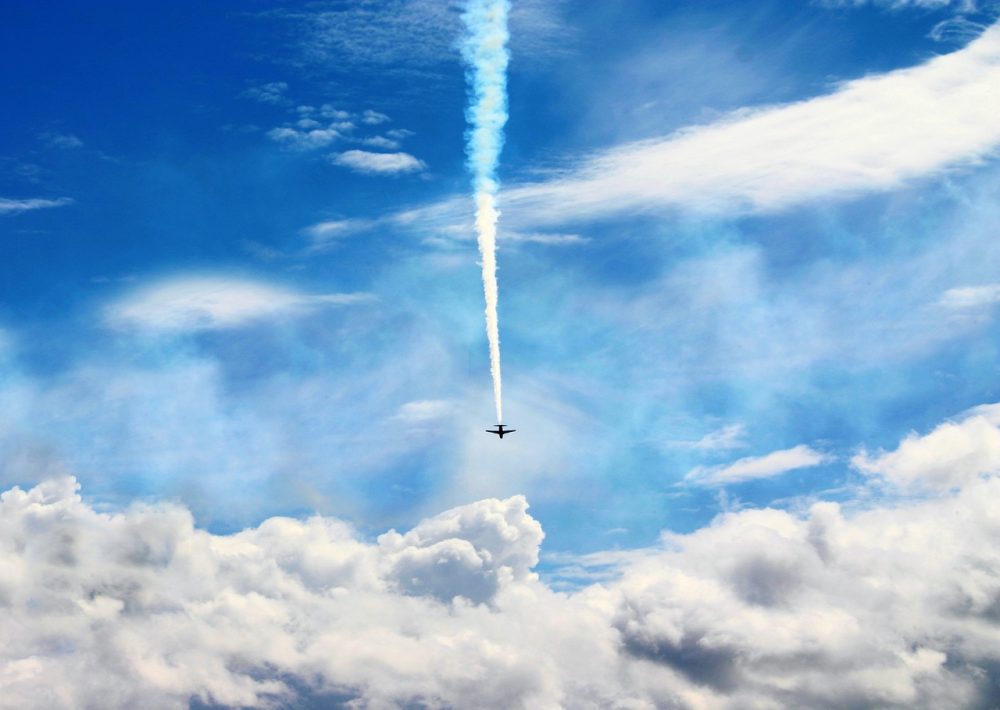
A coalition of over 50 aviation and climate scientists has called on policymakers to address the global warming effects of contrails, the white lines left in the sky by passing planes.
The climate impact of contrails was first recognised by the IPCC 25 years ago, however the experts said in a letter that efforts to mitigate their impact have to date been minimal.
Flight path adjustments
According to recent research from Transport & Environment (T&E), minor flight path adjustments for a small percentage of flights could significantly reduce contrail-related warming, with just 3% of flights currently responsible for generating 80% of contrail warming.
These changes could cost less than €4 per flight, the group suggest, and offer a climate benefit at least 15 times greater than the CO₂ emissions from the extra fuel used in rerouting.
Given that contrails have short-lived warming effects, these minor changes could yield immediate climate benefits, aiding efforts to meet Paris Agreement goals and bolstering sustainable transport commitments, the experts state.
The experts have also called for greater awareness among the public and policymakers about the climate impact of contrails, as well as the establishment of a robust policy framework to monitor and reduce them, which would include large scale contrail-avoidance trials, supported by more research.
A climate opportunity
“Contrails represent aviation’s climate opportunity of the decade. There are very few climate solutions that can be implemented so quickly, at so little cost,” commented Krisztina Hencz, aviation policy manager at Transport & Environment (T&E).
“The problem was recognised by the UN 25 years ago. But to date, the problem has received very little attention. So it’s time for policymakers to take control of this issue and implement the solutions they have at hand. It’s a win win for them and the planet.”
While avoiding contrails would lead to notable climate benefits, the experts also state that this does not lessen the urgency to reduce the overall emissions of the aviation sector.
“Preventing contrails has turned out to be among the lowest hanging fruit among our options to stop the rise in global temperatures,” added Professor Anthony Patt, professor of climate policy, Department of Environmental Systems Science at ETH Zürich. “However, because safety dictates that air traffic be tightly regulated, the minor changes to flight routes that are needed require coordinated government leadership.” Read more here.