While compost derived from food waste represents an effective means of diverting waste from landfill, it is not as effective as traditional commercial peat moss–based potting mix when it comes to seedling production, a recent study by the University of Arkansas’ System Division of Agriculture found.
According to the US Food and Drug Administration, an estimated 30% to 40% of the United States’ food supply ends up as waste, with the researchers seeking to determine whether said waste could ‘lay the foundation’ for growing future crops.
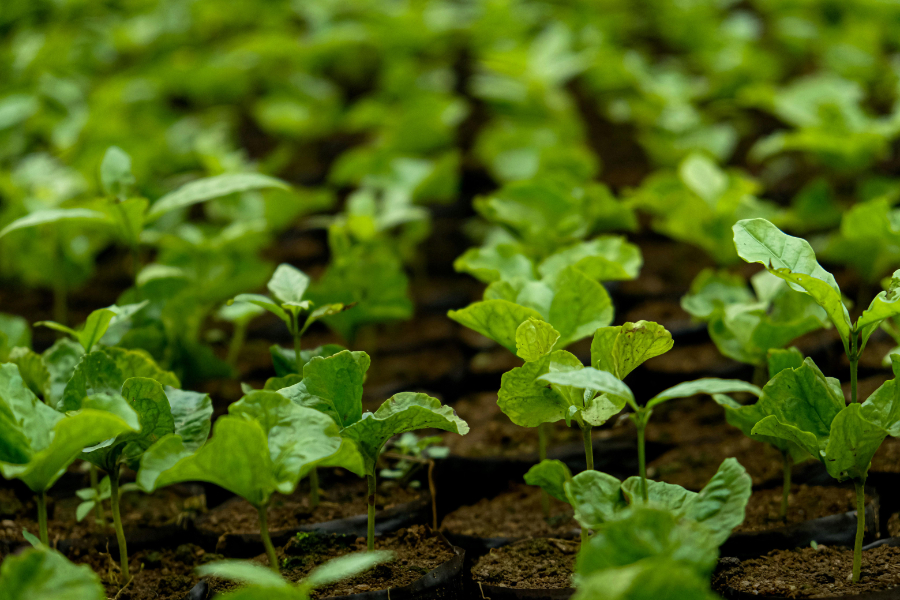
The researchers compared seedling germination, growth, and nutrient uptake using various different forms of compost – pure food waste compost, pure commercial peat moss–based potting mix, and blends of the two at different ratios. The study focused specifically on tomato and watermelon seedlings.
Organic substrate
“It’s [about] capturing food waste that would otherwise go to landfill and produce greenhouse gases and cause harm to the environment in some capacity,” commented Matt Bertucci, assistant professor of sustainable fruit and vegetable production with the University of Arkansas System Division of Agriculture.
“Instead, we are utilising it to generate an organic substrate, an organic amendment compost that can then be utilised for propagating seedlings.”
Monitoring growth
As the study found, seedlings grown in pure food waste substrate had a lower rate of emergence, as well as reduced growth compared with those grown in commercial potting mix. In addition, biomass accumulation was also lower in the pure compost treatment.
It noted, however, that mixtures containing less than 50% food waste compost performed better than pure compost and helped to support improved seedling emergence and growth. The researchers thus determined that food waste is suitable as part of a substrate mix.
“Compost is the sweet spot for sustainability,” Bertucci added.
Co-authors on the study included horticulture and food science researchers within the University of Arkansas, while funding was provided through an Arkansas Specialty Crop Block Research Grant, with additional support from the US Department of Agriculture’s National Institute of Food and Agriculture.
The study was published in the HortTechnology journal, and can be found here.