Global renewable energy capacity is expected to more than double by 2030, the International Energy Agency has said in its Renewables 2025 report, however it has scaled back its end-of-decade growth expectations due to policy changes in the United States and China.
According to the IEA, global renewable energy capacity will rise by 4,600 GW between now and the end of the decade, down from the 5,500 it predicted last year.
However, this growth is still equivalent to the combined current generation capacity of China, the European Union and Japan, it noted.
The IEA revised its forecast downwards ‘mainly due to policy changes in the United States and in China,’ it said.
‘The early phase-out of federal tax incentives along with other regulatory changes in the United States lowered our growth expectations for renewables in the US market by almost 50% compared with last year’s forecast. China’s shift from fixed tariffs to auctions is impacting project economics, resulting in a reduction in our forecast for renewables’ growth in the Chinese market.’
Leading the charge
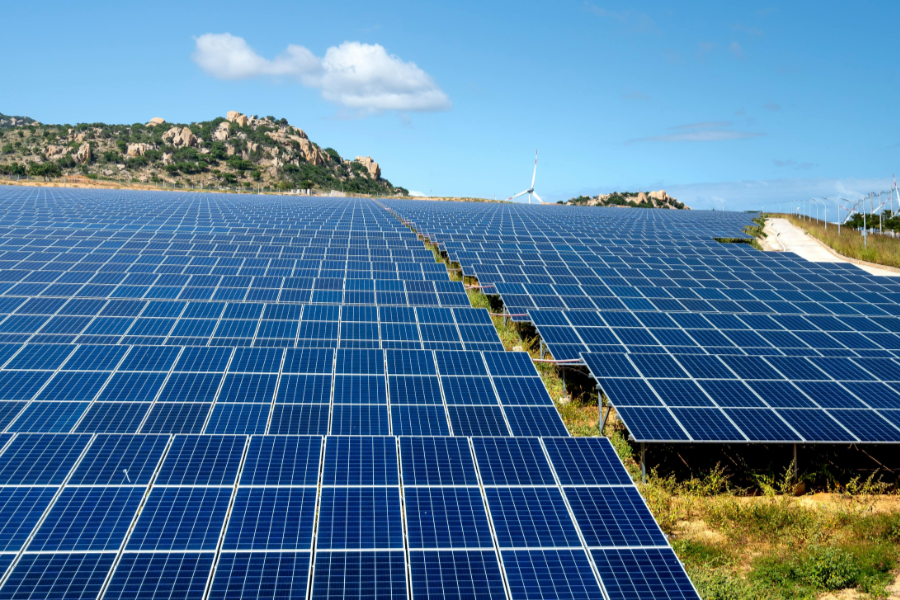
Solar is expected to account for 80% of the global renewable energy growth between now and 2030, driven by lower costs and faster permitting timeframes, followed by wind, hydro, bioenergy and geothermal.
The IEA noted that geothermal installations are expected to hit ‘historic highs’ in several markets, including the United States, Japan, Indonesia, along with a number of emerging and developing economies. Growth in pumped-storage hydropower is expected to be 80% faster over the next five years, compared with the decade to date.
On a geographic level, emerging economies across Asia, the Middle East and Africa are expected to contribute significantly to the acceleration in renewable capacity, driven by cost competitiveness and stronger policy support from governments. India is set to become the largest renewables growth market, after China, and should ‘comfortably’ reach its 2030 renewables target, the IEA added.
Growth in renewable capacity
“The growth in global renewable capacity in the coming years will be dominated by solar PV – but with wind, hydropower, bioenergy and geothermal all contributing, too,” commented IEA executive director Fatih Birol. “Solar PV is on course to account for some 80% of the increase in the world’s renewable capacity over the next five years. In addition to growth in established markets, solar is set to surge in economies such as Saudi Arabia, Pakistan and several Southeast Asian countries.
“As renewables’ role in electricity systems rises in many countries, policy makers need to play close attention to supply chain security and grid integration challenges.” Read more here.