A new initiative to ‘bridge the existing gaps in supply chain heat decarbonisation’ has been launched by AstraZeneca, Secaro and ERM.
The Clean Heat Program, as it is known, seeks to address the ‘strategic risk’ of industrial heat, which thus far has proven difficult to address due to the complexity and cost of transitioning away from fossil-fuel based heat.
While most businesses remain focused on climate goals – with 65% of companies having established net zero climate goals and the number of firms adopting SBTi initiatives increasing 14% last year – heat decarbonisation has proven technically challenging. According to the initiative’s partners, industrial process heat accounts for around 18% of global greenhouse gas emissions each year.
‘Business critical’
“Decarbonising heat is now business critical,” commented Emily Prior, chief growth officer at Secaro, a supply chain intelligence programme. “It is an essential way to protect revenue, reduce exposure to energy price shocks, and stay ahead of regulation and investor and customer expectations.”
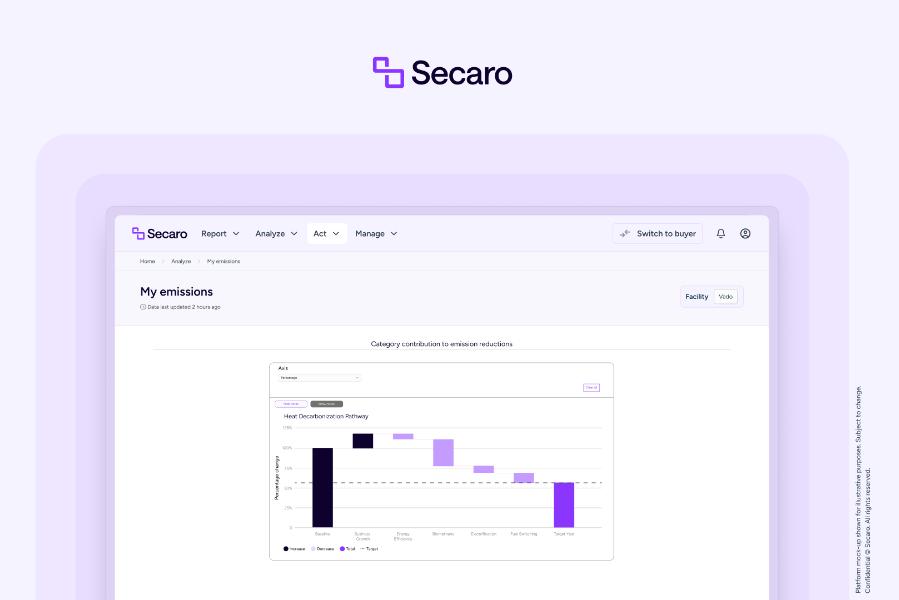
The Clean Heat Program has been developed to support companies and suppliers in identifying and implementing practical solutions to reduce emissions from heat generation, incorporating supply chain data, technical analysis and financing guidance to assist firms in moving beyond early assessment stages into implementation.
“Many organisations are looking at heat in isolation, comparing the current gas bill to a full switch to biomethane for example,” Prior added. “In order to succeed in decarbonising supply chain heat, businesses need to take a more holistic approach that starts with efficiency, and then moves to decarbonised fuels, so that the economics work.
“As part of this program, businesses will have access to a range of financing solutions, including access to the EU-based heat decarbonisation fund and off-balance-sheet financing partners.”
Founding partners
Global pharmaceutical company AstraZeneca has joined the initiative as a founding partner, with the firm committing to collaborating with peers, suppliers, and major buyers to address the issues that are delaying heat decarbonisation.
Sustainability consultancy ERM, meanwhile, will provide “technical expertise” to support Secaro’s data, which will help to “accelerate the delivery of heat decarbonisation projects that have historically struggled to move beyond preliminary assessment,” added Jon Hughes, partner at ERM.
“The Clean Heat Program will provide clients with the practical implementation support required to decarbonise industrial heat while strengthening resilience, reducing risk, and unlocking value across the supply chain.”
Organisations that are interested in joining the first cohort of founding members should register their interest by 31 March at https://secaro.io/clean-heat.