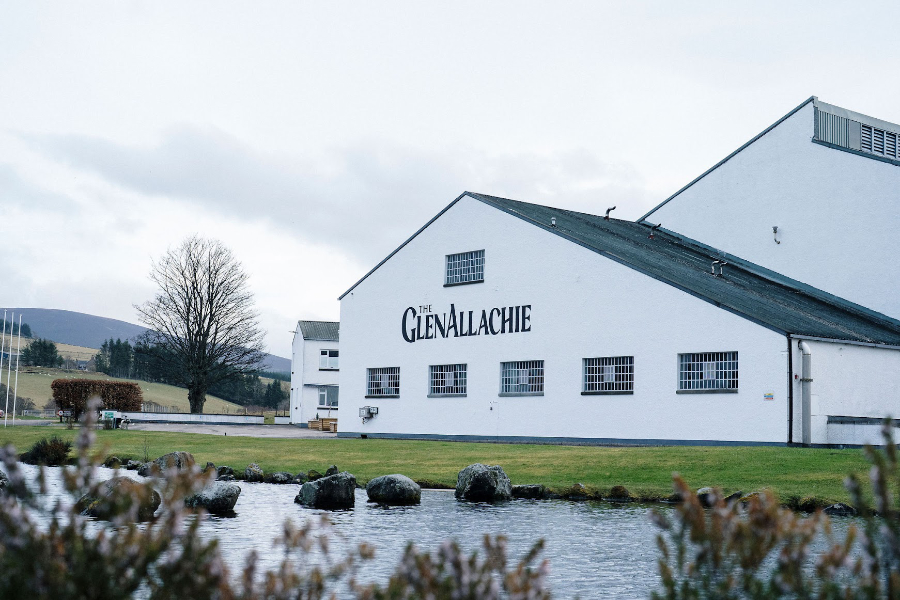
Scotland‘s The GlenAllachie distillery has announced the installation of a new distillation technology that will enable the whisky maker to reduce energy use in the wash distillation process by more than 50%.
The Speyside-based distillery uses Mechanical Vapour Recompression (MVR) to recycled waste heat generated during the distillation process to reheat the stills. The MVR system was developed in partnership with Briggs of Burton and is supported by the Scottish Industrial Energy Transformation Fund (SIETF)
According to the distillers, the annual carbon emissions reduction using the system will be comparable to the energy consumption of around 825 homes.
Energy consumption
Commenting on the investment, Billy Walker, owner of The GlenAllachie, said that the company’s pot stills account for 60% of its total energy consumption.
“That’s why finding a more sustainable way to power them has been such a priority,” he commented. “Support from the SIETF has made it possible for us to take on a project of this scale and this new technology, combined with our investment in on-site solar panels, has enabled us to shrink our carbon footprint even further.
“Reaching this milestone brings us ever closer to realising our vision for The GlenAllachie’s future. This is not about increasing capacity, it’s about building the next chapter of The GlenAllachie’s legacy, rooted in quality, tradition, and innovation.”
Environmental projects
The distillery’s environmental efforts support the Scotch Whisky Association’s 2040 net-zero target. Along with the new MVR system, projects implemented by the company include the installation of an energy-efficient burner that can run on hydrogen, a heat recovery system, the use of bio-gas processing, and the introduction of electric forklifts.
Elsewhere, biodiversity measures, including the maintenance of beehives on the estate, have also been implemented, alongside the use of FSC-approved labels and recyclable bottles.
Briggs of Burton, an engineering firm with roots dating back to 1732, provided the design, installation, and commissioning of the MVR system. Read more here.