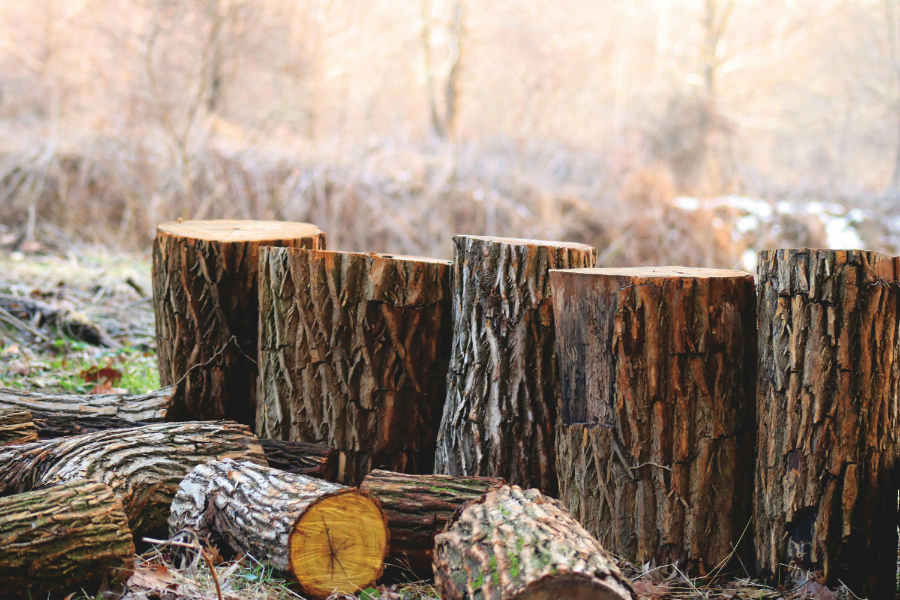
A new study by researchers at Chalmers University of Technology in Sweden has identified the food commodities that are doing the most damage when it comes to deforestation, with staple crops such as maize, rice and cassava together responsible for around 11% of global agriculture-driven deforestation.
In contrast, if cocoa, coffee and rubber are taken together, they account for less than 5% of deforestation, the study, Global patterns of commodity-driven deforestation and associated carbon emissions, found.
Beef leads the way
By far the biggest impact on deforestation, however, is from the beef industry, which is responsible for two fifths (40%) of global deforestation.
Palm oil, the production of which is largely concentrated in Southeast Asia, is responsible for 9% of commodity-linked deforestation, while soybeans, largely situated in South America, is responsible for 5%.
“Deforestation’s links to food production have long been studied, but have often focused on some products, such as beef, soybeans and palm oil, which are well known in the context of deforestation; and some countries in the world, such as Brazil or Indonesia,” commented Chandrakant Singh, researcher at Chalmers University of Technology and lead author of the report.
“In our study, we’ve combined extensive satellite data on land use with agriculture statistics in a way that gives us the most comprehensive and accurate picture yet of what is driving deforestation worldwide.”
Forest loss
In compiling the study, which was published in Nature Food, researchers analysed 179 countries and 184 commodities over the period 2001–2022. As they estimated, around 122 million hectares of forest were lost during this period, with more than 80% of this deforestation occurring in tropical regions.
Brazil alone accounted for nearly a third of global deforestation (32%) during the period, followed by Indonesia, China and the Democratic Republic of Congo.
“The debate on deforestation has circulated a lot around how people in rich countries like ours cause deforestation with our commodities imports, and this is absolutely important to get to grips with,” added fellow author Martin Persson. “But we mustn’t forget that a large proportion of deforestation is driven by agricultural production for domestic markets. So to really reduce deforestation, we must also take action in the producer countries.”
Deforestation-linked emissions
The study also evaluated the extent of emissions linked to deforestation, estimating that land clearing for agriculture and forestry products generated around 41 billion tonnes of carbon dioxide over the study period. This equated to around 5% of global emissions.
The researchers plan to broaden their analysis beyond food and agriculture, including assessing the impact of the mining and energy sector, which is a “major driver of both direct and indirect deforestation,” Singh added. “By broadening the analysis, we can get a more complete picture of which economic activities are putting pressure on forests around the world.” Read more here.
Commodities Driving Global Deforestation (%)
| Commodity | Share (%) |
|---|---|
| Beef | 40 |
| Palm oil | 9 |
| Soy beans | 5 |
| Maize | 4 |
| Rice | 4 |
| Cassava | 3 |
| Cocoa | 2 |
| Coffee | 1 |
| Rubber | 1 |
Countries Responsible for the Largest Shares of Global Deforestation (%)
| Country | Share (%) |
|---|---|
| Brazil | 32 |
| Indonesia | 9 |
| China | 6 |
| Democratic Republic of Congo | 6 |
| USA | 5 |
| Ivory Coast | 3 |