Italian pasta maker Barilla has highlighted the progress it is making in reducing its water footprint, and the switch to recyclable packaging across its portfolio.
In terms of water management, Barilla noted that the total volume of water recycled and reused across its operations increased by 45% in 2024, compared to 2022, while the rise in water-stressed areas was as high as 164%.
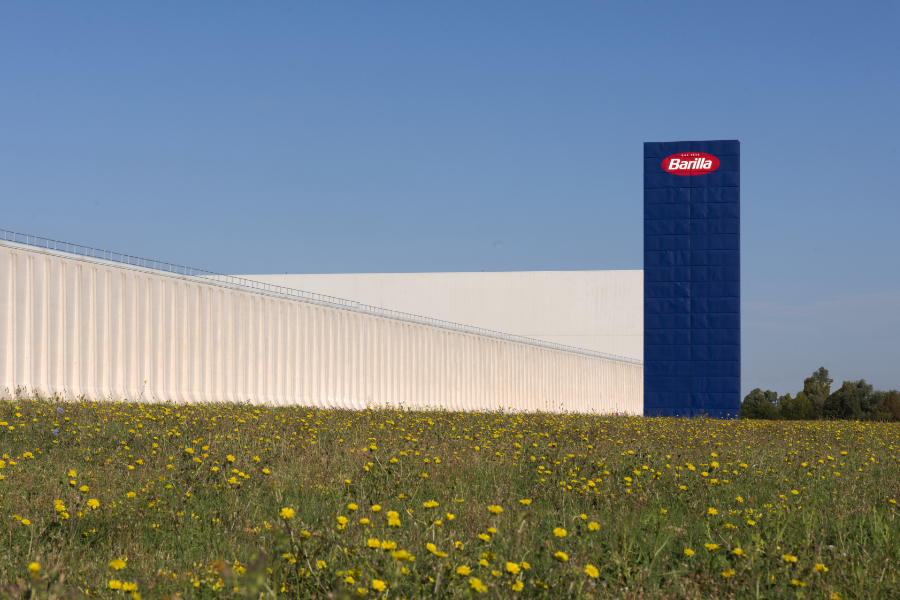
It noted that its Rubbiano plant in Parma (pictured), which is dedicated to the production of sauces and pesto, made an important contribution to its water reduction efforts, as improvements to wastewater treatment systems enabled the recovery of over 62,000 m³ of water between 2022 and 2024.
Water efficiency
As part of ongoing efforts to improve water efficiency at its facilities, it is planning further investments of €5 million at the Rubbiano facility. This forms part of a €168 million Energy & Water Plan introduced in 2024, which aims to increase the recycled water index by 250% in the most water-stressed areas by 2030, compared to 2022.
‘A fundamental resource for pasta production and for the balance of ecosystems, water is a central element in Barilla’s management of its operations,’ it said in a statement. ‘The company works to progressively reduce water consumption in its production processes, promoting the responsible use of this resource and encouraging recovery, recycling and reuse practices within its plants and across the supply chain.’
Barilla added that its Environmental Management System is aligned with the UNI EN ISO 14001 standard, while the company tracks water consumption performance through a global Supply Chain Scorecard.
Packaging
On packaging, Barilla noted that 99.8% of its packaging is now designed to be recyclable, with more than half of the packaging materials it uses coming from recycled sources.
In addition, 71% of its packaging is either paper- or cardboard-based, as the company seeks to ‘improve product protection, reducing food waste, and to increase the use of recycled materials, decreasing the use of fossil-based resources’, it noted.
Its packaging journey is guided by the Sustainable Packaging Principles, introduced in 1997 and updated regularly since, which sets out the goal of eliminating around 4,000 tonnes of packaging material from the market by 2030 through redesign initiatives.
As an example, its flagship Blue Box pasta packaging is now made from virgin fibre cardboard sourced from sustainably managed forests, while the company has also introduced low-odour inks, which help to improve recyclability within the paper recycling stream. Read more here.