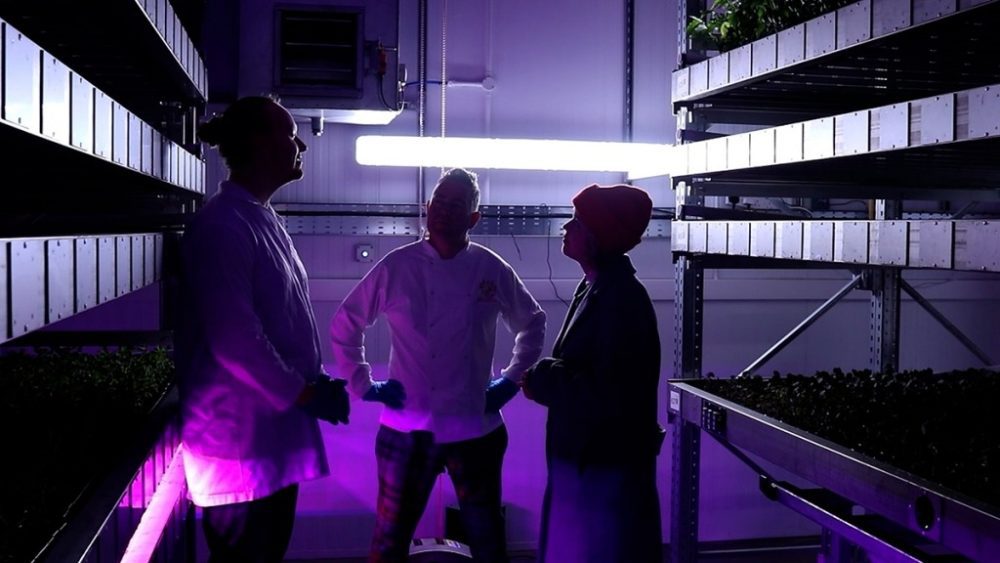
A new study by the University of Aberdeen and the University of Surrey has found that growing lettuce through vertical farming methods can be just as sustainable as growing it in a field, albeit with a significant reduction in the amount of land used.
The study, A cradle-to-customer life cycle assessment case study of UK vertical farming, which was published in the Journal of Cleaner Production, noted that as much as 8,000 hectares of land in the UK could be saved through the use of vertical farming.
The study examined a vertical lettuce farm and found that it produced the equivalent of 740 grams of carbon dioxide per kilogram of lettuce. This carbon footprint is comparable to traditional field-grown lettuce, but with significantly less land usage – a more sustainable agriculture approach.
Climate impact of farming
“Our findings show that vertical farms can help reduce the climate impact of farming, especially if their electricity comes from renewable sources,” Dr Zoe M Harris, co-author of the study and a senior lecturer at the Centre for Environment and Sustainability at the University of Surrey. “Vertical farming uses about 28 times less land than traditional farming methods. […] That could free up land to grow other crops.
“Vertical farms can also be built in cities, significantly reducing the impact of transporting the crop to the people who eat them.”
Environmental footprint
Elsewhere, Professor Astley Hastings, reader in environmental science at the University of Aberdeen, noted that the study also assessed the environmental footprint of vertically farmed lettuce to that sourced from by UK supermarkets from the UK and Spain.
“Vertical farming reduced land use impacts, but its overall impact was dependant of the way the electricity it used was generated, whilst the Spanish sourced lettuce impact was dominated by transport and irrigation and the UK lettuce was grown on peat soils and their degradation dominated the impact,” she noted.”
Electricity consumption was identified as a major contributor to the lettuce farm’s overall climate change impact, accounting for nearly 40% of it. The researchers also examined other environmental impacts, including land use, water use, and water pollution.
Michael Gargaro, a researcher at the Centre for Environment and Sustainability, pointed out that one of the most significant environmental impacts came from the jute plugs used to grow the lettuce seeds. He suggested that switching to alternative materials, such as coconut fibre, hemp, or perlite, could enhance the sustainability of vertical farms.
“We hope this study inspires further research into the sustainability of the food sector,” he added. Read more here.