


Investment in clean fuels will need to quadruple between now and the end of the decade if international ambitions are to be met, a new report by the World Economic Forum has suggested.
According to the report, Fuelling the Future: How Business, Finance and Policy can Accelerate the Clean Fuels Market, which was developed in collaboration with Bain & Company, global investment in clean fuels – such as biofuels and hydrogen derivatives – has the potential to increase from around $25 billion a year to $100 billion, driven by new demand and government policy.
‘An important pathway’
“Clean fuels represent an important pathway to advancing sustainability while continuing to supply the energy required by the global economic system,” commented Roberto Bocca, head of the centre for energy and materials, World Economic Forum. “Our new research shows that the clean fuels industry can build on existing infrastructure to deliver durable environmental benefits alongside economic value.”
According to the report, progress will depend on the alignment of policy, business and financing measures that can ‘turn global goals into credible, economically viable projects’.
Currently, clean fuels represent just over 1% of global clean energy investment, however ambition in this area is on the rise – the recent ‘Belém 4x’ pledge at COP30 in Brazil saw more than 25 countries commit to quadrupling production and use of clean fuels by 2035.
Liquid and gaseous fuels currently account for 56% of global energy use, meaning that a transition to cleaner alternatives would have positive implications for energy security, employment and emissions.
Business leadership
“Over the last few years, the question among business leaders in the industry has evolved from should we invest, to how and when”, added Cate Hight, partner in the Energy and Natural Resource practice at Bain & Company. “We find that those who succeed generating value are rethinking how to approach projects focusing on customers, embracing flexibility and partnerships, and mitigating investment risk.”
The report includes case studies from Europe, Latin America and South-East Asia, which demonstrate how different regions have approached policy design, financing structures and technology solutions in their transition to cleaner fuels.
In addition, a newly-launched Digital Playbook accompanies the report, providing practical examples to assist with implementation.
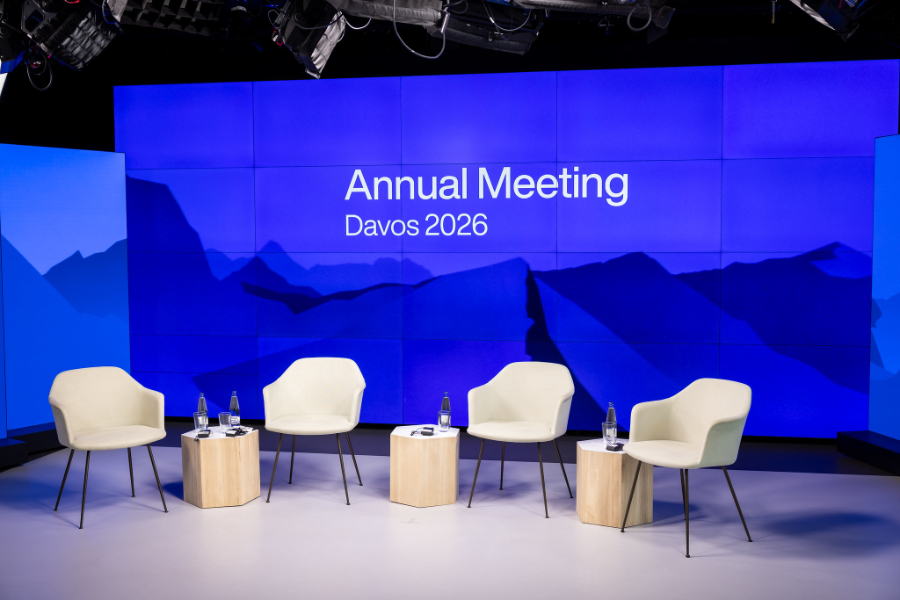
The report was published ahead of the World Economic Forum’s annual meeting in Davos, which takes place from 19-23 January. Read more here and here.
[Photo: ©2026 World Economic Forum/Kamal Kimaoui]


One thought on “World Economic Forum calls for stepping up of investment in clean fuels”
Comments are closed.