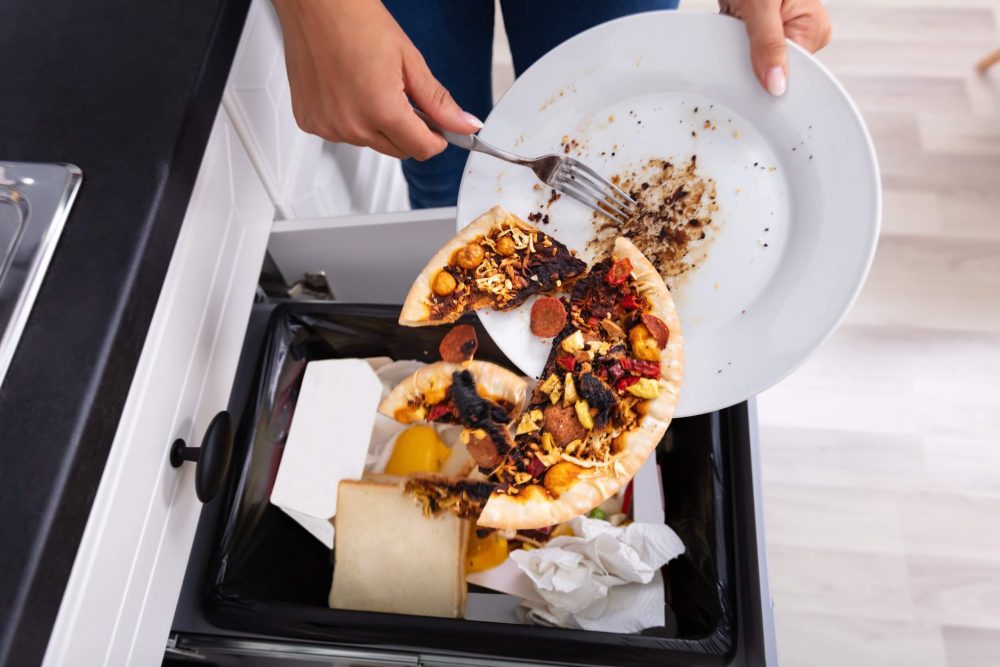
Some 49% of French households say that they actively seek to limit food waste when shopping or eating, new data from Worldpanel has revealed.
According to the data, which was published ahead of the International Day of Awareness of Food Loss and Waste on 29 September, a combination of inflation and ecological awareness is leading households to adopt practical actions to reduce food waste.
Food habits
Three fifths (60%) say that they set aside leftovers to eat them later, while a similar percentage (57%) state that they do not automatically throw food away once it passes the expiry date, but consume it if the product is still edible.
Top food waste reduction measures in the home include buying short-date products in the supermarket, cited by 56%, and checking for longer shelf-life items to better manage purchases (48%).
In addition, nearly half (47%) of households say that they purchase ‘imperfect’ fruit and vegetable products, while 47% plan their menus in advance in order to buy only what they need.
Two fifths (41%) cook in smaller quantities to reduce waste.
Bulk purchasing
Bulk purchasing has also emerged as an important factor for French households seeking to reduce waste. Today, 40.6% of French households consume bulk products, compared with 39% in 2024 — a gain of +1.6 points.
Some 64% of surveyed households say that they engage in bulk purchasing to ensure they have the correct amount that they need, while 52% do so to avoid unnecessary packaging.
“Driven by strong ecological values and growing interest in frugality, bulk shopping has returned to its pre-pandemic level,” commented Gaëlle le Floch, insight director, Worldpanel by Numerator. “Yet its democratisation remains a challenge: for it to establish itself long-term, it must prove its economic appeal and reassure consumers on hygiene,”
Less packaging and less waste are ‘two strong motivations for the French’, Worldpanel noted.
The study is based on PanelVoice surveys of French households. In December 2023, 10,480 households responded, and in April 2025, 7,515 households took part.