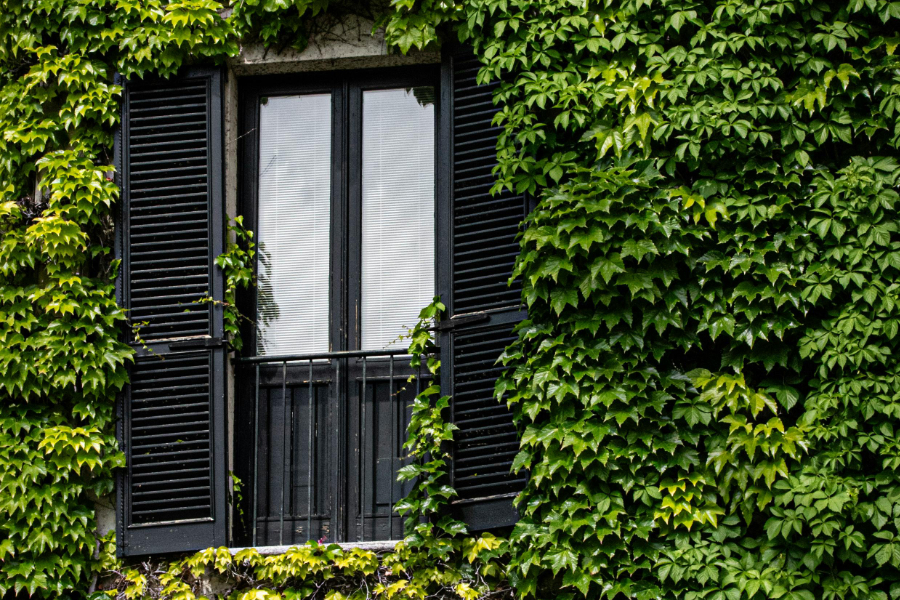
‘Living walls’, structures comprised of flowers and plants that are affixed to the outside of commercial buildings, can play a ‘significant role in boosting urban biodiversity, a new study by researchers at the University of Plymouth has found.
The study, which was published in the Journal of Urban Science, explored how plant-covered walls influence biodiversity in city environments where space for traditional green areas is limited, with the researchers tracking the behaviour of 12 different types of bees, hoverflies and other pollinators, as well as 19 types of soil invertebrates and 12 species of spiders, at three locations across Plymouth.
In addition, bird activity was also tracked, with house sparrows, blackbirds and robins nesting within the living wall during the observed period.
Soil-based planting
Living walls that featured soil-based planting were found to support more wildlife than those using artificial substrates while plant choice also influenced the presence of certain species, with ivy, Mexican daisy and honeysuckle attracting the highest number of pollinator species.
Elsewhere, the study also found that living walls can reduce heat loss from buildings, linking biodiversity outcomes with energy performance.
The research was carried out by scientists and students from the University of Plymouth’s School of Geography, Earth and Environmental Sciences and the School of Biological and Marine Sciences.
‘Global biodiversity crisis’
“We’re in the middle of a global biodiversity crisis, where wild species are increasingly being threatened by the changing climate and habitat loss,” commented Dr Paul Lunt, associate professor in environmental science at the University of Plymouth.
“We need to do everything we can to support our wildlife, and it is one of the reasons why living walls are becoming an increasingly visible feature of UK urban design. Our work provides one of the clearest assessments to date of their biodiversity benefits, as well as a policy challenge, with current legislation meaning their ecological contributions are being undervalued in planning assessments. Based on our research, we feel there is a case for revisiting that if we are to fully realise the extent to which living walls can benefit our urban flora and fauna.” Read more here.