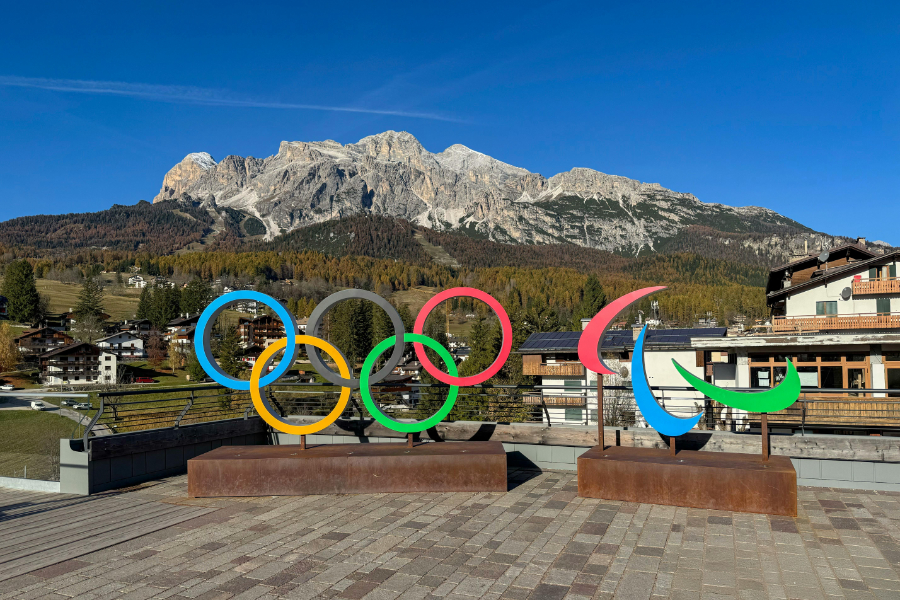
With the 2026 Olympic and Paralympic Winter Games set to kick off in Milan Cortina on 6 February, a new study explores the impact that climate change is having on the long-term viability of the competition.
The study, which was led by the University of Waterloo in conjunction with researchers from the University of Innsbruck and the University of Toronto, was published in the Current Issues in Tourism journal.
The researchers analysed the 93 potential host locations identified by the International Olympic Committee as having sufficient winter sports infrastructure to host the Games, and found that under current climate policy trajectories, just 52 of these would remain feasible for future editions of the Winter Olympics, and just 22 for the Winter Paralympics.
‘Altering the geography’
“Climate change is altering the geography of where the Winter Olympics and Paralympics can be held,” commented Dr. Daniel Scott, professor in the Faculty of Environment at Waterloo and lead author of the study.
“We have to prioritise solutions to the much greater risk facing the Paralympics and explore ways that the One Bid, One City partnership can survive in an era of climate change.”
Potential solutions would include merging the Winter Olympics and Paralympics to take place concurrently, which would be challenging given the size of the Games and the logistics involved. Another option would be to move the Games from their traditional month of February back to January, which would increase the number of feasible Paralympic locations to 38.
Snowmaking – which has been employed by most recent hosts of the Games to some extent – was identified as being of key importance to the future of the competition. Without it, the researchers note, the number of potential hosts would decline to just four by the 2050s.
Climate change impact
“No sport can escape the impacts of climate change,” added Dr. Maleleine Orr, a professor in the Faculty of Kinesiology and Physical Education at the University of Toronto.
“The world’s best athletes, who have dedicated their lives to sport, deserve nothing less than the best conditions that can be provided sustainably. The winter sport community must work together to find solutions to adapt to climate change and achieve the goals of the Paris Climate Agreement.” Read more here and here.