With so much happening in the world of corporate sustainability, SustainabilityOnline is introducing The Sustainability Brief – a regular round-up of some of the top stories making headlines around the world.
In other words, we scour the world for the most important sustainability news, so you don’t have to. Please also check out our homepage for today’s top stories. If you have a news story you’d like to send us, you can contact us here.
osapiens acquires Nasdaq Metrio platform and customer base
osapiens has acquired the Nasdaq Metrio sustainability data platform and its customer base from Nasdaq, expanding its sustainability data-management offering in the US. The acquisition adds Metrio’s capabilities for collecting, managing and reporting ESG data to osapiens’ existing platform. Nasdaq Metrio customers will transition to osapiens, while the company plans to use the acquisition to accelerate its expansion in the US market.
ENGIE signs 48MW solar PPA for QTS data-centre operations
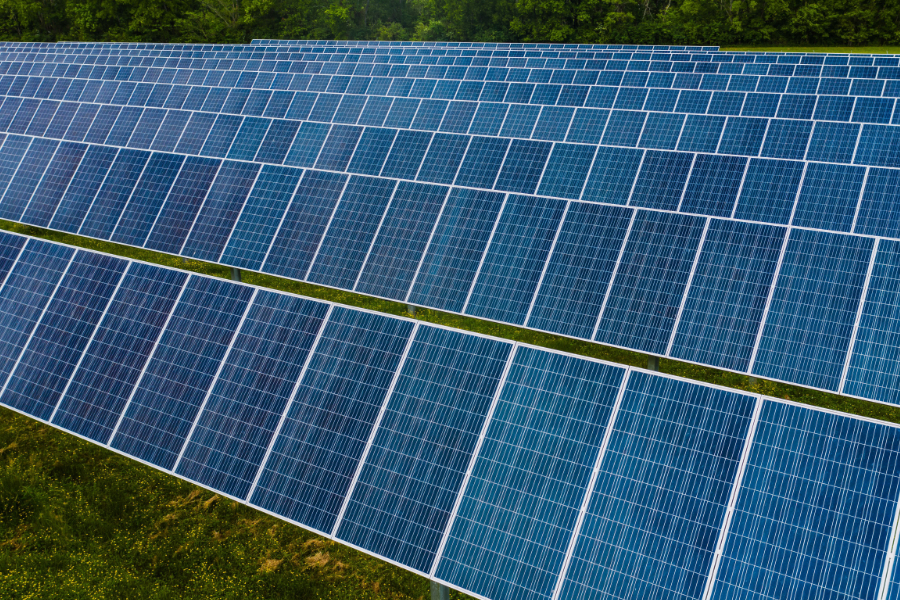
ENGIE has signed a 48MWac solar power purchase agreement with QTS for electricity from the Lubio Solar project in Texas. The agreement will supply renewable electricity to QTS under a long-term PPA, as the data-centre operator expands its infrastructure. The project is being developed by ABEI Energy and adds solar generation to electricity supplied to QTS data-centre operations.
AI-guided flightpaths to be tested for aviation climate impact
Google, the UK Department for Transport, the Met Office, NATS, Contrails.org, the University of Cambridge and Imperial College London are working on a trial examining whether small aircraft altitude adjustments can reduce the warming effects of contrails. The project, Operation Blue Skies, will use AI models to identify flightpath changes in the North Atlantic that could reduce contrail formation. The trial is due to begin in late 2026.
Subsea oil and gas infrastructure could release up to 500 tonnes of microplastics annually
Research from the University of Plymouth estimates that almost 220,000 tonnes of plastics have been deployed in subsea pipeline and umbilical coatings on the UK Continental Shelf. The researchers estimate that around 120,000 tonnes could remain in the marine environment after decommissioning, with degradation potentially releasing between 4.5 and 500 tonnes of microplastics into the UK North Sea each year.
Data-centre cooling technology targets water consumption
Researchers at the University of Limerick are examining cooling technology designed to reduce the water requirements of data centres. The development comes as demand for data-centre capacity increases alongside AI workloads and concerns about water consumption. The researchers point to projections that water used by AI data centres could reach levels comparable with the everyday water requirements of 1.3 billion people by 2030.
PM2.5 pollution reduces plants’ ability to use water and absorb carbon
Researchers at the University of Hong Kong have found that fine particulate pollution reduces plant water-use efficiency and weakens carbon uptake. The study used global data from tree-ring isotopes, eddy-covariance measurements and satellite observations. The researchers found that PM2.5 suppresses photosynthesis by reducing photosynthetically active radiation and plants’ carbon-fixation capacity, weakening gains in water-use efficiency associated with rising atmospheric CO₂.
AirJoule partners with Net Zero Innovation Hub on data-centre waste heat
AirJoule Technologies has announced a collaboration with the Net Zero Innovation Hub for Data Centers to test technology that converts waste heat from data-centre operations into usable water. The companies plan to deploy and validate the technology at a Hub member site before the end of 2026. AirJoule’s system uses a thermodynamic process to recover water from air using low-grade waste heat.