Op-ed by Akshay Kashyap, founder and managing director, Lumax Greenfuel Energy Solutions Pvt.
In India, transport is the third-largest GHG-emitting sector. Transport contributes roughly 12% of India’s energy-related CO₂ emissions, and more than 90% of these transport emissions come from vehicles operating on Indian roads.
In FY2024–25, India imported ~242 MMT of crude oil at a cost of ~US$137 billion. An estimated 50–60% of petroleum demand is linked to the transport sector, implying roughly 120–145 MMT of crude-equivalent consumption and ~US$70–82 billion of associated annual oil-import exposure.
India’s transport sector sits at the intersection of two critical national challenges – rising GHG emissions and growing dependence on imported fossil fuels. In 2024 alone, the sector emitted approximately 353 million tonnes of GHGs (CO₂e), accounting for nearly 8% of India’s economy-wide GHG emissions. More importantly, road transport accounts for ~93% of the sector’s emissions, making it the single biggest opportunity for transport decarbonisation.
Within road transport, the emissions burden is disproportionately concentrated in commercial and heavy-duty vehicles, followed by passenger vehicles, two-wheelers and other road segments. This makes decarbonising high-utilisation, fuel-intensive vehicles particularly critical.
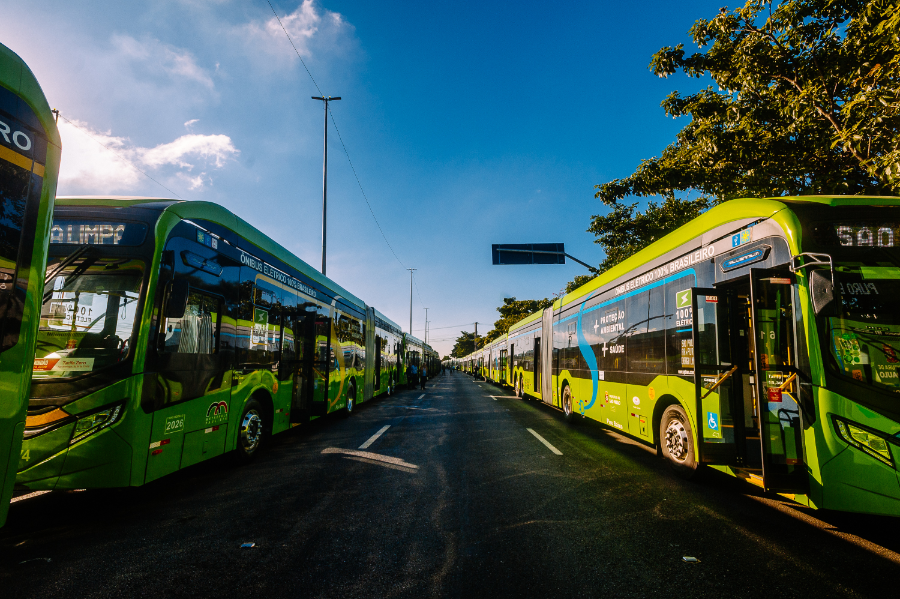
India, therefore, cannot rely on a one-size-fits-all technology pathway. A pragmatic multi-fuel strategy – leveraging electrification, CNG/CBG, LNG, green hydrogen and other low-carbon fuels according to vehicle segment and use case – can simultaneously reduce transport emissions, curb fossil-fuel consumption and lower the country’s substantial foreign-exchange exposure from crude-oil imports.
Decarbonising transport is therefore not just a climate imperative – it is fundamental to India’s energy security and economic resilience.
Multi-fuel strategy for transport sector
TERI’s 2026 freight analysis says light, medium and heavy-duty trucks are only about 5% of India’s vehicle stock but contribute more than 35% of transport CO₂ emissions. TERI’s baseline study also shows that trucks (HDVs + LDVs) consume about 55.4% of India’s diesel sold through retail and direct sales, equivalent to roughly 42.5 million tonnes of diesel using 2021–22 consumption.
Transitioning India’s heavy-duty transport from diesel to LNG and green hydrogen can simultaneously address the country’s GHG emissions and foreign-exchange burden.
LNG offers a practical near-term alternative for long-haul trucks, reducing dependence on crude-oil-derived diesel and delivering an estimated 5–10% lifecycle CO₂ reduction versus diesel, although its forex benefit is partly offset when LNG itself is imported.
In the longer term, domestically produced green hydrogen can deliver much deeper decarbonisation while replacing imported fossil energy with India’s renewable resources.
NITI Aayog–RMI estimates that scaling green hydrogen across key sectors, including long-haul trucking, could generate US$246–358 billion in cumulative energy-import savings by 2050 and contribute to 3.6 billion tonnes of cumulative CO₂ abatement.
Together, LNG as a transition fuel and green hydrogen as a deep-decarbonisation fuel can help India reduce diesel consumption, lower GHG emissions and forex outflow, and strengthen long-term energy security and self-reliance.
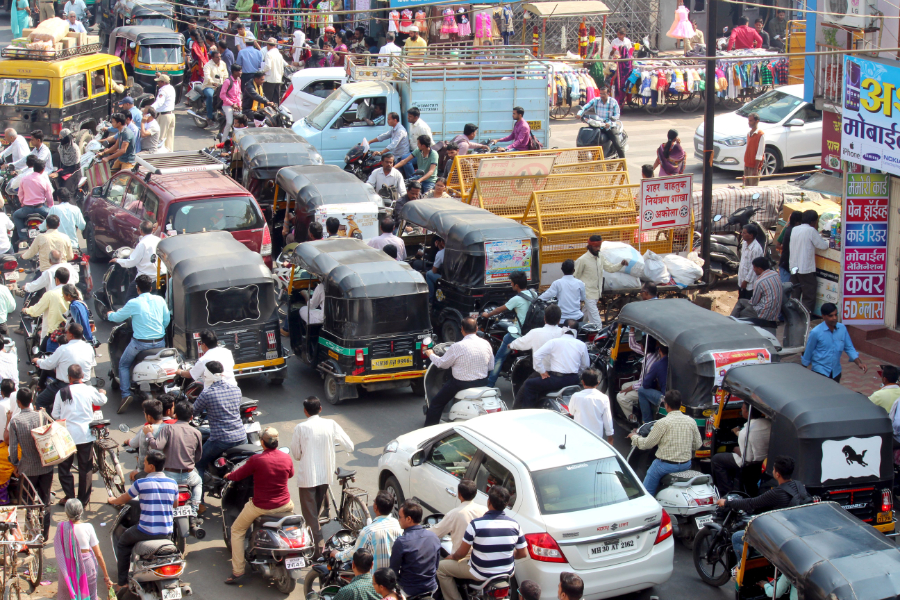
India has ~263 million two-wheelers and ~49 million cars, jeeps and taxis (MoRTH, 2022), making passenger mobility a major opportunity to reduce both GHG emissions and forex outflow.
Two-wheelers and passenger cars each contribute approximately 18% of India’s transport GHG emissions. Two-wheelers also account for ~61% of petrol consumption, while cars account for ~34%, against India’s total petrol consumption of ~40 MMT in FY2024-25.
Accelerating EV adoption in two-wheelers can therefore eliminate a significant portion of petrol demand and deliver around 20% lower lifecycle GHG emissions even on India’s current electricity mix, with greater savings as the grid gets greener.
For four-wheelers, domestically produced CBG + CNG can substitute fossil petrol/diesel, reducing both lifecycle emissions and dependence on imported crude and natural gas. A 50% transition of two-wheelers alone could displace ~12 MMT of petrol annually, demonstrating the significant potential for forex savings.
Together, EVs for two-wheelers + CBG for four-wheelers provide a practical pathway to lower GHG emissions, reduce fossil-fuel imports and strengthen India’s energy security.
Impact of decarbonising the transport sector
A multi-fuel strategy – EVs, CBG/biofuels, LNG/Bio-LNG and green hydrogen – can simultaneously strengthen India’s energy security and accelerate transport decarbonisation.
With transport emitting ~353 MtCO₂e annually and representing an estimated US$70–82 billion in annual oil-import exposure, transitioning towards cleaner, domestically produced fuels could avoid hundreds of millions of tonnes of GHG emissions and save tens of billions of dollars in fossil-fuel imports annually.
Decarbonising transport is therefore not just a climate imperative, but a strategic pathway to reduce forex outflow and strengthen India’s energy sovereignty.