In the early days, the fashion industry’s sustainability work largely concentrated on materials and provenance. The focus now, however, is more structural: curbing overproduction, designing around natural limits, and creating standards that can work across global supply chains.
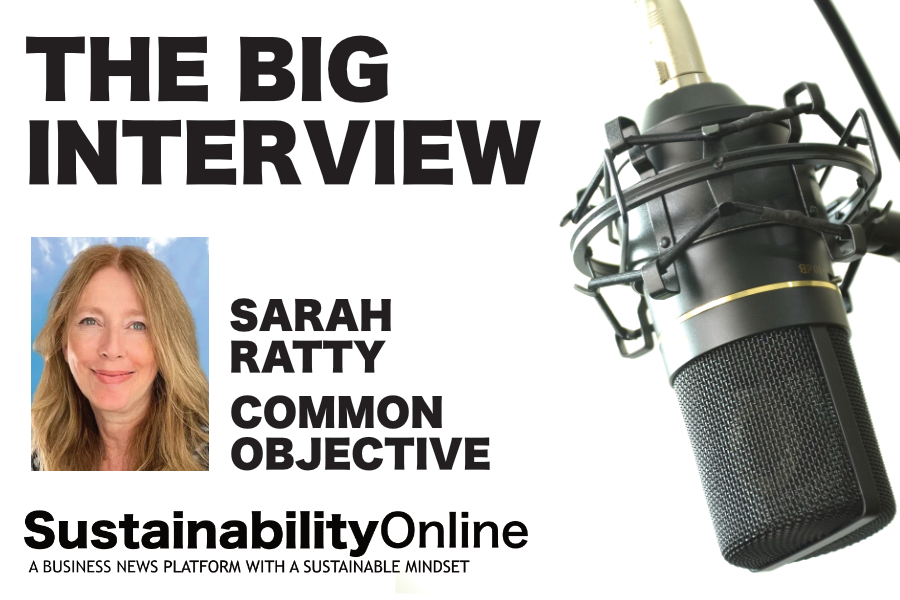
Sarah Ratty FRSA is an environmental and sustainability speaker, pioneering designer and co-founder of the Ethical Fashion Forum, now Common Objective. She helped shape the Global Organic Textile Standard through her work with the Soil Association, while her designs featured in the V&A’s Fashioned from Nature exhibition.
In this exclusive interview with the Sustainability Speakers Agency, Sarah discusses what fashion’s early sustainability movement overlooked, why systemic change takes time and how leaders can use creativity to drive change within their organisations.
Fashion’s early sustainability movement concentrated heavily on materials and provenance. What did it overlook, and what must organisations now change at a systems level?
One of the things that we focused on at that time was where things come from. We forgot some of the other key aspects, which is that we don’t design in a vacuum. We need people to create product, and I think that was one of the missing links.
That’s why we, in the early Noughties, created the Ethical Fashion Forum. That was a way forward to think about people, planet and progress, and how we can make a difference. Circularity and all those things which are now buzzwords, which everybody uses all the time, weren’t in general use.
Materials change led the way, and we’re now at a point where people understand that, but we also need to think about system change. We’re all part of nature. We’re not separate.
We’ve got materials and provenance and roots, and we know where things grow and come from, but we’ve also got this crazy notion that we’ve got an ever-fruiting tree. We don’t have an ever-fruiting tree. What we need to do now is learn about the rhythms of nature and the cycles of life.
We have winter, we have spring, we have summer, we have fall. These are systems of nature that we cannot change. We are part of it, and we have to adapt.
When they changed the laws in 2005, quotas which were designed to keep overproduction out of the story suddenly became lifted, and overproduction became a massive story. Now we’re dealing with a generation that’s grown up with overproduction, and we really have to stop it.
We know that we don’t have three planets. We are living on a beautiful planet, and we need to keep it as it is and improve it. That’s what my work is about. It’s about harnessing the power of creativity, human evolution, thinking about stories and systems change, and designing a future which has that in mind. That’s my purpose.
What did developing the Global Organic Textile Standard reveal about the practical barriers to systemic change and the role of design in overcoming them?
We didn’t want to create a system whereby you have to have this certification in this country, you have to have this certification in that one, and in America you have to have this one. How can we get together and work together? That was one of the biggest missions, and that’s no mean feat, to try and bring all those people together in a Global Organic Textile Standard.
That took a lot of time to get together. We already had global organic standards for food, so how are we going to push this over into the textile world? The cross-contamination risk is different. How are we going to mitigate these different risks and make a system that is compliant, but is also easy?
They always say that the simplest idea is the most difficult because you’re paring it down, and that’s the role of design. Coming back to design thinking, you’re paring it down, getting rid of the excess and trying to make it clean and easy to follow, so that it’s a good rollout and can be easily identified everywhere.
We’ve got one kitemark which everyone can say, “I know what this is. I believe this provenance.” That’s really important. I think that was very successful. We’re all now aware of the Global Organic Textile Standard. I started working on it in 2005, and I was working with them for about 10 years.
It was a really exciting time. It was nice to be able to push forward, but also be mindful of how design actually works in real life. I think that was the value that I brought to it as a designer.
I had this lovely conversation with one of the curators at the V&A when we were doing our exhibition, Fashioned from Nature, and she said to me this wonderful phrase: “Our ancestors weren’t complacent. They did actually try to do good things as well.”
We’re part of the rhythm of life. We’re part of nature. We’re part of the seasons, and I think it’s important to take responsibility for our actions.
What do you want leaders to take from your speeches and apply within their own organisations?
What I really would like is to inspire hope: hope for a generation, hope for the future, hope for your organisation. I want to help people understand that their light bulb moments whilst I’m talking, their moments, their “aha!”, are important. They can join in this journey of transformation.
One of the things that perhaps not a lot of people know about me is that I’m a survivor of a road traffic accident in 1999. I was in South Africa. I broke my back, my leg, my arm, my shoulder. I was at the peak of my career, and I thought that was it.
I was very pragmatic, and I remember saying, “People break their legs all the time skiing. I’ll be all right.” It took me five years to recover. I was disabled. It gave me a different view, but I was always on the path of transformation and change.
I thought, “What can I do now?” That’s when I got involved with the Soil Association, the Ethical Fashion Forum and the Pesticide Action Network. I thought, “I’ve got all this experience. How can I transform from the inside?” I can give design knowledge, I can give my fashion background, and I can make positive change happen.
I’ve had an incredible design journey, an incredible life. I’ve been very blessed to meet loads of amazing people, but I really want to help people transform.
We need to take the right action. We must stop things where they’re not working. We have to have the confidence and the courage to do that. I hope that I inspire leaders to do that.
This exclusive interview with Sarah Ratty was conducted by Tabish Ali of the Motivational Speakers Agency.