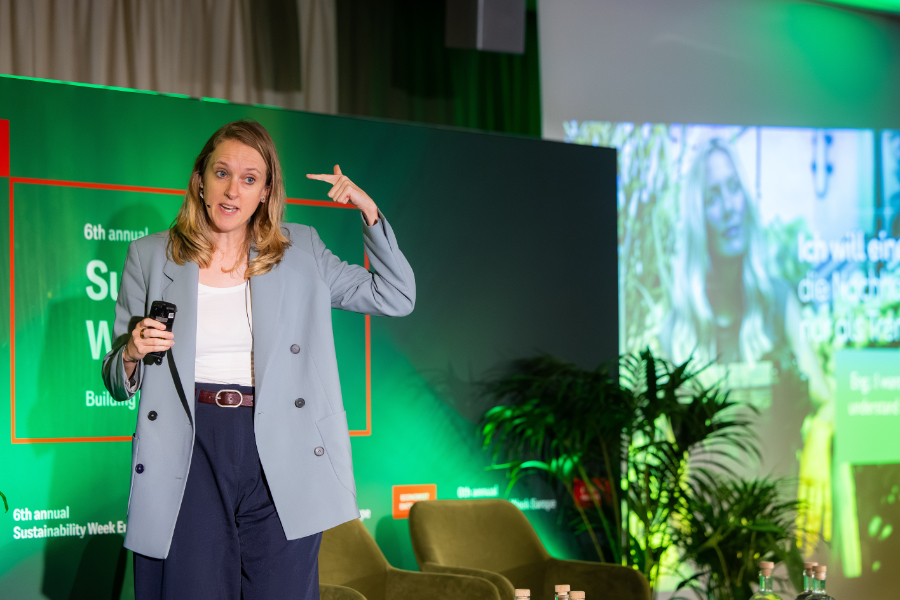
Op-ed by Johanna Gollnhofer, Associate Professor of Marketing and Director of the Institute for Marketing and Customer Insight, University of St. Gallen.
Ask why so many sustainable products stay stuck in a niche, and you usually hear about price, technology or a lack of consumer awareness. In my view, the problem often starts much earlier – with a basic rule of marketing that we broke.
Marketing is not decoration. At its core, it follows a simple sequence: insights (the diagnosis), then strategy, then tactics. Get the diagnosis wrong, and everything that follows will be consistently and efficiently wrong. That is exactly what happened with many sustainable products.
Mistake 1: We misread the market
For years, companies built their picture of the market on survey data. Consumers said they care about sustainability, that they would choose sustainable products, even that they would pay more for them. Many concluded that the ‘green segment’ was large and growing.
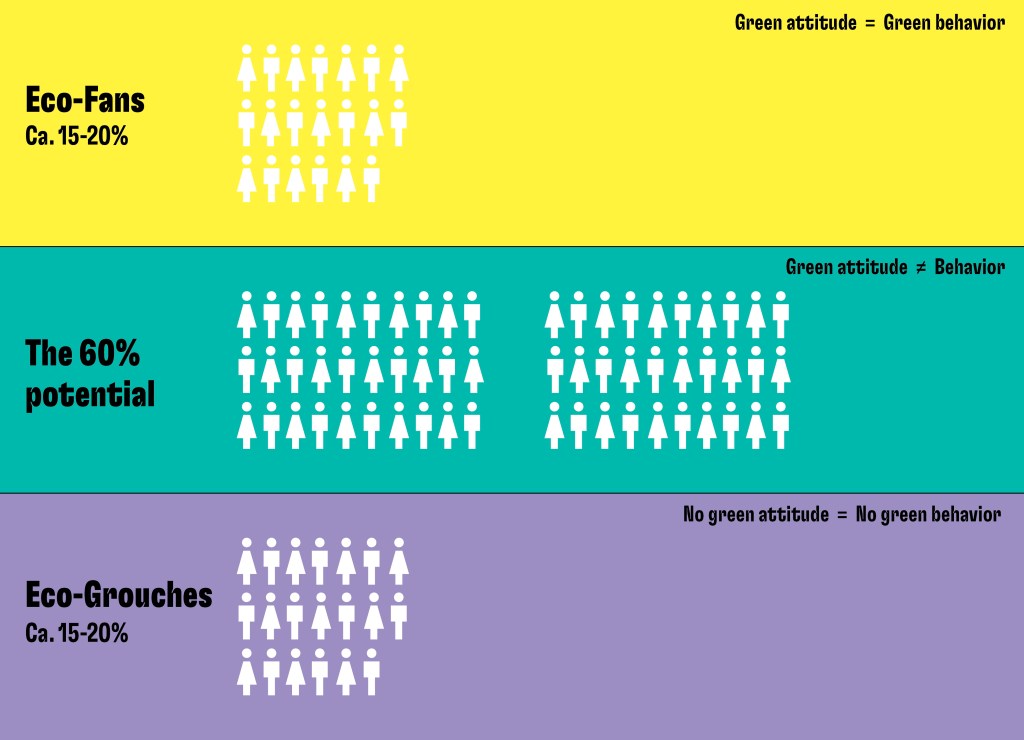
But surveys capture attitudes, not behaviour. When stated attitudes meet the supermarket shelf, a gap opens up – the attitude-behaviour gap. In actual purchase patterns, the group that consistently buys sustainable products and accepts a price premium is relatively small.
Next to it sits a much larger group, which Jan Pechmann and I call ‘the 60% in our book The 60% Potential. These consumers are not against sustainability; they think it is a good idea. But they don’t actively seek it out, they don’t want to make sacrifices, and they rarely pay more.
The figure is deliberately rounded: across the market studies we review, the size of this broad middle varies by country, category and method – but it consistently makes up around half of the market or more.
So the misdiagnosis was twofold. We overestimated the green segment. And we underestimated the mainstream.
Mistake 2: We targeted the niche
If the diagnosis is wrong, the strategy follows. Assuming a large green segment, many companies made a seemingly logical choice: target it. Brands positioned themselves for the already convinced and optimised for the smallest part of the market. In the book, we call this the Eco-Trap: fishing in a small pond while a much larger one lies right next to it.
That can work for a niche brand. It cannot deliver scale. And scale is the point – commercially and environmentally. A sustainable product that only the committed few buy has limited impact, however good it is.
Mistake 3: We made sustainable products look niche
Once the strategy is set, execution almost writes itself. Products are designed to signal sustainability. Packaging turns green and brown. Communication focuses on responsibility, impact and doing the right thing.
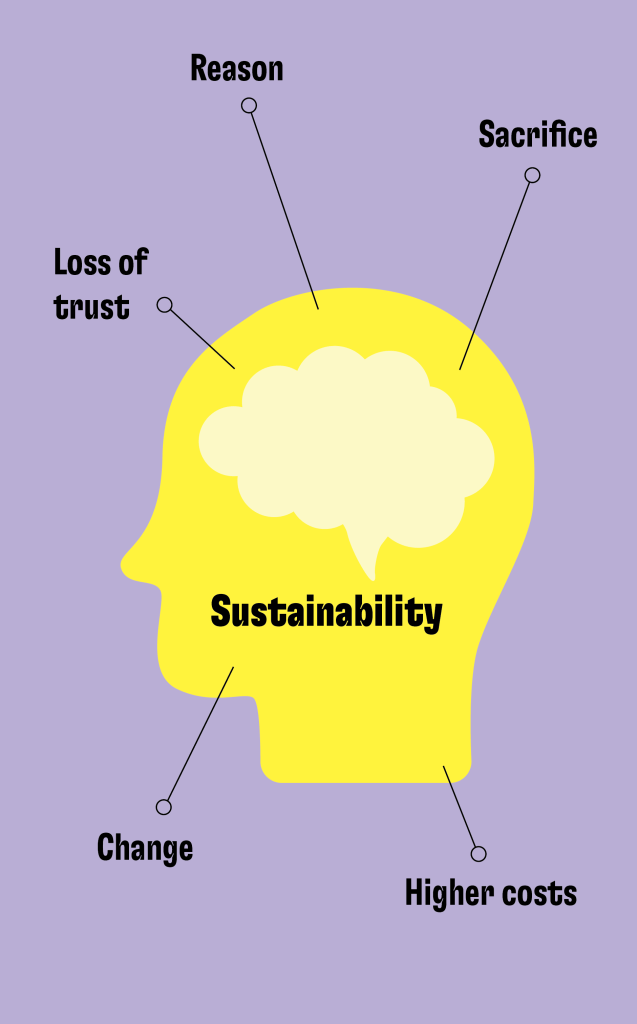
For committed green consumers, these signals work. For the 60%, they often do the opposite. In the mainstream, the word sustainability has an image problem: it is associated with sacrifice, higher costs and change. Green codes make products feel niche, signal compromise – and quietly exclude the very audience needed for growth.
How to do it better: start with the 60%
Now imagine following the rule properly.
Insights: The growth opportunity lies not with the already converted, but with the broad middle that is open to sustainability without looking for it.
Strategy: Design for the mainstream, not the niche. Instead of asking consumers to care more, make it easier for them to choose differently.
Tactics: Only then do the classic levers follow – and they look very different:
- Product: Win on performance, taste, convenience and design, with sustainability built in rather than leading.
- Price: Aim for price parity with conventional alternatives wherever possible. For the 60%, price beats sustainability – but brand beats price.
- Place: Be present where mainstream decisions happen: the regular aisle and the discounter, not only the organic store.
- Promotion: Communicate desirability, relevance and normality, and answer the question ‘what’s in it for me?’ Sustainability is the goal, not necessarily the message.
The question is not whether consumers care enough
The sustainability debate often ends in frustration about consumers who say one thing and do another. I think that is the wrong conclusion. The attitude-behaviour gap is not a moral failure of consumers. It is a market reality – and a design brief for marketers.
The question is not whether consumers care enough. It is whether companies design for the 60%.
About the author: Johanna Gollnhofer is Professor of Marketing and Director of the Institute for Marketing and Customer Insight (IMC-HSG) at the University of St. Gallen, where she researches consumer behaviour and marketing effectiveness. Together with Jan Pechmann, she is the author of The 60% Potential: Using Marketing to Win Over Mainstream Consumers for Sustainable Consumption (Campus, 2025), the English edition of Das 60%-Potenzial. She regularly speaks as a keynote speaker on sustainability and marketing.