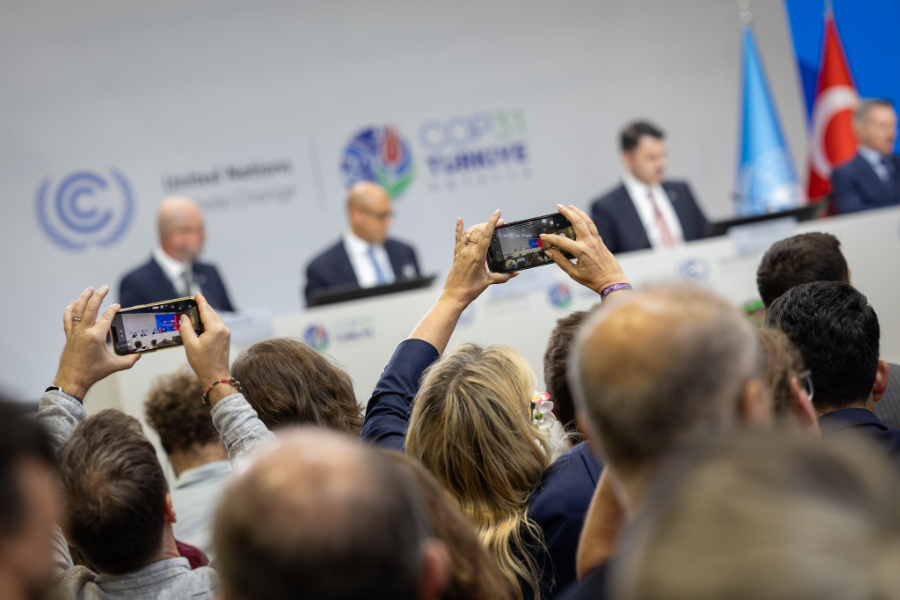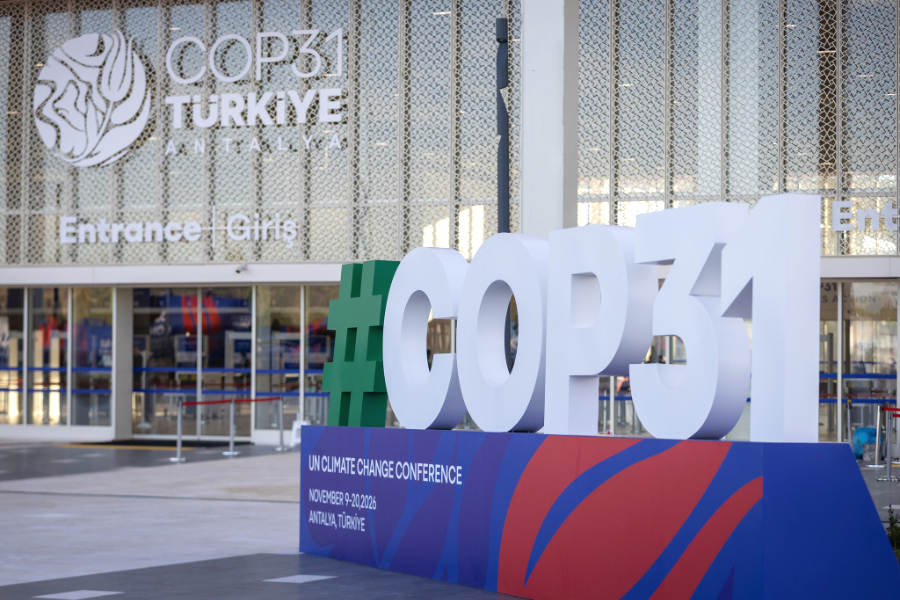
COP31 has come to an end in Türkiye with no new deal to combat climate change, following consternation over absence of fossil fuels in the final draft text.
Commenting following the closing plenary in Antalya, UN Climate Change executive secretary Simon Stiell said, “Over many COPs, climate cooperation has delivered vast progress – taking humanity off an unsurvivable path of global heating. But clearly much, much more is needed. The fight continues. We will never give up.”
Despite the failure to reach agreement, Stiell highlighted progress made at COP31 in terms of progressing the Just Transition, a “momentum boost” for electrification, the as well as positive actions across six axes of the COP31 Action Agenda, from food systems to urban resilience.
“This process has suffered setbacks before and come back stronger,” he said. “It must do so again. And COP32 [set to take place in Addis Ababa next year] is a vital stepping stone.”
Here’s what government spokespersons, NGOs and other organisations said about COP31’s conclusion.
António Guterres, Secretary-General, United Nations
“I am deeply disappointed that COP31 has ended without consensus on an overarching outcome. I share the very profound frustration of all those who expected governments to rise to the moment the climate crisis demands. But this setback does not change the facts.
There may be no consensus in the negotiating room. There is no ambiguity in the science. Temperatures keep shattering records. Climate extremes keep intensifying. Emissions remain far too high. And every delay makes our task harder and more costly.
“The world is now poised to exceed the globally-agreed limit of a 1.5 degree temperature rise. The window to keep that overshoot as short and shallow as possible is rapidly closing. The take-home message from COP31 is clear: the world must do much more to confront the climate crisis – and it must do it now.”
Darragh O’Brien, Ireland’s Minister for Climate, Energy and the Environment and Wopke Hoekstra, European Commissioner for Climate, Net Zero and Clean Growth
“We came to COP31 in good faith, with a shared vision to focus on implementation, to build on previous outcomes, and bring about real progress across mitigation and adaptation.
“We also came to COP to talk about how we can make meaningful progress on access to climate finance. About turning financial pledges into the projects and programmes that support vulnerable communities. About moving forward on delivering the commitment to triple adaptation finance. So this COP did not fail over climate finance.
“We have engaged constructively and intensively with the COP Presidencies and with other parties. We have shown flexibility and looked for common ground. However, the need for consensus cannot become a driver for the lowest common denominator. We cannot allow the COP process to be hijacked by the self-interest of the few at the expense of the many. Nor should we sacrifice substance, credibility or effectiveness at the altar of an empty agreement.”
Alexander De Croo, Administrator, UN Development Programme
“I share UN Secretary-General António Guterres’ disappointment that the Parties were unable to reach consensus at COP31. But climate change will not wait for consensus.
“Every fraction of a degree of warming puts more lives, livelihoods and development gains at risk. The economic cost of inaction continues to rise, and the case for climate action is stronger than ever. Around the world, countries are already investing in clean energy and strengthening resilience. Consensus or no consensus, the work continues.”
Maria Mendiluce, CEO, We Mean Business Coalition
“The world needed political leadership from Antalya and instead got a breakdown in international cooperation. At a time when climate change is costing lives and livelihoods, and businesses are making investment decisions that will shape our economies for decades, the inability of governments to reach agreement does serious damage to the credibility of the COP process. But at Antalya many countries drew a line in the sand, insisting the commitment to transition away from fossil fuels is not up for negotiation.
“Yet the real economy came to COP31 to show that electrification is already happening. Ninety countries have backed a global ambition on electrification, and businesses have demonstrated their readiness to invest and accelerate delivery. That is a significant achievement. The economic case for the energy transition is growing stronger, even as the politics become more difficult.”
Ani Dasgupta, President and CEO, World Resources Institute
“The hollow outcome at COP31 was a failure of political leadership, not a failure of the Paris Agreement. When narrow national interests override collective responsibility to confront the climate crisis, the entire world pays the price. Climate summits are not stages for posturing; they require every country to roll up their sleeves and do the hard work of finding ambitious common ground.
“At a time when the science could not be clearer, it is indefensible that countries could not agree on even mentioning fossil fuels, the primary driver of climate change. The science has long settled this question – it’s time for the politics to catch up.”
Savio Carvalho, Head of Campaigns and Networks, 350.org
“You’d think that in the middle of the worst fossil fuel crisis in history, after a year of devastating wildfires, floods and collapsing glaciers, world leaders would finally rise to the moment. But they didn’t. We averted a truly bad outcome because many countries stood up to the fossil fuel industry and rejected dangerous distractions. But we still left COP31 without a clear plan to exit coal, oil, and gas. There’s no real money on the table to help countries survive the climate breakdown that is already at our doorstep.
The world needs governments with the courage to stand with people and the planet, even when the fossil fuel industry pushes back. This isn’t the end. We’ll keep pushing until governments end the age of fossil fuels. Every meeting and every decision in the year ahead counts. The time for delay is over.”
Nafkote Dabi, Climate Policy Lead, Oxfam International
“Rich polluting countries sent a damning message at COP31 about whose lives matter. The decision prioritises false solutions and creates opportunities for new damaging extractive projects without even mentioning fossil fuels. As they keep the world on its collision course with climate disaster, wealthy nations dodge the debt they promised to pay a decade ago.
“This failure betrays millions of people who did little to cause the climate crisis, trying to protect their communities, recover from climate disasters, and prepare for what comes next. Governments claim they don’t have the money, but taxing the super-rich and fossil fuel corporations could raise $1.6 trillion. They are most to blame for climate breakdown, so we must make rich polluters pay.”
Patricia Fuller, President and CEO, IISD
“The failure to reach consensus at COP 31 reflects the broader challenges facing multilateralism in an increasingly fragmented world. Major powers have proven either unwilling or unable to promote unity in the face of escalating global crises. Yet in Antalya, we also saw encouraging examples of countries coming together to meet the moment.”
Tasneem Essop, Executive Director of Climate Action Network International
“This was the worst COP ever. We are witnessing human suffering on an unimaginable scale, and we had hoped this COP would take steps to protect people from the worsening climate crisis. Instead, rich nations gutted the very measures that could have made a difference.
“Negotiating room after negotiating room, developed countries systematically blocked measures that would require them to provide finance to protect people’s lives and address the climate crisis. […] The space created to protect humanity from climate catastrophe is being deliberately dismantled by political leaders who consider the lives of those in the global south as disposable.”
Mohamed Adow, Director, Power Shift Africa
“This has been the worst ever COP and its collapse needs to be a wake up call for the world. Rich nations and polluting governments cannot keep arriving empty-handed and expecting a carefully worded declaration to get them off the hook.
“COP31 was a ghost COP, and its lack of progress will haunt the climate vulnerable. Despite progress in recent years agreeing to transition away from fossil fuels in 2023 and a promise to triple adaptation finance in 2025, this year everything ground to a halt. At a time when climate breakdown is only getting worse, this is unforgiveable.”
Emel Türker Alpay, Climate and Energy Campaigner, Greenpeace Türkiye
“As COP31 host, Türkiye took on a substantial responsibility: to demonstrate climate leadership and Turkish civil society has been clear about what is needed. The presidency, however, chose to ignore it, even after more than 10,000 people from all over the world marched through Antalya, calling for climate action.
“Across Türkiye, communities are calling for a coal phase-out and a clear pathway towards a just transition. COP31 may have ended, but that call will not. We will continue to raise our voices and demand the change that is so urgently needed.”
Teresa Anderson, Global Lead on Climate Justice, ActionAid International
“Temperatures are rising, impacts are rising, but support for climate-hit countries is shrinking. The EU’s refusal to allow real progress on adaptation finance means that harvests will fail when they might have thrived. Buildings will collapse that could have withstood storms. People will drown because they didn’t get a flood alert. Millions of people will be left to deal with hunger, destruction and death that could have been avoided if rich countries cared about humanity’s future.
“While the EU’s standing up to a text weak on fossil fuels has helped its reputation in this space, its self-appointed crown of climate leadership still sits crookedly. The success of climate negotiations cannot be judged on carbon dioxide alone. Until wealthy polluting countries can stop seeing climate finance as a zero-sum game, climate talks will fail in their job of keeping humanity safe from rising temperatures.”
Bertha Argueta, Senior Policy and Advocacy Officer for Climate Justice, European Network on Debt and Development
“This COP has once again made clear that delivering on the Paris Agreement requires more than promises: it demands action on climate finance. Developed countries must meet their commitments to provide adequate, predictable public finance, while all countries must be prepared to confront the structural barriers holding back climate action in developing countries, including unsustainable debt and the high cost of capital.
“We cannot continue to rely on the failed narrative that private finance alone will fill the gap. Closing the climate finance divide requires political courage, systemic reform and the delivery of public finance at the scale and speed the climate crisis demands.”
Romain Ioualalen, Global Policy Lead, Oil Change International
“This is a damning indictment of political cowardice. How do countries plan to break free from the worst fossil fuel energy crisis in history if they cannot even agree on a way forward? Rich countries, like the EU, have once again kicked the can down the road on public climate finance, failing to make clear when or how they will deliver the money they owe the Global South to fund a fair energy transition, adapt to climate disasters, and address loss and damage.
“This stalemate only benefits the fossil fuel industry. Fossil fuel interests have been the conductors of the negotiations, and Türkiye and Australia have been gracious hosts, happily serving them a lifeline on a silver platter. No deal is nothing to celebrate, but the dangerous agreement on the table would have been worse. They can stall the negotiations, but they cannot stop the transition. We will keep building pressure inside and outside the negotiating halls until they deliver.”
Lien Vandamme, Senior Campaigner, Human Rights, Climate Justice and Accountability, Center for International Environmental Law (CIEL)
“Antalya gave us nothing but a renewed drive to take to the streets and demand accountability. The very countries that have caused the escalating climate crisis continue showing up at these talks with empty hands, presenting themselves as climate leaders while letting communities on the frontlines suffer and die. COP31 halls were empty of justice and accountability, yet full of lobbyists. The process of the climate talks must change.
“The slogan of this COP was “from consensus to action,” but we saw neither. The false premise that all countries must agree on every comma at the expense of upholding their legal obligations to provide real finance and phase out fossil fuels continues to undermine any true progress. It is reassuring that some States are finally waking up to this reality and starting to call for change. The momentum for a deep reform of the UN climate talks is mounting, and the failure of COP31 has only added to the urgency.”
Friederike Strub, Advisor, Recourse
“This COP was touted to be about implementation but it failed completely. Wealthy countries, the hosts, and hundreds of fossil fuel lobbyists blocked progress on finance, just transition and fossil fuel phase out, opening the door to false solutions and empty talk shops.
“Without adequate climate finance and a functioning just transition mechanism, countries in crisis will be forced to rely even more on skewed institutions like the IMF and multilateral development banks. This will only deepen the vicious cycle of debt, fossil extraction and climate disasters, driving precious public money into profit-driven schemes rather than genuine climate action.”
Dr Jeni Miller, Executive Director, Global Climate and Health Alliance
“The COP31 process has betrayed people’s health by failing to deliver a clear plan for transitioning away from fossil fuels or providing the finance countries need to protect lives and prepare their health systems for escalating climate shocks.”
“COP31 and its presidents Australia and Türkiye did not deliver the necessary protection for people’s health and lives – the rightly rejected ‘Antalya Pact’ did not mention health at all even as climate change compounds this year’s super El Nino, causing severe droughts in Fiji and Bolivia, extreme flooding in the western US, and wildfires in Southeast Asia, and putting millions of additional people at risk of hunger or famine.”
Dr. Rachel Cleetus, Climate Program director, Union of Concerned Scientists
“The failure of this COP to deliver ambitious, fair, science-based outcomes falls squarely on the shoulders of richer nations, petrostates, and the disgracefully incompetent duo of the Turkish and Australian COP presidents. COP31 has exposed the hypocrisy of rich nations like EU member states that claim to champion science while refusing to deliver on their climate finance obligations that are essential to achieve global climate goals.
“People in developing countries reeling from devastating climate impacts don’t need empty words about the gravity of breaching 1.5°C of global warming—they are already living with the harsh injustices of the long-standing failure of wealthy, major polluting countries to rein in their heat-trapping emissions.
“We must keep up the pressure on political leaders to deliver real action in these international venues and back home to make a safer, more just world possible for generations to come.”
Mariel Vilella, Director of Global Climate Program, GAIA
“We came to COP31 recognising that we are living on an Earth in overshoot, with our planet pushed beyond its limits and communities already paying the price. The heartbreaking tragedy in Nepal is one more reminder of the human cost of this crisis. We have the solutions, and communities across the world are already demonstrating them. Waste pickers are at the forefront, showing what a people-centred, inclusive and just transition looks like in practice.
“Yet governments continue to fall short of the ambition and political will needed to scale up these solutions. Instead, we are being sold false solutions like carbon capture and storage, allowing polluters to keep burning while pretending to solve the problem. We need to stop pollution at source.”
Ann Harrison, Climate Justice Policy Advisor, Amnesty International
“Countries from across regions were right to reject the colossal betrayal that the COP31 co-presidencies tried to pass off as climate action. They resisted a polluters’ charter designed to protect corporate profits while sacrificing people and the planet. They refused to accept a deeply unjust text that failed even to name fossil fuels while opening the door to risky technologies that could prolong their use.
“Rejecting this dangerous text was an important act of resistance. It prevented a predatory world order imposing a terrible outcome while hiding under the mask of consensus. But COP31 itself was a colossal failure. After two weeks of obstruction by high-income historically high emitting states, COP31 failed to deliver progress towards the fossil fuel phase out, finance for adaptation and loss and damage and just transition measures urgently needed to protect people’s rights and survival.”
[Photo: ©UN Climate Change – Kiara Worth]