While the global aquaculture industry has blossomed in recent years, it is increasingly relying on species that are ‘less beneficial’ for food security, climate mitigation, and biodiversity, a new study by researchers at the University of British Columbia has suggested.
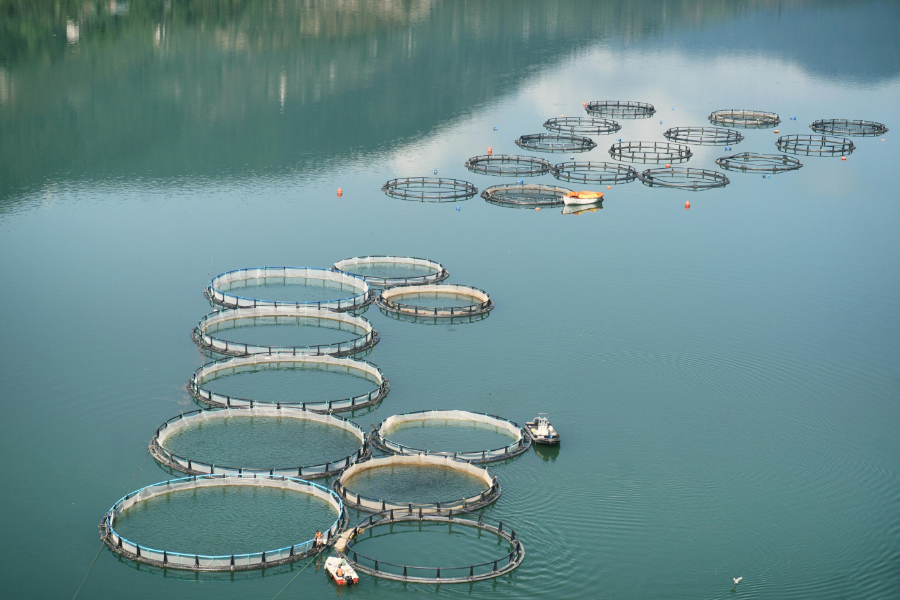
The study, Shifting Trends in Aquaculture’s Biological Potential to Address Food, Climate and Biodiversity Challenges, which was published in the Fish and Fisheries journal, examined global aquaculture production from 1950 to 2023, and found that since the 1980s, the industry has shifted towards a smaller number of intensively farmed species, particularly finfish such as salmon, trout, and sea bass.
While commercially valuable, these species tend to have lower overall sustainability potential compared to previous aquaculture systems.
‘A growing mismatch’
“Aquaculture has enormous potential to support global food systems and environmental goals, but our findings show that current production trends are moving us in the wrong direction,” commented Dr. William Cheung, professor and director of the Institute for the Oceans and Fisheries (IOF), and senior author of the study. “We’re seeing a growing mismatch between what we produce and what would best support climate, biodiversity, and food security outcomes.”
The researchers used a traits-based approach to evaluate how different species contribute to three core areas – food provision, climate impact, and biodiversity (FCB).
As it found, modern aquaculture systems tended to focus on species that involved higher environmental trade-offs, such as greater resource use, and also had higher vulnerability to climate-related changes.
‘Not all are equal’
“Salmon aquaculture is currently the fastest-growing food sector in the world, however, it is strongly affected by warming waters and deoxygenation, and is a species that has lower FCB potential,” added Aleah Wong, lead author and PhD candidate in the IOF. “Not all aquaculture species are equal. Some, like bivalves and seaweed, can deliver significant environmental benefits, while others come with higher trade-offs. Currently, many of the most beneficial species are under-represented in global production.”
As the researchers note, while aquaculture still has the potential to support climate and food security goals, production choices may be required to ensure long-term sustainability, such as focusing on lower-impact species and greater diversification.
“Food security is shaped by factors like production efficiency and species’ nutrient density, but also by complex dynamics between producers, consumers, markets and regulatory bodies that affect food security indirectly through impacts on food availability, access, trade, income and equity,” Dr. Cheung added. Read more here and here.